



Getting Started
Getting Started with ONU Health
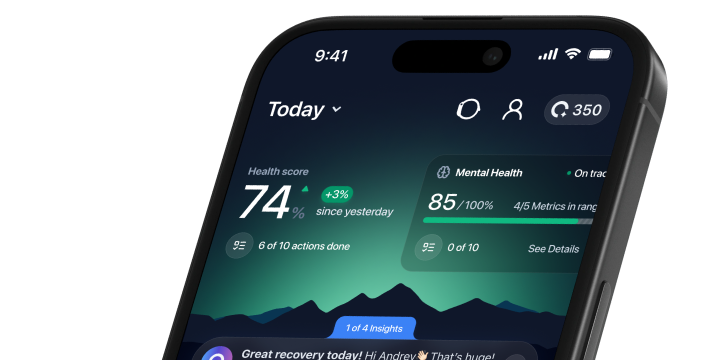
Welcome to ONU Health — your AI-powered health and prevention system.

This guide will help you set up your account, understand your core health metrics, and get the most value from the app.
What is ONU Health?
ONU Health is an AI-driven health control system that connects your wearable data, medical records, biomarkers, and lifestyle information into one unified health account.
Unlike a simple tracker, ONU Health:

  • Calculates your disease risks (e.g., cardiometabolic, immune, stress-related)
  • Translates raw health data into clear daily to-dos
  • Tracks how your actions reduce risk over time
  • Works preventively — so you don’t have to guess what’s wrong

Think of it as a performance dashboard for your body.
The Optimal Setup with ONU Health
ONU works best when:

  • You wear your Apple Watch or compatible wearable as consistently as possible
  • Apple Health permissions are fully enabled (HRV, RHR, Sleep, Steps, Respiratory Rate, etc.)
  • You complete the onboarding questionnaire honestly
  • You upload available lab results (if you have them)

The more complete your data, the more precise your risk calculations and recommendations.
Understanding Your Core Metrics
🧠 Health Score

Your Health Score is your overall risk-adjusted performance index.
It combines:
  • Biomarkers
  • Wearable data
  • Lifestyle inputs
  • Preventive adherence
  • Disease-specific risk models
Higher score = lower projected medical risk.
Lower score = higher optimization potential.
Unlike generic wellness apps, your score reflects long-term disease probability, not just today’s mood.


🔥 Risk Index

Your Risk Index estimates your probability of developing specific conditions based on:
  • Cardiometabolic markers
  • Sleep patterns
  • HRV & resting heart rate
  • Stress load
  • Physical activity
  • Family history
  • Lab biomarkers (if available)
Risk ranges:
  • 0–33 → Low
  • 34–66 → Medium
  • 67–100 → Elevated
Your daily actions directly reduce this index. You will see this reflected in percentage improvements over time.


🌙 Recovery

Recovery reflects your physiological readiness.
It integrates:

  • HRV
  • Resting Heart Rate
  • Sleep quality
  • Recent stress load
Higher recovery = stronger adaptive capacity
Lower recovery = increased vulnerability
ONU adjusts your recommendations dynamically based on recovery — because pushing through low recovery increases long-term risk.


🏃 Strain

Strain measures how much load you put on your body during the day.
It includes:
  • Workouts
  • Passive movement
  • Cardiovascular stress
Strain is contextualized against Recovery.
High Strain + Low Recovery = elevated risk signal.
ONU does not simply encourage “more exercise.” It recommends an optimal load.


💢 Stress Load

Stress Load measures physiological stress, not just psychological perception.
It includes:
  • Heart rate variability
  • Respiratory patterns
  • Sleep disturbance
  • Elevated resting heart rate
Chronic stress without recovery increases:
  • Cardiovascular risk
  • Immune vulnerability
  • Metabolic dysfunction
ONU highlights this early — before symptoms appear.


📊 Prevention Adherence

This tracks whether you complete your daily and weekly preventive actions.
Examples:
  • Sleep optimization
  • Movement targets
  • Nutrition improvements
  • Medical checkups
  • Supplement routines (if applicable)
Higher adherence = measurable risk reduction.
How ONU Health Thinks
Most health apps track.
ONU calculates.
Every recommendation is tied to:
  • A measurable biomarker
  • A disease risk model
  • A statistical impact
When your risk drops by 4%, it reflects calculated improvement — not motivational messaging.
Feedback, Bugs & Roadmap
If you have suggestions or feature requests, please submit them via the in-app feedback section.

If you encounter a bug involving personal data, contact us over the contact us page.

We continuously improve based on user data (anonymized), scientific literature, and real-world health outcomes.