The test measures the vitamin B12 in your blood
MedlinePlus says it is often ordered when other tests suggest a type of anaemia, or when you have nerve symptoms.
 Written and medically reviewed by Dr. Arup Sen, Consultant physician, internal medicine
Your vitamin B12 blood test results show how much B12 is in your blood. MedlinePlus gives a typical range of 299 to 1054 pg/mL, or 219 to 773 pmol/L. Your lab report shows the range your lab uses, and labs differ, so read your number against that first.
MedlinePlus says it is often ordered when other tests suggest a type of anaemia, or when you have nerve symptoms.
Ranges vary between labs.
The NHS says some problems can become permanent, so it should be diagnosed and treated as soon as possible.
Vitamin B12, also called cobalamin, is a vitamin your body cannot make. You get it from food. MedlinePlus says B12 supports energy, nerve health and healthy blood cells.
The blood test measures how much B12 is in a sample of your blood. MedlinePlus says it is often done together with a folate test, because low levels of either vitamin can cause the same kind of anaemia. You can read about that on our folate page.
Your body keeps a large store of B12. The NIH Office of Dietary Supplements says this is why symptoms of deficiency can take years to appear. So a low result may reflect a slow drift rather than a sudden change.
MedlinePlus says the test is most often ordered when other blood tests point to megaloblastic anaemia, where red blood cells are larger than normal. It is also used when someone has numbness, tingling, weakness or balance problems, confusion or memory changes.
A low result can mean your body is not getting enough B12, or not absorbing it. MedlinePlus says a methylmalonic acid (MMA) test may be used to confirm it. A high MMA level points to a true B12 deficiency. Your doctor may also check a homocysteine level.
Causes the NHS and MedlinePlus list:
This is the range MedlinePlus gives. Your lab report shows the range your lab uses, and that is the one your result should be read against. MedlinePlus also notes that experts are not certain of normal levels for some B vitamins and that reference ranges differ between labs.
| Result | pg/mL | pmol/L | Source |
|---|---|---|---|
| Normal range | 299 to 1054 | 219 to 773 | MedlinePlus |
| Low | Below 299 | Below 219 | MedlinePlus |
Source: MedlinePlus (Vitamin B12 level). MedlinePlus says people with a level below this are likely to have symptoms or develop them, and that a methylmalonic acid test is used to confirm a true deficiency. It gives no single cut-off for a high result.
The NHS lists these symptoms of B12 or folate deficiency anaemia. Some can happen without anaemia.
The NIH Office of Dietary Supplements adds numbness and tingling in the hands and feet, balance problems, pale skin and heart palpitations. It says nerve damage can happen even without anaemia.
A high result is less common. MedlinePlus says extra B12 is usually cleared in your urine. It links high levels to liver disease, such as cirrhosis or hepatitis, and to myeloproliferative disorders, a group of bone marrow conditions.
Supplements can also lift your level. The NIH Office of Dietary Supplements says B12 has not been shown to cause harm even at high doses. Even so, tell your doctor about any supplement you take, so they can read your result in context. MedlinePlus says very high levels of B vitamins can point to an underlying condition.
Vitamin B12 helps your body make healthy red blood cells and keeps your nerves working. A low level can build up slowly. You might feel tired for months, or notice pins and needles, before anyone thinks to check.
This page explains what the test measures, what low and high results can mean, who is more likely to run low and what you can do. It explains the marker in general. It does not interpret your own result.
MedlinePlus says testing may be considered even without symptoms if you are at higher risk. Groups the sources name:
Treatment depends on the cause, and your doctor will decide it. The NHS says B12 deficiency is usually treated first with injections. After that, some people take tablets between meals and others need regular injections, sometimes for life. These are everyday steps you can talk about with your doctor.
The NIH Office of Dietary Supplements says B12 occurs naturally in fish, meat, poultry, eggs, milk and other dairy. Some breakfast cereals and nutritional yeasts are fortified.
The NHS says a vegan diet without supplements or fortified foods can lead to deficiency. Fortified foods or a supplement can cover the gap. Ask a pharmacist or GP what suits you.
If you take metformin or a stomach-acid medicine long term, ask your doctor whether your B12 should be checked. Do not stop a medicine on your own.
The NIH Office of Dietary Supplements gives 2.4 mcg a day for adults, 2.6 mcg in pregnancy and 2.8 mcg when breastfeeding.
Ask when your level should be checked again, and use the same lab if you can.
See your GP or doctor if you think you may have low B12, if your result is outside your lab's range and nobody has talked it through with you, or if you have the symptoms above. The NHS stresses diagnosis and treatment as soon as possible, because some problems caused by deficiency can be permanent.
Get help sooner if your numbness, weakness, balance or memory is getting worse. The NHS says adults with severe anaemia are at risk of heart failure. If you have chest pain that feels tight or squeezing, or severe difficulty breathing, the NHS says call 999. Outside the UK, call your local emergency number.
ONU does not sell lab tests and does not interpret your results. ONU is a wellness product, not a medical device.
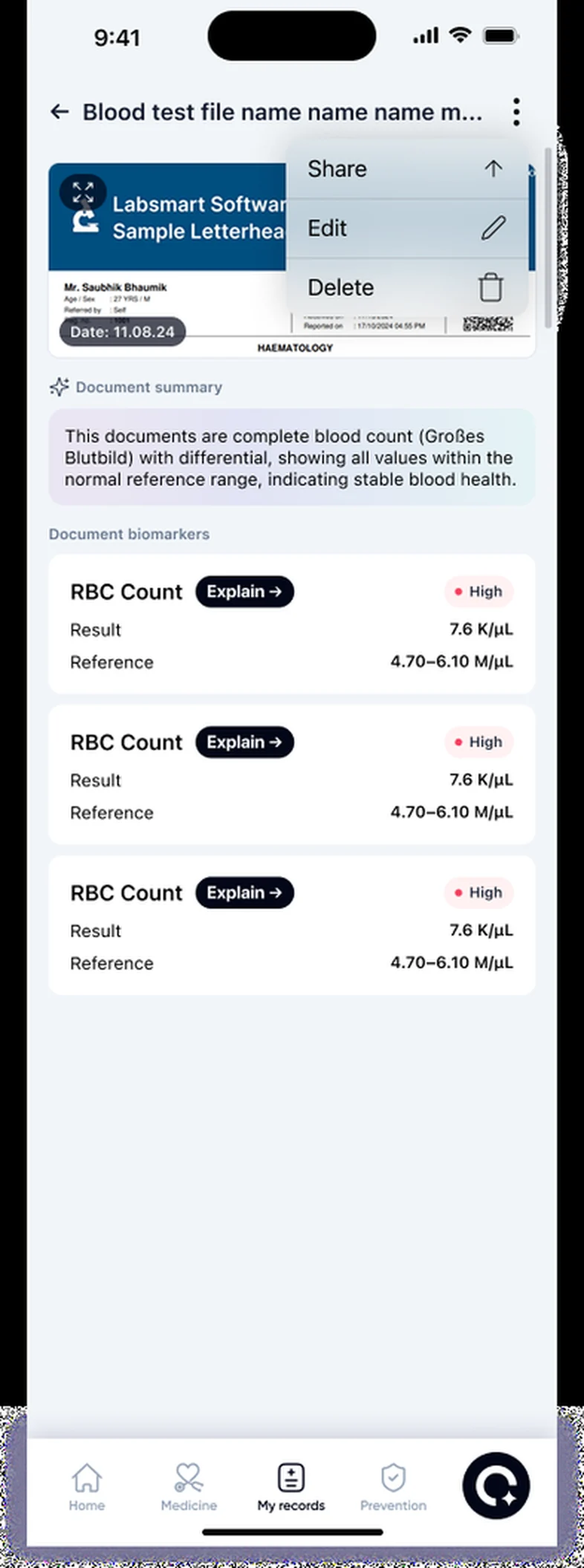
In the ONU app for iPhone, you can upload your lab reports and keep them in one place. Your B12 result then sits next to your daily ONU Score and your sleep, recovery and activity trends. If tiredness was the reason you got tested, that context can help you describe the last few months to your doctor.
Low B12 is one cause of anaemia. Try the free anaemia check, which ends with a summary to take to your doctor. See also haemoglobin, ferritin and blood test results explained.
Bring your everyday signals and health information into a clearer picture.