Key takeaways
A preventive checkup is a chance to catch problems early and lower your risk of future ones, even when you feel well. The National Institute on Aging notes that regular visits help doctors find chronic conditions early and help patients manage risk factors such as high blood pressure and cholesterol. Screening advice depends on your age, sex, family history and lifestyle, so the most useful question is which checks are due for you.
Bring facts that change decisions: medicines, supplements, family history and earlier results. For every test, ask why it is being done and what will happen with the result. Leave with a written plan and a date for next time.
Why a preventive checkup is worth your time
Many of the conditions that matter most over a lifetime, such as high blood pressure, raised cholesterol and type 2 diabetes, often cause no symptoms for years. A checkup is where they are usually found. The NIA advises seeing a doctor at least once a year and links regular visits with earlier detection of chronic disease and better quality of life.
A checkup is also a good moment to review medicines, vaccinations and habits like smoking, alcohol, sleep and activity. Going in prepared helps you use a short appointment well, rather than leaving with the feeling that you forgot to ask the thing you came for.
What the visit usually includes
Knowing what normally happens helps you spot what is missing. MedlinePlus explains that at a routine adult visit your blood pressure, height, weight and BMI are usually checked, and your provider may ask about low mood and anxiety, diet and exercise, alcohol, tobacco and drug use, safety at home including seat belts, smoke alarms and intimate partner violence, and possible interactions between medicines. From 65, questions about falls, fear of falling and bladder control are added.
Some of these questions can feel personal. They are asked routinely because they matter for health, and your honest answers are what make the advice relevant to you. If any of these topics was not covered and it matters to you, raise it.
Bring what changes decisions
Your clinician can do more with facts than with a general worry. Bring a list of your medicines and supplements with doses, conditions that run in your family and roughly when relatives were diagnosed, earlier test results with dates, your vaccination record if you have it, and the one or two things you most want to talk about. Put the most important first.
MedlinePlus advises telling your provider about every prescription and over-the-counter medicine, vitamin and supplement you take, because they can affect test results. If you use a wearable or have done an online health check, bring a short summary rather than every chart.
What to ask at a preventive checkup about screening
Screening advice depends on your age, sex, history and risk. In the United States, the Preventive Services Task Force publishes recommendations by group, covering more than a hundred topics, including breast cancer screening, osteoporosis, depression and anxiety. Other countries have their own programmes.
A good question is simply: given my age and family history, which checks are due, and which can wait? Follow up with: is there anything in my family history that means I should start earlier or be checked more often? Your clinician can then tailor the list, rather than offering every test available.
Common screening by age: what to expect
MedlinePlus summarises typical screening for adults aged 40 to 64. Blood pressure is checked at least once a year, more often with risk factors. Cholesterol is checked from age 20 and repeated every four to six years if there are no risk factors.
Bowel cancer screening is recommended from 45 to 75, using either a colonoscopy every ten years or a stool test at set intervals. People who are overweight are screened for prediabetes and type 2 diabetes from 35, every three years. Women are generally offered mammograms from 40, and cervical screening up to 65.
Your own programme may differ, so ask what applies where you live.
If you are in your twenties or thirties
Checkups are not only for middle age. MedlinePlus advises regular visits for adults aged 18 to 39 even when they feel healthy, and gives a typical pattern for men in that group. Blood pressure is checked at least every three to five years, more often with diabetes, heart or kidney disease, excess weight, a close relative with high blood pressure, or readings that are already slightly raised.
Cholesterol testing starts at 20 and is repeated every four to six years if there are no risk factors. Screening for prediabetes and type 2 diabetes starts at 35 for people who are overweight. Eye exams every five to ten years before 40, and dental visits once or twice a year, round it out.
Good questions here are which of these are due and whether anything in your family means starting sooner.
After 65: what changes
The list shifts again later in life. MedlinePlus advises women aged 65 and over to have their blood pressure checked at least yearly and to have a bone density scan, and suggests an eye exam every one to two years. A hearing test is recommended if you notice signs of hearing loss.
Bowel cancer screening continues through 75, is a decision to discuss with your provider between 76 and 85, and is no longer needed after that. Cervical screening can usually stop after 65 if earlier results were clear. Vaccines such as shingles, pneumococcal and, from 75, RSV come into the picture.
Your provider is also likely to ask about falls, balance and bladder control, so be ready to answer honestly.
Questions about your blood pressure
Blood pressure is checked at almost every visit, which makes it easy to overlook. Ask what your reading was and whether it is in a healthy range for you. Ask whether a single reading is enough, or whether you should also check at home.
MedlinePlus notes that people with diabetes, heart or kidney disease, obesity, a close relative with high blood pressure, or readings that are already slightly raised may need more frequent checks. If your reading is high, ask what the next step is: a repeat, home monitoring, lifestyle changes or treatment.
Questions about blood tests
If your clinician suggests blood tests, ask what each is checking, whether you need to fast, and whether to take your usual medicines beforehand. MedlinePlus explains that food, medicines, supplements, hard exercise and your period can all affect results. Common preventive tests include cholesterol, which helps assess heart disease risk, and blood sugar, which screens for diabetes.
Ask how you will get the results, whether they will be explained to you, and what happens if something is outside the range. A result outside the range does not always mean a problem, and one inside it does not guarantee good health.
Understand a test before you agree to it
For any test, ask what it is looking for, how reliable it is, what happens if it comes back abnormal, and whether the result would change anything. MedlinePlus notes that false positive and false negative results, though uncommon, are possible and may lead to retesting. A false alarm can mean more tests, more appointments and worry.
That does not make testing bad. It means the best tests are the ones with a clear reason behind them. If the answer would not change your care, you may not need the test.
If it would, you will understand why it matters.
Questions about your medicines
A checkup is a good time for a medicine review. Ask whether each medicine you take is still needed, whether the dose is right, and whether any of them interact with each other or with supplements you take. Ask about side effects you have noticed but not mentioned, such as tiredness, dizziness or stomach upset.
If you take a medicine long term, ask whether it needs any monitoring, such as a yearly blood test. Never stop a prescribed medicine on your own because you feel better, but do ask whether it could be reduced. Bring the boxes or a photo of the labels if you are not sure of names or doses.
Questions about cancer screening
Cancer screening is one of the areas where age and history matter most. MedlinePlus describes several options for bowel cancer screening between 45 and 75, from a colonoscopy every ten years to stool tests every one to three years, and notes that a positive stool test needs a follow-up colonoscopy. For people aged 50 to 80 with a significant smoking history, a yearly low-dose CT scan for lung cancer may be offered.
Ask which options suit you, what each involves, how often it is repeated, and what a positive result would mean. If close relatives had cancer young, mention it, as you may need earlier or more frequent checks.
Infection screening people forget to ask about
Some screening tests have nothing to do with age-related disease and are easy to miss. MedlinePlus lists a one-time hepatitis C test for adults aged 18 to 79 and a one-time HIV test for people aged 15 to 65, with yearly HIV testing for those at increased risk. Testing for syphilis, chlamydia and other sexually transmitted infections depends on your history.
These can feel awkward to bring up, but many of these infections cause no symptoms for a long time, and treatment works best when they are found early. A simple question is enough: have I had the one-time tests recommended for my age, and is there anything else I should be tested for given my history?
Questions about stopping a test
Preventive care is not only about adding tests. Some stop being useful at a certain age, and some are not recommended at all. MedlinePlus notes, for example, that bowel cancer screening is no longer needed after 85, that cervical screening can usually stop after 65 after clear results, and that the USPSTF recommends against routine testicular exams by a provider for men without symptoms because they show little or no benefit.
If you have been having a test for years, it is fair to ask whether you still need it, what the benefit is at your age, and what would happen if you stopped. A good answer explains the reasoning, not just the habit.
Questions about skin checks
Skin cancer checks are another area where the advice depends on your risk. MedlinePlus says a provider may check your skin if you are at higher risk, for example if you have had skin cancer before, have close relatives who had it, or have a weakened immune system. It also notes that professional groups neither recommend nor advise against checking your own skin.
So the useful question is whether you count as higher risk, and if so, how often your skin should be examined. If you have noticed a mole or patch that is new, changing, bleeding or simply looks different from the others, mention it at the start of the appointment rather than waiting for a routine check.
Questions about your heart and metabolic health
Heart disease and type 2 diabetes share many risk factors, so a checkup is a good time to look at them together. Ask what your blood pressure, cholesterol, blood sugar and weight mean in combination, rather than one by one. Ask whether your overall risk of heart disease or stroke has been estimated, and what would lower it most.
MedlinePlus advises checking cholesterol more often if you have diabetes, heart disease, kidney problems or high blood pressure. If you have a family history of early heart attacks, high cholesterol or diabetes, say so clearly. It may change when and how often you are tested.
Questions about activity and weight
Weight and activity can feel awkward to discuss, but they shape many of your other results. Ask what a healthy weight and waist size would look like for you, and which change would make the biggest difference. Ask how active you should aim to be.
The NIA reports that regular exercise is linked to longer life and more years without disability, and describes a study of adults aged 40 and over in which people taking 8,000 or more steps a day had a 51 percent lower risk of death from any cause than those taking 4,000. That was an observational finding, but it shows how much ordinary movement matters.
Questions about smoking and alcohol
Be honest about smoking, vaping and alcohol, because they change which checks you need and what advice makes sense. The NIA notes that quitting smoking improves health at any age, and describes a large study in which people who quit between 45 and 54 gained about six years of life on average, and those who quit between 55 and 64 about four. Ask what support is available to stop, and whether your smoking history means you should be offered lung cancer screening. For alcohol, ask whether your usual amount is within safe limits and whether it could be affecting your sleep, blood pressure or liver tests.
Questions about mental health, sleep and stress
A checkup is not only about the body. The USPSTF includes screening for depression and anxiety in adults among its recommendations. If you have been feeling low, anxious, stressed or exhausted for weeks, or sleeping badly, say so, even if it feels less important than a test result.
Ask whether your symptoms could be linked to a physical cause, such as thyroid problems or anaemia, and what support is available. If someone has noticed loud snoring with pauses in your breathing, mention it. These are common, treatable problems, and raising them early usually makes them easier to deal with.
Questions about vaccines, teeth and eyes
Preventive care also includes the less obvious checks. MedlinePlus lists a yearly flu vaccine, a tetanus booster every ten years, and shingles vaccination from 50 among adult vaccines, with others depending on your history. Ask whether you are up to date.
It also suggests seeing a dentist once or twice a year, and having an eye exam every two to four years from 40 to 54, and every one to three years from 55 to 64, or yearly if you have diabetes. Your clinician may not cover teeth and eyes directly, but asking helps you keep the whole picture in view.
Catch-up vaccines worth checking
Many adults are not sure which vaccines they had as children, and that is worth sorting out. For adults aged 18 to 39, MedlinePlus lists a yearly flu vaccine, one dose of Tdap if you did not have it as a teenager, a Td or Tdap booster every ten years, and catch-up doses of MMR, chickenpox or hepatitis B if you are not already protected. It suggests asking about HPV vaccination if you were never vaccinated or did not finish the course.
COVID-19 vaccination is something to discuss with your provider. If you do not have a record, ask whether a blood test for immunity or simply a catch-up dose makes more sense, and keep a copy of whatever you are given.
Questions about bones and falls
Bone health tends to be forgotten until a fracture happens. The USPSTF lists screening for osteoporosis to prevent fractures among its recommendations, and MedlinePlus suggests women aged 50 to 64 with risk factors discuss screening with their provider. Ask whether a bone density scan is right for you, especially if you have gone through menopause or have taken steroid tablets for a long time, which the NHS lists among the causes of weaker bones.
If you are older or have had a fall, ask about falls prevention too. Strength and balance exercises are often part of the answer.
Use your wearable data selectively
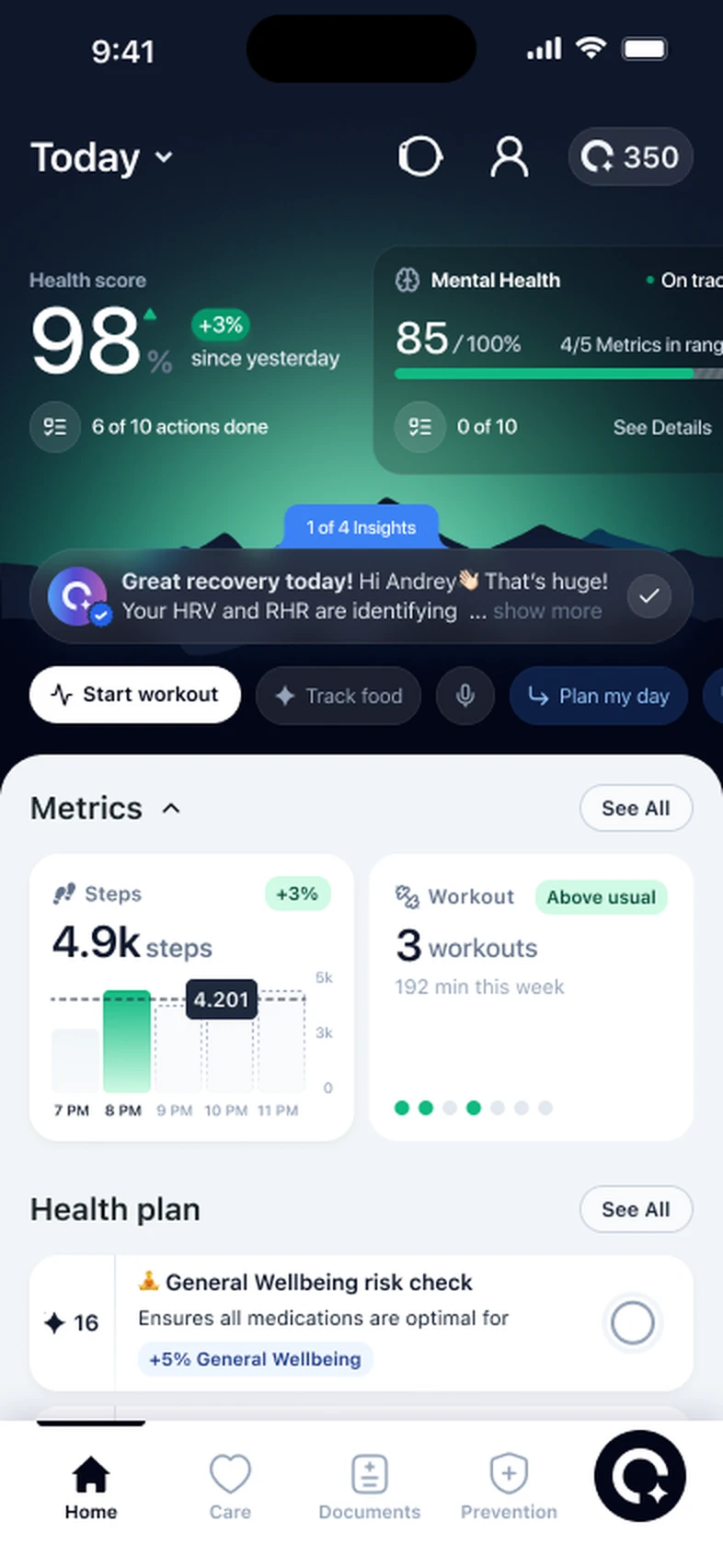
Weeks of charts will not fit into a short appointment. Pick out what is relevant: a clear change in resting heart rate, a long run of poor sleep, a drop in activity or repeated palpitations. Say what you noticed, when it started and how it was measured.
A wearable is context for the conversation. It does not replace an examination, blood pressure check or blood test, and it cannot screen for disease. If your device flagged something that worried you, ask your clinician whether it needs following up, and accept that the answer may be no.
Common mistakes at a checkup
The first mistake is saving your real concern for the last minute, when there is no time to deal with it. Say it first. The second is assuming the clinician knows your family history or your supplements.
The third is asking for every test available, which can lead to borderline results and more tests without answering a real question. The fourth is leaving without knowing how you will get results. The fifth is downplaying symptoms because you feel embarrassed.
Clinicians have heard it all, and the details you are tempted to leave out are often the ones that matter most.
Practical steps before your next checkup
This week, write a one-page summary: your medicines and supplements with doses, any conditions you have, family history with ages at diagnosis, and the dates of your last blood pressure, cholesterol, blood sugar and any cancer screening. Add your top two or three questions in order of importance. Find your vaccination record if you can.
If you track sleep, heart rate or activity, write down any clear changes in a sentence or two. Check whether you need to fast for any blood tests. On the day, bring the summary and a pen, or ask if you can take notes on your phone.
Leave with a plan
Before you go, check you know which tests were ordered, how and when you will get results, who will explain them, and when the next check is due. Ask whether there is anything you should change in the meantime, such as diet, activity, alcohol or smoking, and what the most important single step would be. Write it down.
If a result arrives later with no explanation, ask. MedlinePlus advises discussing results with your provider even when they look normal. A good checkup ends with a few clear actions and a date, not a vague sense that everything is probably fine.
The NHS Health Check in England
If you live in England and are aged 40 to 74, you may be offered a free NHS Health Check every five years. The NHS explains that it is for people who do not already have conditions such as heart disease, diabetes, high blood pressure, kidney disease or a previous stroke, and are not already taking statins. The check includes your height, weight, waist measurement and blood pressure, a cholesterol test and sometimes a blood sugar test, and questions about family history, smoking, alcohol and activity.
You are given a ten-year risk score for heart disease and stroke, described as low, moderate or high. If you think you are eligible but have not been invited, the NHS suggests contacting your GP practice or local council.
A worked example
Rahul, 46, books a checkup because a colleague had a heart attack. He brings a short list: no regular medicines, a vitamin D supplement, father diagnosed with type 2 diabetes at 52, mother with high blood pressure. His questions: which checks are due for me, and what is my heart risk?
His blood pressure is slightly raised, so his doctor asks him to check at home for a week. A blood test is arranged for cholesterol and blood sugar, given his family history and weight. They also discuss bowel cancer screening, since he is over 45.
Rahul leaves with a written list of tests, when results arrive and a follow-up date.
When not to wait for a checkup
A preventive checkup is for when you feel well. Do not wait for one if you have new or worrying symptoms. Book a sooner appointment for things like unexplained weight loss, a lump, a change in bowel habit, blood in your stool or urine, lasting tiredness, or a cough that will not go away.
Seek urgent help for chest pain, severe breathlessness, fainting, sudden weakness on one side of the body or difficulty speaking. If you are not sure how urgent something is, call your doctor's practice or a health advice line rather than waiting for a routine visit.
How ONU fits
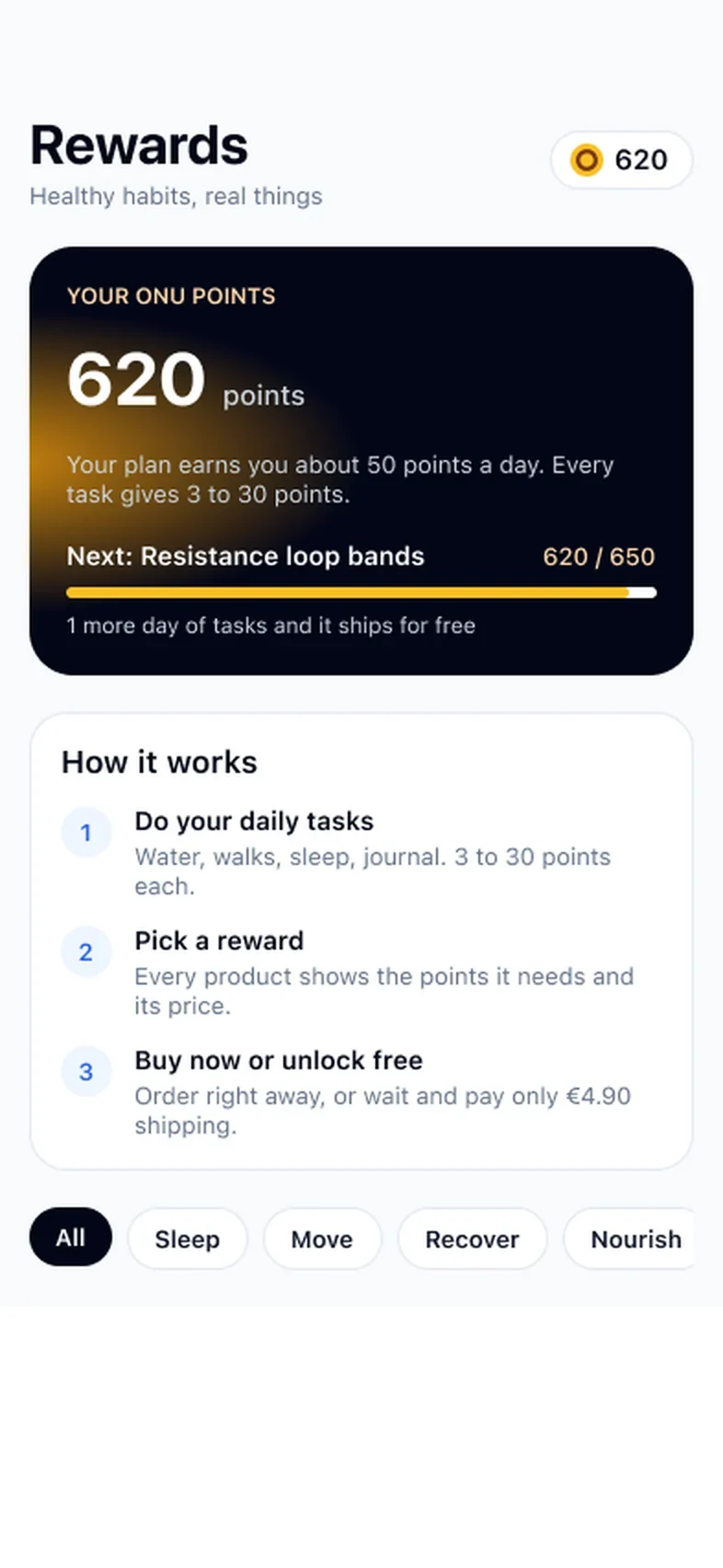
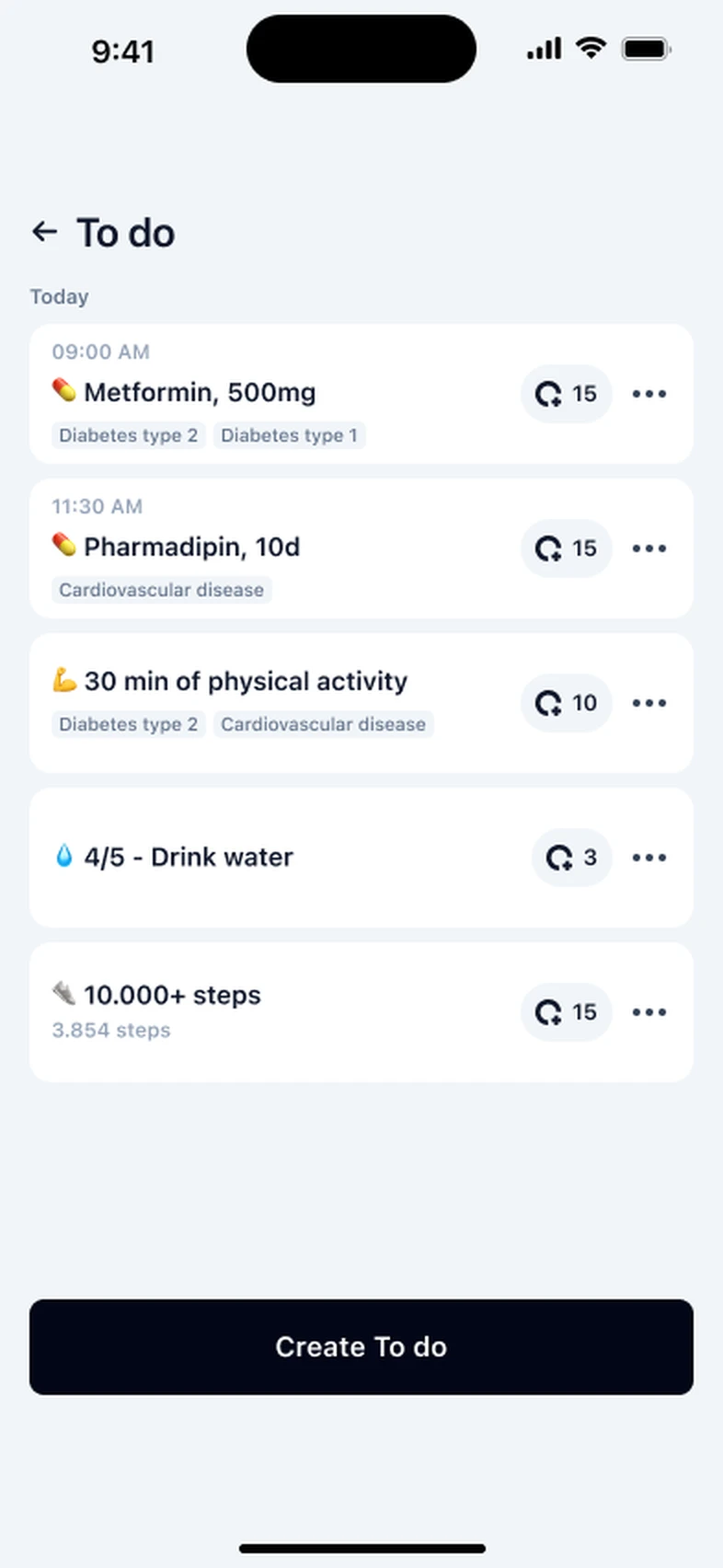
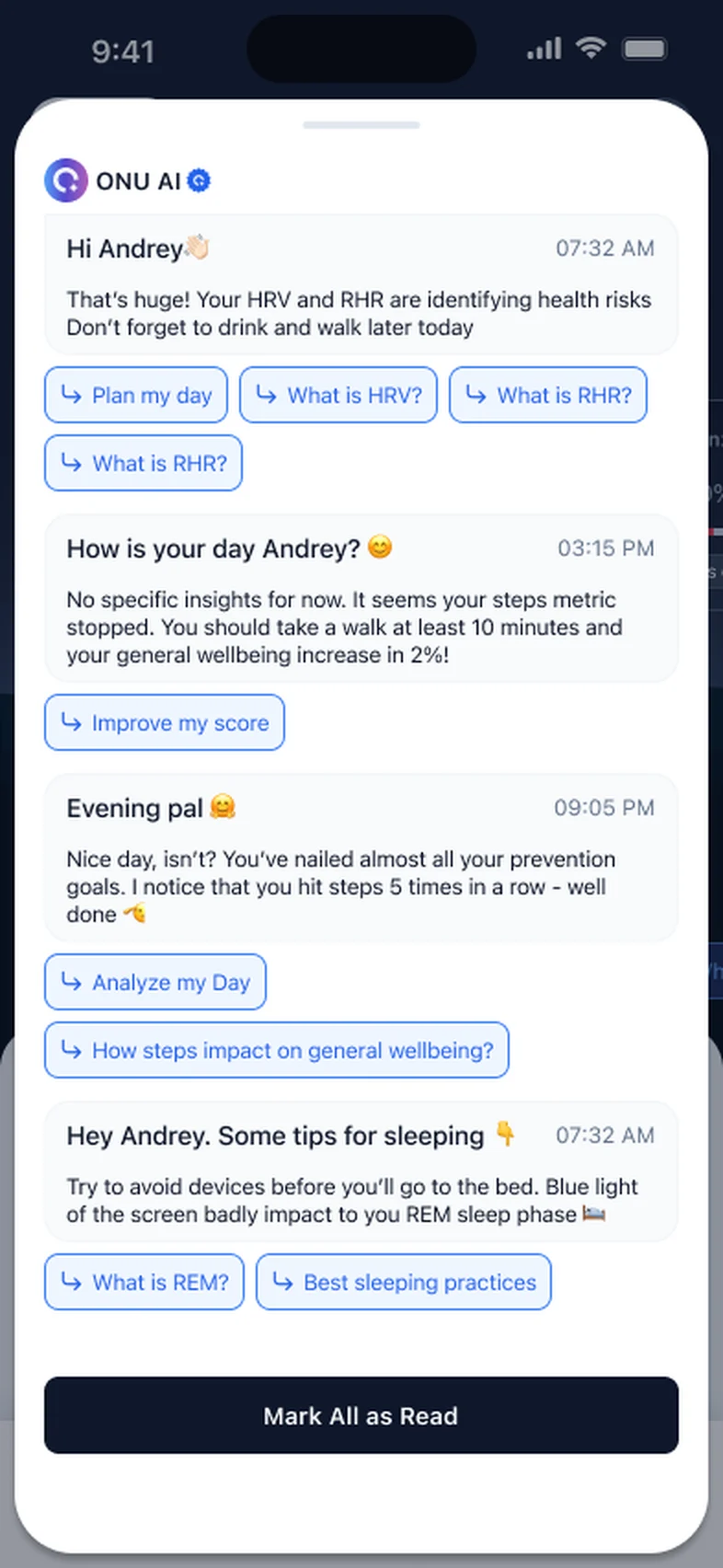
ONU's free prevention checks on the site cover eight areas, including type 2 diabetes, blood pressure, cholesterol, heart and circulation, thyroid, anaemia, weight, and stress and burnout. Each ends with a short summary you can bring to your appointment. The ONU app keeps your uploaded lab reports with your daily sleep, recovery and activity data, so your history is in one place.
ONU is a wellness product, not a medical device. It does not sell lab tests or replace a checkup. ONU Pro includes a call with a doctor if you need help understanding your results.
There are also questionnaires for nine conditions, each ending with a summary for your doctor.
Common questions
Does everyone need annual blood tests?
Not necessarily. Which tests you need, and how often, depends on your age, history and risk. Ask what is recommended for you.
How often should I have a checkup?
The NIA advises seeing a doctor at least once a year. Your clinician may suggest a different schedule depending on your health and local programmes.
Can a wearable replace a preventive checkup?
No. It can add context about sleep, heart rate and activity, but it cannot examine you or screen for disease.
How do I prepare if I only have ten minutes?
Bring your medicine list and write down your top two questions. Start with the one that matters most.
What family history should I mention?
Close relatives with heart disease, stroke, high blood pressure, diabetes, high cholesterol or cancer, and roughly the age they were diagnosed.
Is there a free checkup for adults in England?
Yes. The NHS Health Check is offered every five years to adults aged 40 to 74 who do not already have certain conditions such as heart disease, diabetes or high blood pressure. Contact your GP practice if you have not been invited.
Should I ask for extra tests just in case?
Ask why a test would help first. Extra tests can produce borderline results that lead to more tests without answering a real question.
Do I need to fast before my checkup?
Only if a test requires it. Cholesterol and blood sugar tests sometimes do. Ask when you book.
When should I start bowel cancer screening?
MedlinePlus lists screening from 45 to 75 for people at average risk. Talk to your doctor earlier if you have a strong family history.
Do I still need screening after 75?
It depends on the test and your health. MedlinePlus says bowel cancer screening between 76 and 85 is a decision to make with your provider, and is no longer needed after 85. Ask which tests are still useful for you.
What to do next
Sources and further reading
- USPSTF: Recommendationsuspreventiveservicestaskforce.org
- MedlinePlus: Understanding lab resultsmedlineplus.gov
- MedlinePlus: Health screenings for men ages 40 to 64medlineplus.gov
- MedlinePlus: Health screenings for women ages 40 to 64medlineplus.gov
- National Institute on Aging: What do we know about healthy aging?nia.nih.gov
- NHS: Steroidsnhs.uk
- MedlinePlus: Health screenings for men ages 18 to 39medlineplus.gov
- MedlinePlus: Health screenings for women age 65 and oldermedlineplus.gov
- NHS: NHS Health Checknhs.uk
General educational information, not a diagnosis or a personal treatment plan. Device information is identified separately from independent health guidance. Speak to a qualified professional about anything that concerns you.