HDL carries cholesterol back to your liver,
which removes it from your body. That is why it is called good cholesterol.
 Written and medically reviewed by Dr. Arup Sen, Consultant physician, internal medicine
The low HDL cholesterol meaning is simple at heart: you have less of the cholesterol that helps clear other cholesterol from your blood. The NHS says a healthy HDL is above 1.0 mmol/L for men and above 1.2 mmol/L for women. MedlinePlus says HDL below 40 mg/dL in men, or below 50 mg/dL in women, is low. Your lab report shows the range your lab uses.
HDL levels: healthy, low and best
which removes it from your body. That is why it is called good cholesterol.
healthy HDL is above 1.0 mmol/L for men and above 1.2 mmol/L for women.
HDL below 40 mg/dL in men or below 50 mg/dL in women is low. 60 mg/dL or higher is best.
Cholesterol moves around your blood inside particles called lipoproteins. HDL stands for high-density lipoprotein.
MedlinePlus explains that HDL carries cholesterol from other parts of your body back to the liver, which then removes it. The American Heart Association describes it as carrying LDL, the bad cholesterol, away from the arteries and back to the liver.
The AHA also says a healthy HDL level may help protect against heart attack and stroke, but that HDL does not eliminate LDL. Only a fraction of the cholesterol in your blood is carried by HDL. So a good HDL does not cancel out a high LDL. Your doctor will look at both. See our page on what is a good LDL level.
Think of HDL as a clean-up crew. A bigger crew helps, but it cannot keep up if too much is being dropped in the first place.
A low HDL result means less cholesterol is being carried away for removal. On its own, it does not tell you or your doctor much. Its meaning depends on the rest of your results and your history.
The CDC says that high triglycerides combined with low HDL or high LDL can raise the risk of heart attack and stroke. The AHA says this combination is linked with fatty build-ups in the arteries. That is why HDL is almost always read together with your LDL, triglycerides and total cholesterol.
The NHS says your GP combines your cholesterol levels with your age, blood pressure and health conditions to estimate your risk. They may give you a QRISK score, which estimates your chance of a heart or circulation problem over the next 10 years. Your HDL is part of that picture.
MedlinePlus and the AHA list several things that can lower HDL:
MedlinePlus lists these medicines as ones that can lower HDL:
MedlinePlus says that if you take one of these and your HDL is very low, ask your provider whether you should keep taking it. Do not stop a medicine on your own.
HDL is often called good cholesterol. A low level does not cause symptoms. It is one piece of the picture your doctor uses to estimate your risk of heart disease and stroke.
Below you will find what HDL does, the levels the sources use, what can push it down, and what you can do to help raise it. This page explains HDL in general. It does not interpret your own result.
UK labs usually report HDL in mmol/L. US labs usually use mg/dL. Here are the figures each source gives. Your lab report shows the range your lab uses.
| Group | Healthy HDL, mmol/L (NHS) | HDL, mg/dL (MedlinePlus) |
|---|---|---|
| Men, adults | Above 1.0 | Below 40 is low; 60 or higher is best |
| Women, adults | Above 1.2 | Below 50 is low; 60 or higher is best |
| Age 19 or younger | Not given | More than 45 |
mmol/L: NHS, Cholesterol levels. mg/dL: MedlinePlus, Cholesterol levels and HDL pages. The CDC gives an optimal HDL of at least 40 mg/dL in men and at least 50 mg/dL in women.
MedlinePlus says higher HDL is better, because a high level can lower the risk of coronary artery disease and stroke. It gives 60 mg/dL or higher as the best level for adults.
Still, a high HDL is not a free pass. The AHA reminds us that HDL does not remove all LDL. If your LDL is high, it still needs attention.
HDL is measured as part of a standard cholesterol test, so it follows the same schedule.
MedlinePlus recommends lifestyle changes first. These are the steps it and the NHS describe. Check with your doctor before big changes, especially if you have a heart condition.
MedlinePlus suggests 30 minutes of moderate to vigorous aerobic activity on most days. The NHS advises at least 150 minutes of moderate activity or 75 minutes of vigorous activity a week.
MedlinePlus says smoking and secondhand smoke can lower HDL. Ask your GP or a stop smoking service for help.
MedlinePlus suggests this swap, along with limiting sugar and refined carbohydrates and eating more high-fibre foods. The NHS suggests oily fish, olive or rapeseed oil, nuts and seeds, and wholegrains.
MedlinePlus says losing weight, especially fat around the waist, may raise HDL.
The NHS says avoid regularly drinking more than 14 units a week and have several drink-free days. MedlinePlus says too much alcohol can lower HDL through weight gain.
ONU does not sell lab tests and does not interpret your results. ONU is a wellness product, not a medical device.
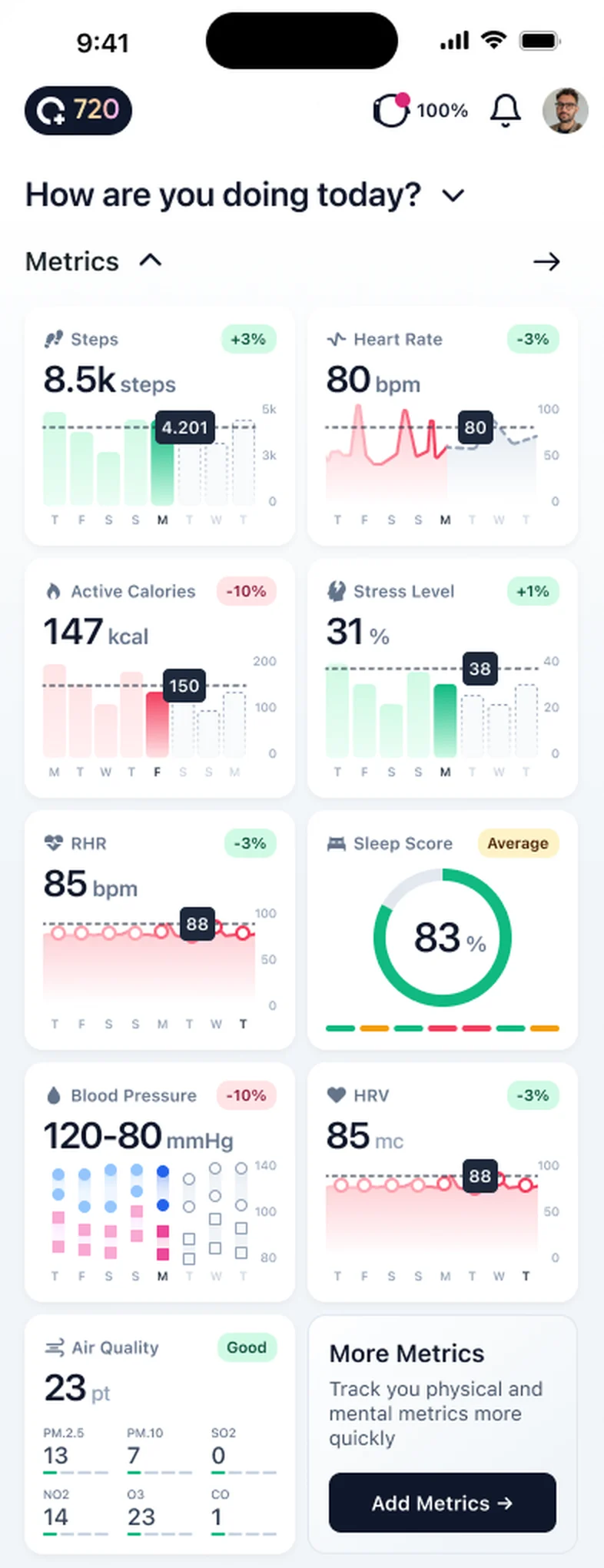
In the ONU app for iPhone, you can upload the lab reports you already have and store them. Your HDL and the rest of your cholesterol panel then sit next to your daily ONU Score and your sleep, recovery and activity trends. If you are working on moving more, for example, you can see your activity trend in the months between tests.
Before your next appointment, try the free cholesterol check. It ends with a summary you can take to your doctor. See also our pages on LDL and triglycerides.
See your GP or doctor if your HDL was flagged as low and nobody has talked you through your overall cholesterol and heart risk, if heart disease runs in your family, or if you take one of the medicines above and your HDL is very low.
Call 999 for heart attack signs. The NHS says call 999 if you have chest pain that feels tight or squeezing, chest pain spreading to your arms, neck or jaw, severe difficulty breathing, pale, blue or grey lips or skin, or if someone has passed out and is not responding normally. Do not drive yourself to A&E. Outside the UK, call your local emergency number.
Bring your everyday signals and health information into a clearer picture.