Creatinine is a waste product of creatine,
which your muscles use for energy. Your kidneys remove it, MedlinePlus says.
 Written and medically reviewed by Dr. Arup Sen, Consultant physician, internal medicine
Creatinine blood test high? It means there is more creatinine, a waste product from your muscles, in your blood than your lab expects. MedlinePlus gives a typical range of 0.7 to 1.3 mg/dL for men and 0.5 to 0.95 mg/dL for women. Your lab report shows the range your lab uses, so read your number against that first.
Typical creatinine ranges
which your muscles use for energy. Your kidneys remove it, MedlinePlus says.
Labs vary.
but also from dehydration, a blocked urinary tract or muscle breakdown (MedlinePlus).
Creatine is a chemical your body uses mainly to supply energy to your muscles. As your muscles use it, it breaks down into creatinine. MedlinePlus explains that your kidneys then filter creatinine out of your blood and into your urine.
If your kidneys are not working as well, MedlinePlus says less creatinine leaves in your urine, so the level in your blood rises. That makes creatinine a simple, widely used check on kidney function.
On its own, though, the number has limits. Someone with a lot of muscle can have a higher creatinine with healthy kidneys. Someone with little muscle can have a lower one even when their kidneys are struggling. That is why labs use creatinine, together with your age and sex, to estimate your eGFR. The NHS says doctors use the result with your age, size and gender to estimate how many millilitres of waste your kidneys filter each minute.
MedlinePlus says the test may also be ordered if you have high blood pressure or diabetes, or if a medicine overdose is suspected.
MedlinePlus lists these reasons creatinine can be higher than normal:
The NHS says chronic kidney disease (CKD) is usually caused by conditions that strain the kidneys, often in combination: high blood pressure, diabetes, high cholesterol, kidney infections, kidney inflammation, inherited cysts, urine blockages and long-term use of some medicines, such as lithium and NSAIDs.
MedlinePlus says lower than normal creatinine may be due to muscle and nerve conditions that reduce muscle mass, or malnutrition.
A low reading is often less of a concern than a high one, but it can also make your eGFR look better than it is. The National Kidney Foundation lists unusual muscle mass and malnutrition among things that can affect the accuracy of eGFR. If your result is flagged as low, ask your doctor whether it needs a follow-up.
Your doctor will usually look at your eGFR, and often repeat the test. The National Kidney Foundation says trends over time are often more useful than a single number, and suggests asking about a repeat eGFR in 3 months.
They may also check your urine. The NHS says a urine test measures albumin and creatinine to give an albumin:creatinine ratio (ACR). NIDDK explains that albumin is a protein that passes into urine when the kidneys are damaged.
If there is a clear reason, such as dehydration or a new medicine, your doctor may simply retest once that has settled. If the result stays high, they will look at your blood pressure, blood sugar and medicines, and may stage any kidney disease.
Your kidneys clear creatinine from your blood. So when the level rises, doctors want to know whether your kidneys are filtering as well as they should. But creatinine also depends on your muscle size, how much water you have had and some medicines. One high reading is a reason to look closer, not a verdict.
This page explains what creatinine is, what a high or low result can mean, what can affect it and what you can do. It explains the marker in general. It does not interpret your own result.
These are the ranges MedlinePlus gives for serum creatinine. Your lab report shows the range your lab uses, and that is the one your result should be read against.
| Group | mg/dL | µmol/L | Source |
|---|---|---|---|
| Men | 0.7 to 1.3 | 62 to 115 | MedlinePlus |
| Women | 0.5 to 0.95 | 44 to 84 | MedlinePlus |
Source: MedlinePlus (Creatinine blood test). MedlinePlus says women often have lower levels because they usually have less muscle mass, levels vary with body size and muscle mass, and ranges can differ slightly between labs.
The NHS says CKD cannot always be prevented, but you can lower the chances. These steps come from the NHS and NIDDK. Talk to your doctor before big changes, especially if you already have kidney disease.
The NHS says manage long-term conditions like diabetes and high blood pressure. NIDDK calls blood pressure control the most important step for people with CKD.
The NHS says taking too many NSAIDs, such as ibuprofen, or taking them for too long, can cause kidney disease. Follow the instructions on the pack and ask a pharmacist if unsure.
The NHS suggests at least 5 portions of fruit and vegetables a day and keeping saturated fat, salt and sugar low.
The NHS advises at least 150 minutes of moderate aerobic activity a week, plus strength exercises on 2 or more days.
The NHS links smoking to cardiovascular disease and a higher risk of CKD. NIDDK says quitting slows kidney damage.
The NHS says do not regularly drink more than 14 units a week, and spread drinking over 3 days or more.
See your GP or doctor if your creatinine is above your lab's range and nobody has talked it through with you, or if you have diabetes, high blood pressure or a family history of kidney disease and have not been tested.
The NHS says to see a GP if you have persistent or worrying symptoms that could be caused by kidney disease. Later symptoms it lists include tiredness, swollen ankles, feet or hands, shortness of breath, feeling sick and blood in your urine. The National Kidney Foundation adds itching, muscle cramps, loss of appetite, and peeing more or less than usual.
If you feel suddenly and seriously unwell, get urgent medical help. In the UK, call NHS 111, or 999 in an emergency. Elsewhere, call your local emergency number.
ONU does not sell lab tests and does not interpret your results. ONU is a wellness product, not a medical device.
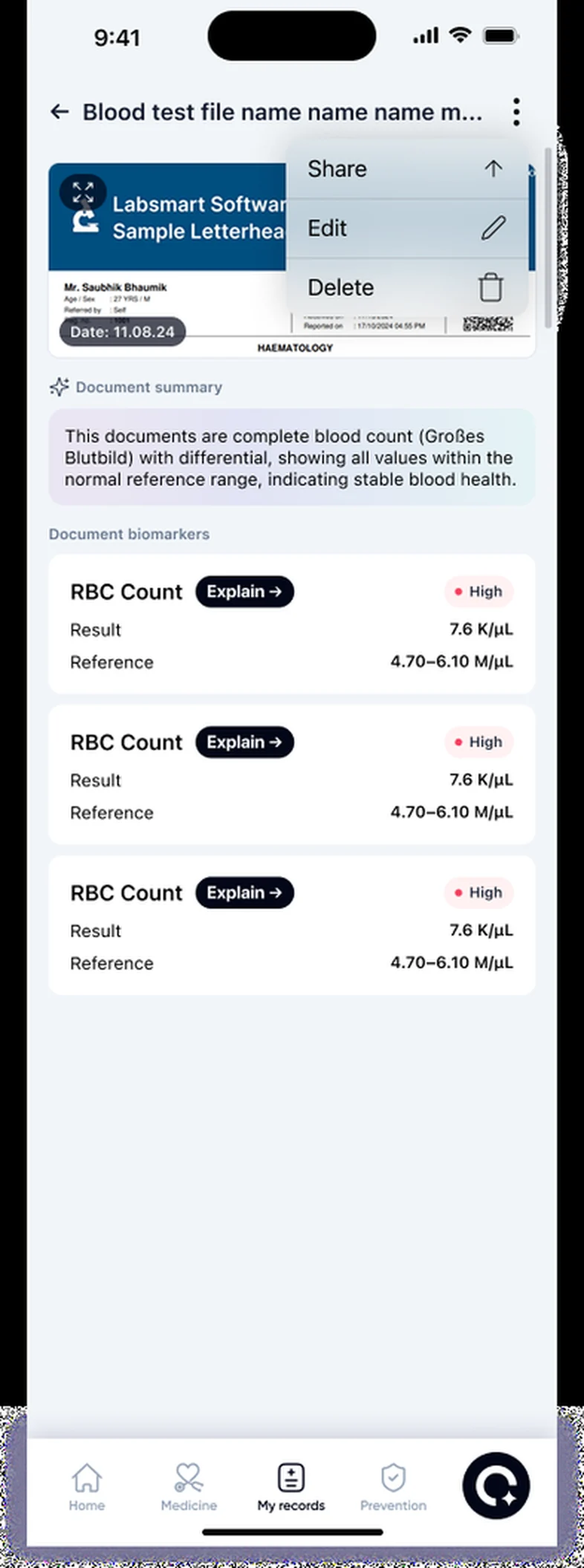
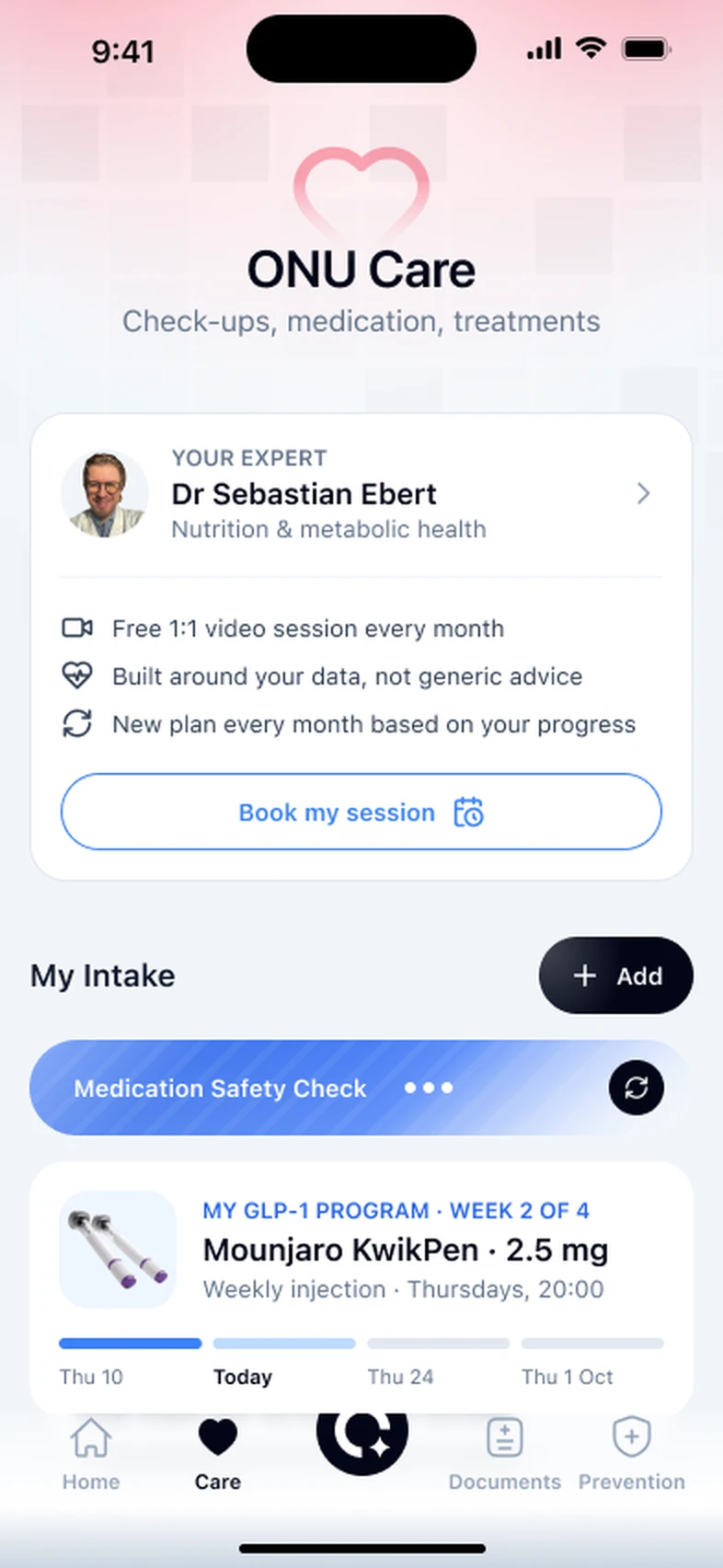
In the ONU app for iPhone, you can upload your lab reports and keep them in one place. Your creatinine and eGFR results then sit next to your daily ONU Score and your sleep, recovery and activity trends. Because a trend tells your doctor more than one reading, having every report in one place helps.
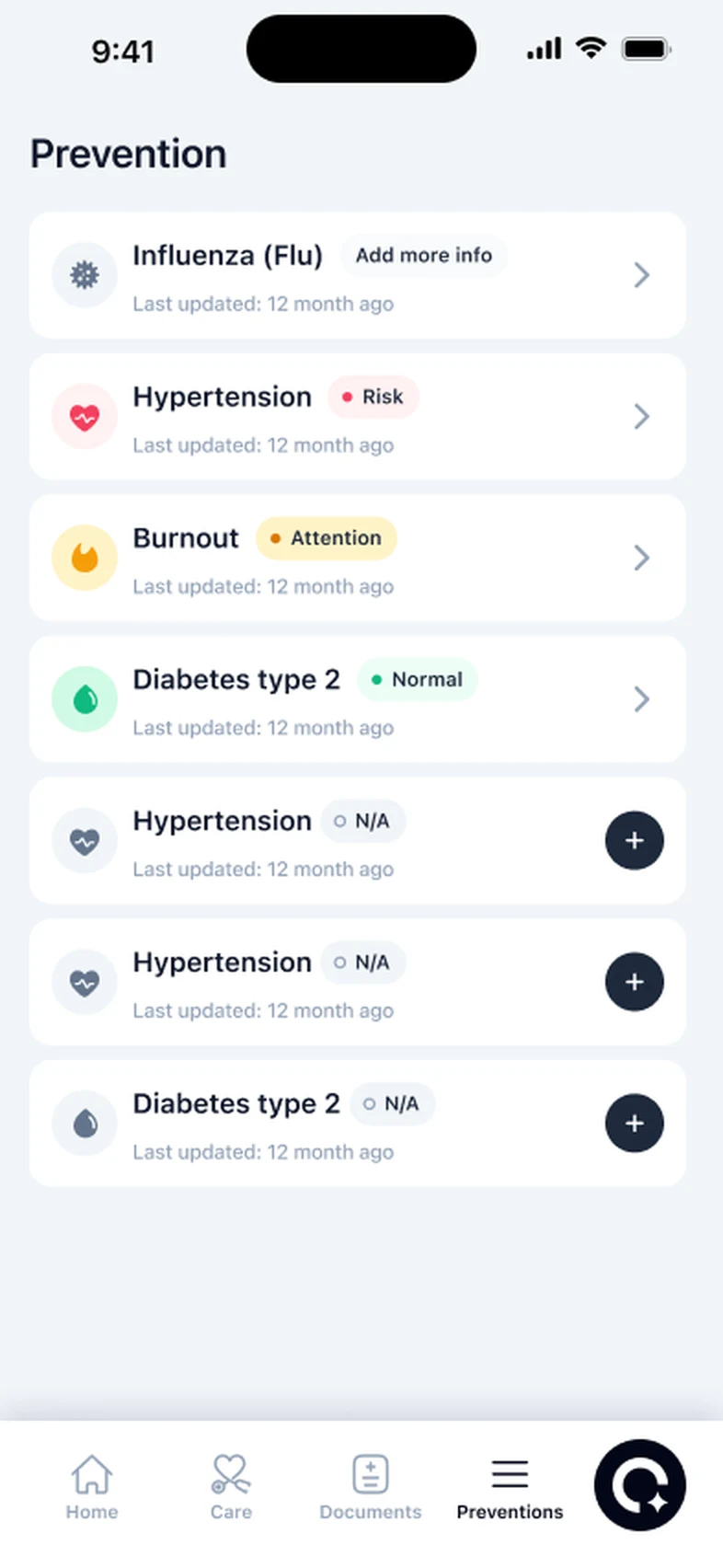
High blood pressure is one of the main strains on the kidneys. Try the free blood pressure check, which ends with a summary to take to your doctor. See also eGFR, uric acid, HbA1c and blood test results explained.
Bring your everyday signals and health information into a clearer picture.