CRP is a marker of inflammation
MedlinePlus says your liver makes it in response to inflammation. Levels rise and fall with how much inflammation there is.
 Written and medically reviewed by Dr. Arup Sen, Consultant physician, internal medicine
If you are looking up high CRP blood test meaning, you have probably seen a raised number next to C-reactive protein on your report. CRP is a protein your liver makes in response to inflammation. A high level tells you that inflammation is going on somewhere in your body, but not where, and not why.
Typical CRP levels, with units
MedlinePlus says your liver makes it in response to inflammation. Levels rise and fall with how much inflammation there is.
Infection, autoimmune conditions, inflammatory bowel disease and many other things can raise it.
Standard CRP looks for larger rises, for example with infection. High-sensitivity CRP (hs-CRP) detects very small rises and is used to estimate heart disease risk.
Inflammation is your body’s way of protecting tissue and helping it heal. MedlinePlus explains that short-term (acute) inflammation is usually helpful, for example when you fight off an infection. Long-term (chronic) inflammation can damage healthy tissue over time.
When inflammation starts, your liver releases more CRP into your blood. A CRP test measures that amount. MedlinePlus says the result shows how much inflammation is present, but not its cause or where it is.
Doctors use the standard CRP test to look for signs of a bacterial infection, to check for chronic inflammatory conditions, to watch for infection after surgery, and to follow how a known condition responds to treatment. MedlinePlus says it can also help guide treatment in sepsis, a life-threatening reaction to infection.
The high-sensitivity test, hs-CRP, measures the same protein but picks up much smaller amounts. The American Heart Association describes hs-CRP as a marker of inflammation linked to a higher risk of heart attack or stroke, and notes that it is a sign of inflammation, not its cause.
MedlinePlus says a high CRP means there is inflammation in the body, but the cause often cannot be found from CRP alone. It lists these as possible causes of a raised result:
The hs-CRP test is read differently. The levels below estimate heart disease risk. They are not used to diagnose an infection.
| hs-CRP result | Unit | Heart risk level (American Heart Association, via MedlinePlus) |
|---|---|---|
| Below 1.0 | mg/L | Low risk |
| 1.0 to 3.0 | mg/L | Average risk |
| Above 3.0 | mg/L | High risk |
The American Heart Association says hs-CRP testing may be considered when a clinician estimates your 10-year heart disease risk as borderline, neither very high nor very low.
MedlinePlus also lists things that can raise CRP without an infection or a specific disease:
Long-term, low-grade inflammation has been linked to heart disease. The American Heart Association reports that this link was first described in studies in the 1990s, and that an hs-CRP test can add to the picture your doctor already has from things like blood pressure and cholesterol.
The American Heart Association says that if two hs-CRP results in a row are high, a clinician will try to rule out other sources of inflammation and may then talk through next steps. These can include a statin to lower the risk of a heart attack. For the cholesterol side of the picture, see LDL cholesterol.
This page explains the two versions of the test, standard CRP and high-sensitivity CRP (hs-CRP), the levels MedlinePlus and the American Heart Association describe, and the common causes of a raised result. It also covers what can push the number up temporarily, and when a high CRP needs urgent care.
Labs report CRP in different units and use different ranges. Your lab report shows the range your lab uses, so compare your number with that, and ask the doctor who ordered the test what it means for you.
The tables below show how MedlinePlus describes CRP results. The first is for the standard test. The second is for hs-CRP, using the American Heart Association risk levels that MedlinePlus quotes. Your lab report shows the range your lab uses, and the unit matters: check whether your result is in mg/dL or mg/L.
| Standard CRP result | Unit | What MedlinePlus says |
|---|---|---|
| Less than 0.3 | mg/dL | Where most healthy adults are |
| 0.3 to 1 | mg/dL | A minor rise; its meaning is unclear |
| 1 to 10 | mg/dL | A moderate rise |
| Above 10 | mg/dL | A marked rise |
MedlinePlus says CRP tends to be slightly higher with age, in women and in African Americans, and that ranges vary between labs.
A low CRP is the usual, expected result. MedlinePlus says healthy people have very low CRP. On an hs-CRP test, a result below 1.0 mg/L is in the low-risk band.
MedlinePlus adds a caution: a low CRP does not always rule out inflammation. In some conditions, such as rheumatoid arthritis and lupus, CRP may not rise. That is why your doctor reads the result alongside your symptoms and other tests.
You cannot treat a CRP number directly. What you can do is look after the things that drive inflammation and heart risk. These steps come from the American Heart Association.
The American Heart Association lists regular physical activity among the main steps to lower heart risk, and says exercise helps fight inflammation, partly by reducing body fat.
The American Heart Association says cigarette smoke can trigger chronic inflammation. MedlinePlus lists smoking as a cause of higher CRP.
The American Heart Association reports a study of more than 210,000 people followed for up to 32 years. Those eating the most pro-inflammatory diets had a 46% higher risk of heart disease and a 28% higher risk of stroke than those eating anti-inflammatory diets. Green leafy and yellow vegetables and whole grains were linked to less inflammation; refined grains, sugary drinks and processed and red meats to more.
The American Heart Association says obesity can trigger chronic inflammation, and lists managing weight among the steps to take.
The American Heart Association says lack of sleep and chronic stress may both promote inflammation. Your sleep and recovery trends can help you spot long runs of short nights.
The American Heart Association’s advice is to tackle exercise, smoking and diet first, then control blood pressure and cholesterol with your doctor.
ONU does not sell lab tests, and it does not read or interpret your results. That is for the doctor who ordered your test.
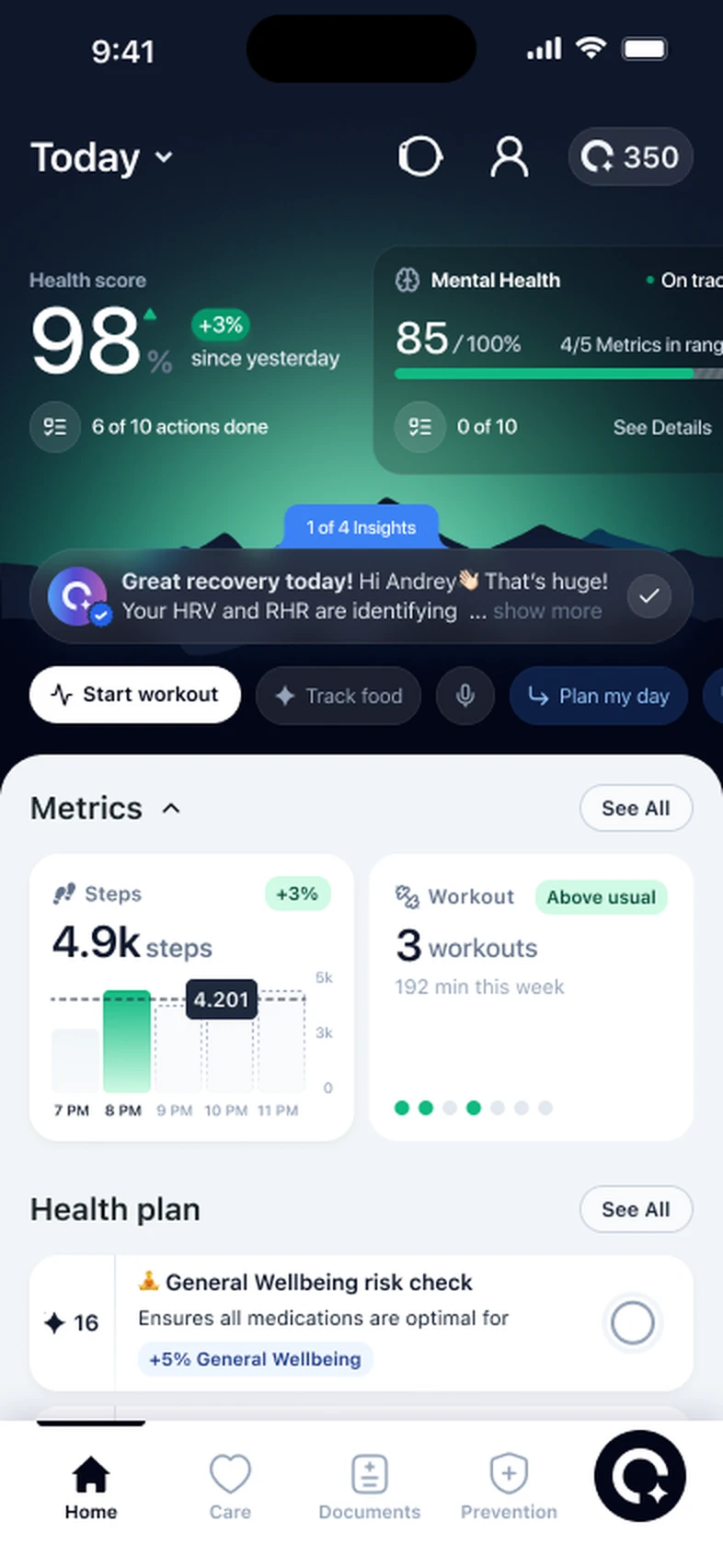
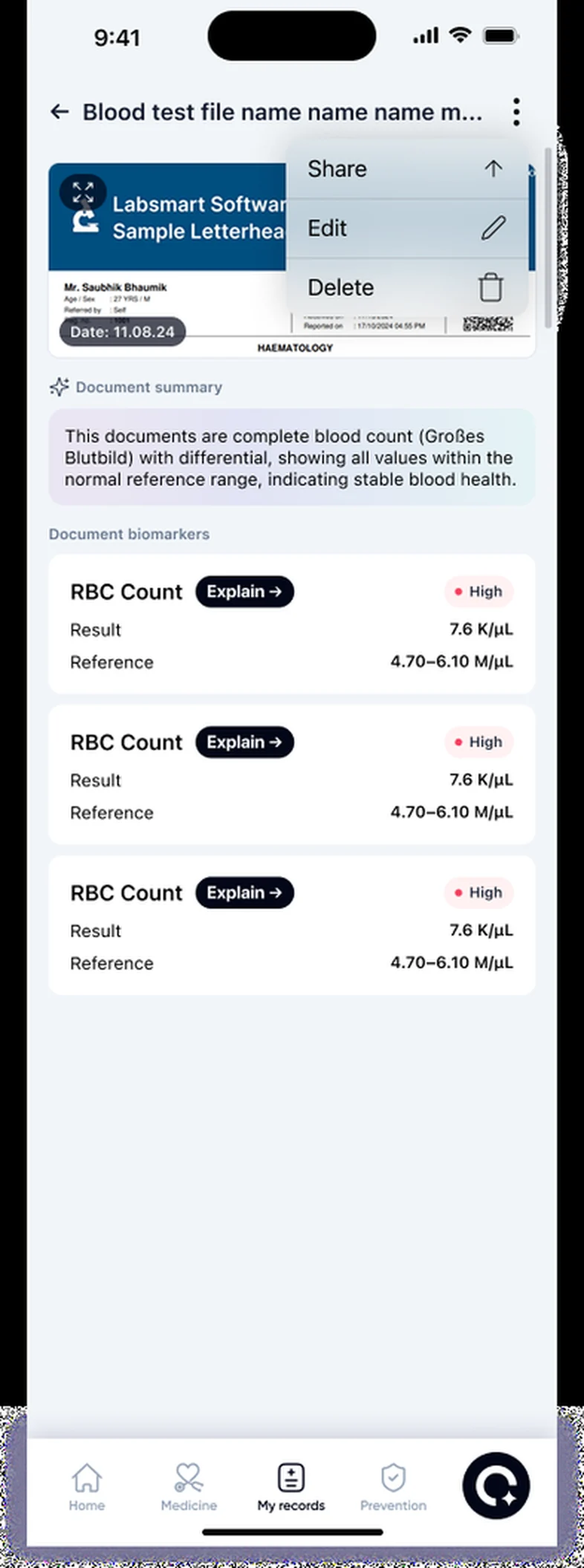
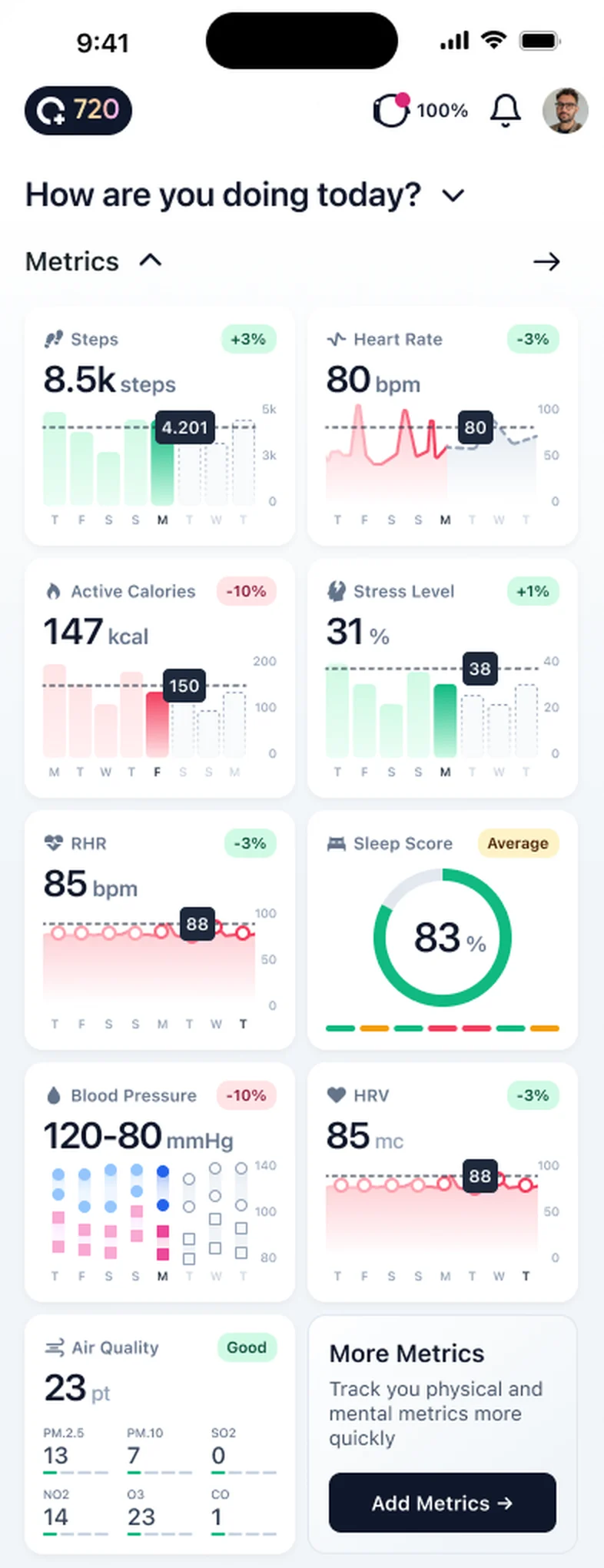
In the free ONU app on iPhone, you can upload and store your lab reports, including CRP and hs-CRP, and see them next to your daily sleep, recovery and activity trends. Because CRP can rise after a cold, and lack of sleep may promote inflammation, it can help to see what was going on in the days around a test when you talk to your doctor.
For a wider look at your heart, try the free heart and circulation check. It ends with a summary you can take to your appointment. For the rest of your report, see blood test results explained.
See your doctor if your CRP is raised and nobody has explained it yet, if you have ongoing symptoms that worry you, or if an hs-CRP result puts you in a higher-risk band and you want to talk about your heart.
A high CRP can be part of a serious infection. The NHS says to call 999 or go to A&E if an adult or child over 5 is breathing very fast; is confused, has slurred speech or is not making sense; has blue, pale or blotchy skin; has a very high or very low temperature, feels hot or cold to the touch or is shivery; has a rash that does not fade when you press it; or has symptoms you are worried might be sepsis. Outside the UK, call your local emergency number. See emergency information.
Bring your everyday signals and health information into a clearer picture.