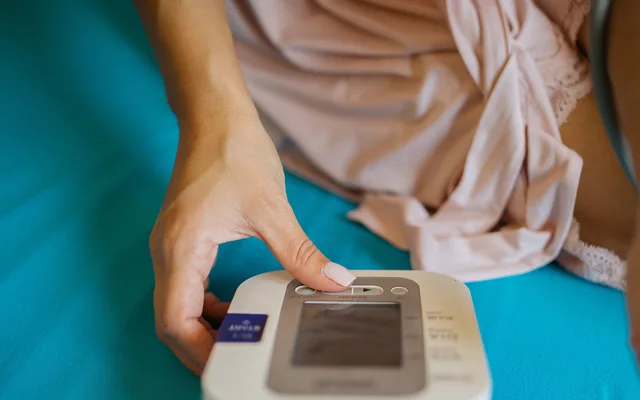
Know which numbers your clinician needs
Blood pressure, the full lipid panel, blood sugar, smoking status and family history. Walk in with them ready instead of booking a second appointment.
 Written and medically reviewed by Dr. Arup Sen, Consultant physician, internal medicine
This heart disease risk check does not invent a score. It shows you which numbers a real risk calculation needs, such as blood pressure and cholesterol, and helps you collect them for an appointment.
Six questions. They do not produce a risk figure — the supplied cardiovascular model blends two validated scores in a way that does not reproduce either. What they produce is the list a clinician would want in front of them.
ONU does not publish a score for this area — the supplied model has unresolved gaps, and a number with no settled meaning would be worse than none. What this gives you is a sheet to take to an appointment.
Educational information to prepare a conversation with your doctor. ONU does not diagnose, predict or prevent disease.
Blood pressure, the full lipid panel, blood sugar, smoking status and family history. Walk in with them ready instead of booking a second appointment.
Validated cardiovascular calculators need specific inputs measured in specific ways. Knowing what they are tells you what to ask for.
You get a clear account of why ONU is not publishing a cardiovascular percentage, instead of a confident-looking figure with nothing behind it.
Resting heart rate, heart-rate variability and activity from your connected wearable.
Recent blood pressure readings and your last lipid panel are the two that matter most.
A clinician can run a validated risk calculator properly, with your real numbers and your real history.
Activity, smoking, blood pressure and weight are all modifiable, and all visible in the app over time.
Take the list above to an appointment, and keep the everyday signals in view in the ONU app between visits.
A heart disease risk check is honest only if it knows its limits. Real risk calculators need measured numbers, such as blood pressure and cholesterol, and a clinician to run them properly. This page explains what those numbers are, how to gather them, and what you can change in the meantime.
Cardiovascular disease is an umbrella term. ONU's cardiovascular reference model describes four main areas: coronary heart disease, which includes heart attacks and angina; cerebrovascular disease, which includes stroke and transient ischemic attack (a mini-stroke); peripheral artery disease, which often shows up as leg pain when walking; and disease of the aorta, the body's main artery.
Most of these share a root cause. Fatty deposits build up in the artery walls over decades, narrowing them and making them stiffer. That process is shaped by blood pressure, cholesterol, blood sugar, smoking and inflammation. It is slow, silent and, for a long time, changeable.
That is why heart disease prevention focuses on numbers you can measure and habits you can change, years before anything is felt.
Heart disease is not only a concern for older men. It affects women too, and risk factors laid down in your twenties and thirties shape what happens decades later.
ONU's cardiovascular reference model groups risk factors into those you cannot change and those you can. Knowing both helps a doctor decide what to check and how often.
| Cannot change | Can change or treat | Other conditions that add risk |
|---|---|---|
| Age, which carries the most weight in the model | Smoking and tobacco use | Chronic kidney disease |
| Early heart disease in a parent, brother or sister | High blood pressure | Inflammatory conditions such as rheumatoid arthritis or lupus |
| Ethnicity: higher risk in South Asian, African and Indigenous populations | High LDL, low HDL or high triglycerides | Sleep apnea |
| Early menopause | Diabetes and raised blood sugar | Depression and long-term psychological stress |
| Past chest radiation for cancer treatment | Extra weight, especially around the middle | Endometriosis, HIV |
| Physical inactivity, excess alcohol, short sleep and chronic stress |
Most risk builds without symptoms, which is why measuring matters. But some signals are easy to dismiss.
Chest tightness, unusual breathlessness or a racing heart when you climb stairs or hurry, which settles when you rest. Leg pain or cramping in the calf when walking that eases when you stop, which can be a sign of narrowed leg arteries. Getting more tired with exertion than you used to, without another explanation. Brief episodes of numbness, weakness, blurred vision or trouble speaking that pass within minutes, which can be a transient ischemic attack and need urgent assessment even after they resolve.
If any of these sound familiar, do not wait for a routine check. Tell a doctor soon, and say it first in the appointment. The check above flags exertion symptoms for exactly that reason.
These are the screenings the American Heart Association recommends for adults, with the starting ages and how often to repeat them.
| Screening | When to start | How often |
|---|---|---|
| Blood pressure | Every routine visit, at all ages | At least once a year if normal (below 120/80 mmHg), more often if higher |
| Cholesterol (lipid panel: total, LDL, HDL, triglycerides) | Age 20 | Every 4 to 6 years at normal risk, more often if risk is raised |
| Blood glucose or HbA1c | Age 45, or earlier if overweight with another risk factor | At least every 3 years |
| Weight, BMI and waist | Every routine visit | Waist checked when BMI is 25 or more |
| Smoking, activity and diet | Every routine visit | Discussed each time |
| 10-year cardiovascular risk estimate | Age 40 | Recalculated as your numbers change |
A 10-year risk estimate combines age, sex, blood pressure, cholesterol, diabetes and smoking, among other inputs, using a validated equation. Examples include the AHA's calculators in the US, QRISK in the UK and the ESC's HeartScore in Europe. Your clinician will use the one that fits where you live. Already have results? The guides to LDL cholesterol, HbA1c and CRP explain one number each.
Each risk factor matters, but they matter far more in combination. A slightly raised blood pressure in a non-smoker with good cholesterol is a different situation from the same reading in someone who smokes and has diabetes. That is why validated calculators take several inputs at once rather than judging any one number alone.
It also explains why small changes across several factors can add up. Stopping smoking, bringing blood pressure down a little, moving more and improving cholesterol each shift the picture, and together they shift it further than any one change alone.
For you, the practical point is simple. Do not let one normal result reassure you about everything, and do not let one high result frighten you about everything. Gather the whole set, and look at it with someone who can weigh it properly.
The check above asks six questions: whether you know your blood pressure, when your cholesterol was last measured, whether you smoke, whether a close relative had early heart disease or stroke, whether you get symptoms on exertion, and which medicines you take. It turns your answers into a sheet for an appointment: what to mention, what to bring, and what to ask.
It does not produce a score or a percentage, and that is deliberate. ONU's cardiovascular reference model blends parts of two published risk tools in a way that does not reproduce either, so a number from it would look precise and mean very little. A validated calculator, run by a clinician with your measured blood pressure and cholesterol, gives you a figure worth acting on.
What you get instead is preparation. Walking in with your numbers ready usually means one appointment instead of two.
If you have answered with "not sure" to any question, that is useful too. It tells you exactly which number to chase before the appointment: a pharmacy blood pressure check, a copy of an old lipid result from your practice, or a phone call to a relative about family history.
Most of what lowers heart risk happens outside the clinic. The CDC names a short list of risk behaviors behind most chronic diseases: tobacco use, poor nutrition, physical inactivity and excessive alcohol.
ONU's reference model gives smoking one of the heaviest weights of any factor you can change. Ask about stopping support. It works better than willpower alone.
The CDC suggests at least 150 minutes a week of moderate activity plus muscle-strengthening on two days. In the model, more active days and regular strength training pull risk down.
The model counts fruit and vegetables, whole grains and fish in your favor, and processed food, fast food, red meat and sugary drinks against you.
The CDC recommends at least seven hours of sleep for adults. Short sleep and chronic stress both appear in the model as risk factors.
Measuring cholesterol and blood sugar, calculating your risk, deciding on medicines such as statins or blood pressure treatment, and investigating symptoms all need a professional.
The ONU app builds a daily ONU Score from sleep, recovery signals such as heart rate variability and resting heart rate, and activity, compared with your own baseline. Over weeks, those trends show whether you are moving more and sleeping better. You can upload lab reports, so your lipid panels and HbA1c results are in one place. To read those two signals well, see what a good HRV is. If you are choosing a tracker for this, see how ONU compares with Oura.
ONU is a wellness product, not a medical device. It does not diagnose heart disease, detect heart attacks or calculate cardiovascular risk.
Book a routine appointment if you are 40 or older and have never had a 10-year risk estimate, if your last cholesterol test was more than 4 to 6 years ago, or if a parent or sibling had a heart attack or stroke young. Those are the AHA screening points in the table above.
Call local emergency services straight away for chest pain, pressure or tightness, especially if it spreads to the arm, neck, jaw, back or stomach, or comes with breathlessness, a cold sweat, nausea or lightheadedness. Symptoms can be less obvious in women, older people and people with diabetes, so take unusual breathlessness or discomfort seriously.
For stroke, think face, arms, speech, time: a face drooping on one side, weakness in one arm, slurred or strange speech. Call emergency services immediately, even if symptoms pass.
Fainting, a very fast or irregular heartbeat with dizziness, or sudden severe breathlessness also need urgent care.