Total cholesterol is the sum of the cholesterol in your blood,
including LDL (bad) and HDL (good) cholesterol, MedlinePlus says.
 Written and medically reviewed by Dr. Arup Sen, Consultant physician, internal medicine
The total cholesterol normal range for adults is below 200 mg/dL, according to MedlinePlus. In the UK, the NHS gives a healthy total cholesterol as under 5 mmol/L. Both describe the same idea in different units. Your lab report shows the range your lab uses, so read your own number against that first.
Total cholesterol normal range by age and units
including LDL (bad) and HDL (good) cholesterol, MedlinePlus says.
(MedlinePlus). For people aged 19 or younger, it is below 170 mg/dL.
UK reports usually show mmol/L, US reports usually show mg/dL.
Cholesterol is a fatty substance in your blood. Your body needs some of it. Too much can clog your blood vessels, which raises the risk of heart problems and stroke, according to the NHS.
Cholesterol travels in particles called lipoproteins. The two you hear about most are LDL, often called bad cholesterol, and HDL, often called good cholesterol. MedlinePlus describes total cholesterol as all the cholesterol in your blood, including HDL and LDL.
The American Heart Association explains how the total is usually worked out: your HDL plus your LDL plus 20% of your triglyceride level. So if one of those parts changes, your total changes too.
That is also why the total can mislead on its own. A higher HDL raises your total, but HDL is the kind that helps carry cholesterol back to your liver. You can read more on the HDL page and the LDL page.
A cholesterol test is sometimes called a lipid panel or lipid profile. The CDC says it usually measures cholesterol and triglyceride levels. Many reports list total cholesterol first, then LDL, HDL and triglycerides. UK reports often add non-HDL cholesterol.
The NHS says target levels depend on things like your age, whether you have any health conditions and your risk of cardiovascular disease. Your GP may also give you a QRISK score. That score estimates your chance of a heart or circulation problem over the next 10 years.
The American Heart Association says your healthcare professional looks at your cholesterol together with your age, family history, smoking, diabetes and high blood pressure. It says total cholesterol and HDL help predict your lifetime or 10-year risk of heart attack or stroke.
So the same number can lead to different advice. Picture two people with a total of 210 mg/dL. One is 35, does not smoke and has a high HDL. The other is 60, smokes and has diabetes. Their doctors are likely to talk about it in very different ways.
A total above your lab's range means there is more cholesterol in your blood than expected. The next question is which part is high. A high LDL or non-HDL usually matters more than a high HDL.
Over time, extra cholesterol can build up in your arteries. MedlinePlus says LDL is the main contributor to this plaque, which can narrow or block arteries and lead to heart attack, stroke or peripheral artery disease.
The NHS lists common reasons cholesterol runs high:
The sources we used describe lower LDL and higher HDL as generally better for heart health. They do not set a lower limit for total cholesterol in adults.
If your report flags your total as low, or if it has dropped a lot without a clear reason, ask the doctor who ordered the test what it means for you. They can look at it alongside your other results and your health.
Total cholesterol is the headline number on a cholesterol test. It adds up the cholesterol in your blood, the helpful kind and the harmful kind together. That makes it a useful first look, but it is not the whole story. Two people with the same total can have very different risk.
This page explains what total cholesterol measures, the typical ranges, what can push it up or down, and what you can do. It explains the marker in general. It does not interpret your own result.
These are the healthy levels the sources give. Your lab report shows the range your lab uses, and that is the range your result should be read against. Your doctor may set a different goal for you.
| Group | Healthy total cholesterol | Source |
|---|---|---|
| Aged 19 or younger | Below 170 mg/dL | MedlinePlus |
| Men aged 20 and older | Below 200 mg/dL | MedlinePlus |
| Women aged 20 and older | Below 200 mg/dL | MedlinePlus |
| Adults (UK) | Under 5 mmol/L | NHS |
| Optimal (adults) | About 150 mg/dL | AHA, CDC |
| May be considered high | Above 200 mg/dL | CDC |
Sources: MedlinePlus (Cholesterol levels: what you need to know), NHS (Cholesterol levels), American Heart Association (What your cholesterol levels mean) and CDC (About cholesterol). The CDC also says high or borderline high cholesterol means a total of 200 mg/dL or higher. MedlinePlus advises comparing results from the same lab, because labs use different ranges and units.
Because high cholesterol has no symptoms, testing is the only way to know. Testing schedules from the sources:
The NHS says healthy eating and more exercise can lower cholesterol, and some people also need medicine. MedlinePlus says lifestyle changes are the first step, and people who take cholesterol medicine should keep them up. Talk to your doctor before big changes.
The NHS suggests more oily fish such as mackerel and salmon, olive or rapeseed oil, nuts and seeds, and less fatty meat, sausages, butter, lard, ghee, cream, cheese, cakes and biscuits. Checking food labels for fat helps.
The NHS advises at least 150 minutes of moderate activity or 75 minutes of vigorous activity a week. It suggests brisk walking, swimming or cycling as good places to start.
The NHS lists brown rice, wholegrain bread and wholewheat pasta, plus plenty of fruit and vegetables.
MedlinePlus recommends losing at least 5% of your body weight if your cholesterol is high and you carry extra weight.
The NHS says smoking can raise your cholesterol. MedlinePlus adds that it lowers HDL. Your GP or a stop smoking service can help.
The NHS says avoid regularly drinking more than 14 units a week, spread drinking over 3 or more days, and have several alcohol-free days.
MedlinePlus says statins are one option when lifestyle changes are not enough. Your doctor decides this with you, based on your overall risk.
See your GP or doctor if your total cholesterol is outside your lab's range and nobody has talked it through with you, if close family members had high cholesterol or heart problems at a young age, or if you have never been tested and fit the groups above.
Call 999 for heart attack signs. The NHS says call 999 if you have chest pain that feels tight or like squeezing, chest pain spreading to your arms, neck or jaw, severe difficulty breathing, pale, blue or grey lips or skin, or if someone has passed out and is not responding normally. Do not drive yourself to A&E. Outside the UK, call your local emergency number.
ONU does not sell lab tests and does not interpret your results. ONU is a wellness product, not a medical device.
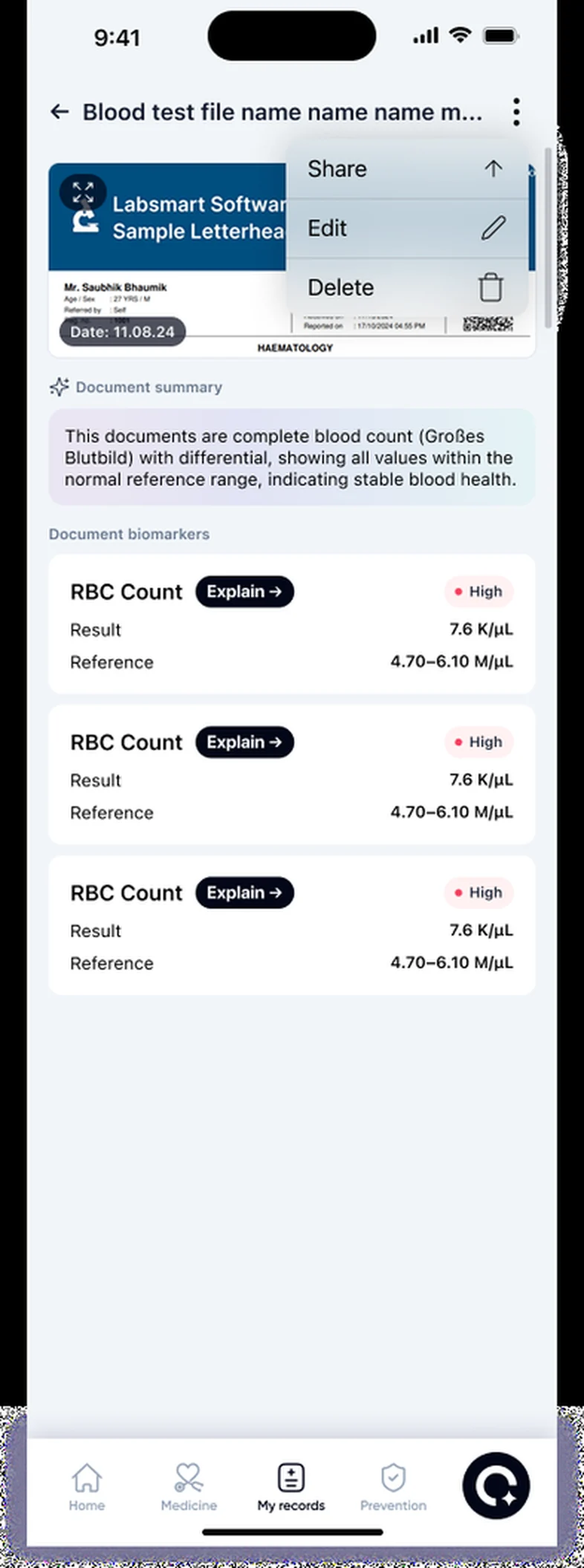
In the ONU app for iPhone, you can upload your lab reports and keep them in one place. Your cholesterol results then sit next to your daily ONU Score and your sleep, recovery and activity trends. When you retest in a year, you can see how the months in between went: how much you moved, how you slept.
Before your appointment, try the free cholesterol check. It ends with a summary to take to your doctor. For help with the rest of your report, see blood test results explained.
Bring your everyday signals and health information into a clearer picture.