

IBS symptoms test: a questionnaire about your pattern
 Written and medically reviewed by Dr. Arup Sen, Consultant physician, internal medicine
This IBS symptoms test is a short history questionnaire. IBS is diagnosed from a pattern of symptoms and from ruling other things out, so a clear description is the most useful thing you can bring.
Irritable bowel syndrome is a disorder of gut–brain interaction: recurrent abdominal pain tied to defecation, with a change in stool frequency or form, and no structural disease to explain it. It is diagnosed positively, on symptom criteria, but the alarm features that point elsewhere have to be absent first.
Worth answering if your gut symptoms have run for months, come and go with stress or food, and you want to describe the pattern accurately.
- Abdominal pain tied to opening your bowels — better after, or worse before
- Stools that swing between loose and hard
- Bloating that builds through the day and settles overnight
- Symptoms that flare with stress, or with particular meals
- Months of this, with nothing found on tests
Bleeding, weight loss you did not intend, waking at night with symptoms, or symptoms starting after fifty are not IBS features and need a clinician’s eye.
Three steps, in the order a clinician takes them.
- 1
IBS is diagnosed positively, on the pattern
Recurrent abdominal pain related to defecation, with a change in stool frequency or form, running for months. It is not a label applied when everything else is excluded — it has criteria of its own, and meeting them is the diagnosis.
- 2
But the alarm features have to be absent
Bleeding, unintended weight loss, waking at night with symptoms, a family history of bowel cancer or inflammatory bowel disease, and onset after fifty. Any of those and the investigation comes first.
- 3
A short set of tests, not an endless one
Usually a full blood count, celiac serology, inflammatory markers and a stool calprotectin. Repeatedly re-testing a settled IBS diagnosis is its own problem; what helps more is tracking what actually sets it off.
You walk away with a page you can hand over.
About a minute and a half. It asks about your history only, scores it the way the source document scores it, and gives you the answers back as something worth mentioning, worth bringing and worth asking — in a file you can download. It is not a diagnosis, and it does not predict anything.
Take the questionnaire- Two weeks of notes: pain, stool form, and what you had eaten
- Whether the pain eases after opening your bowels
- What was happening in your life when it started
- Anything you have already cut out, and whether it helped
Educational information to prepare a conversation with your doctor. ONU does not diagnose, predict or prevent disease.
The irritable bowel questionnaire
Eleven questions. Most of them are scored in reverse, which is deliberate: irritable bowel syndrome is what remains once the investigations come back clear, so normal results count towards it rather than against.
- A few short questionsabout you and your routine
- a minute and a half.to finish
- Nothing savedanswers stay in this tab
This is the questionnaire domain of ONU’s own model, not a diagnosis and not a probability. Irritable bowel syndrome is confirmed by a clinician ruling other things out, not by a set of questions.
Straight answers, including the awkward ones.
Is IBS a real diagnosis?
Yes. It is a disorder of gut–brain interaction with defined diagnostic criteria, not a shrug. The gut and the nervous system that governs it are genuinely more reactive; the pain is real, and it has a mechanism.
What symptoms mean it is not IBS?
Bleeding, weight loss you did not intend, waking from sleep with pain or diarrhea, fever, a family history of bowel cancer or inflammatory bowel disease, or symptoms that started after fifty. None of those are IBS features, and each is a reason for a clinician to look further.
Should I cut out gluten or dairy?
Not before celiac disease has been tested for, because cutting gluten out first makes that test unreliable. Beyond that, structured approaches such as a low-FODMAP diet help many people, but they work best supervised and time-limited rather than as a permanent list of forbidden foods.
Does stress cause it?
Stress does not cause IBS, but it reliably modulates it — which is why the pattern often tracks what is happening in your life. That is a reason to treat sleep and stress as part of managing it, not a reason to consider the symptoms imaginary.
One domain of a larger model.
This is one of four domains. The others — fifteen blood markers, three resting measurements and an age term — need results a clinician interprets, so the full score cannot be produced here.
Questionnaire source: Irritable bowel syndrome.docx — questionnaire domain, negative impact
Independent health information: NIDDK: Irritable bowel syndrome. This source explains the condition; it does not validate the questionnaire as a diagnostic test.

Stress and burnout
Burnout is an occupational phenomenon, not a medical diagnosis. Naming it accurately is what makes it possible to act on.
Read the area
Weight and metabolic health
Weight on its own explains very little. Alongside movement, sleep and what you eat, it starts to describe something useful.
Read the area
Ascites
Worth answering if your abdomen has been swelling, if you have a known liver condition, or if you are preparing for an appointment about either.
Open the check
Jaundice
Worth answering if you or someone you look after has noticed yellowing, dark urine or pale stools, and wants to arrive at an appointment with the history already straight.
Open the check
Crohn’s disease
Worth answering if you have had months of abdominal pain, diarrhea, weight loss or fatigue and are trying to describe it accurately to a clinician.
Open the checkA questionnaire is a snapshot. A night is not.
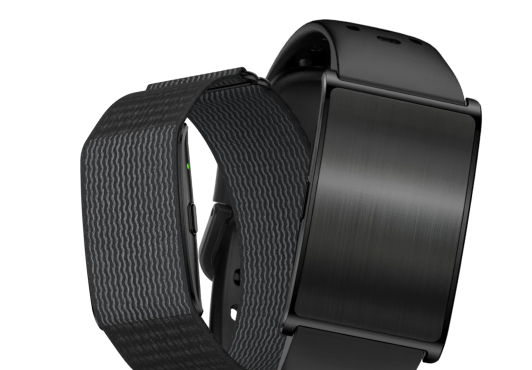
This was your history, written down once. The bracelet is the part that keeps watching — sleep, resting heart rate, temperature and movement, night after night, in one place.
Key takeaways
An IBS symptoms test can help you describe your pattern, but irritable bowel syndrome is diagnosed by a clinician from that pattern and from ruling other conditions out. NIDDK describes IBS as a group of symptoms, mainly abdominal pain and changes in bowel movements, that happen “without any visible signs of damage or disease in your digestive tract.” The American Gastroenterological Association (AGA) says it affects more than 35 million Americans.
- The core of IBS is recurring abdominal pain linked to bowel movements, with a change in how often you go or what stools look like.
- Bleeding, fever, weight loss and severe pain that does not go away are not IBS symptoms, according to the AGA. They need a doctor promptly.
- IBS does not cause lasting harm to the bowel and does not lead to bleeding or cancer, the AGA says.
- There is no single test for IBS. A clear history is one of the most useful things you can bring.
- The questionnaire is the 11-question history domain of ONU’s IBS model. Most items are scored in reverse, because IBS is what remains once other causes are excluded.
What irritable bowel syndrome is
IBS is a disorder of how the gut and brain work together. Nothing looks wrong at colonoscopy, yet the pain and bowel changes are real. The AGA compares it to a headache or a strained muscle: you cannot see it, but you feel it.
Doctors are not sure what causes IBS. The AGA describes it as “a blend of many factors”, including gut muscles that contract abnormally, nerves in the gut that are more sensitive than usual, and problems in how the brain and gut communicate. It is not inflammation, and it is not the same as inflammatory bowel disease such as Crohn’s disease or ulcerative colitis.
IBS symptoms and how they show up
The AGA lists belly pain, cramping, gas, bloating or swelling, changes in stool, diarrhea, constipation, urgency, and sometimes mucus in the stool. It describes three patterns:
- IBS with diarrhea (IBS-D). Frequent loose stools, urgency and cramps. Many people know every toilet on their commute.
- IBS with constipation (IBS-C). Hard or infrequent stools, straining, and urges that do not lead to a bowel movement.
- Mixed IBS (IBS-M). Swinging between the two, sometimes within the same week.
- Pain that eases after going. Pain tied to bowel movements, sometimes easing afterwards, is typical.
- Bloating that builds through the day, often worse after meals and better by morning.
- Symptoms that track your life. The AGA notes people with IBS can be more sensitive to emotional stress such as travel or public speaking, and that women with IBS may have more symptoms during their menstrual cycle.
The AGA points out that normal bowel habits range widely, from three times a day to three times a week. A change from your own normal matters more than any fixed number.
How the IBS symptoms test relates to the official criteria
Doctors use symptom criteria called Rome IV. They describe recurrent abdominal pain on average at least one day a week in the last three months, linked to two or more of these: the pain is related to bowel movements, it comes with a change in how often you go, or it comes with a change in the form of the stool. The criteria must be met for the last three months, with symptoms starting at least six months before diagnosis.
One item in this IBS symptoms test asks exactly that question, and it carries the most weight: 4 points. In the full ONU model, a yes to it puts the overall result in the high group on its own. The rest of the questions are about what has been ruled out.
What else causes the same symptoms
Because IBS is diagnosed partly by exclusion, it helps to know what it can resemble. Gut infections cause diarrhea and cramps. Inflammatory bowel disease causes pain and diarrhea but usually also bleeding, inflammation markers and changes visible at colonoscopy. Celiac disease, intolerance to certain sugars, and problems with the pancreas can cause diarrhea, bloating and weight change. Bowel cancer can change bowel habit, which is why new symptoms after middle age and bleeding are always checked.
This is where the reverse scoring makes sense. In ONU’s model, a stool culture that found no infection, a colonoscopy and endoscopy with nothing abnormal, no blood in the stool, and no history of pancreatitis each add points. Clear results do not prove IBS, but they move the picture towards it.
Who is more likely to have IBS
The questionnaire asks about the history ONU’s IBS model counts. One item is reversed without explanation in the source document: having no history of food intolerance adds points. ONU reproduces it as written. The rest of what the model weighs:
- Recurring pain with bowel changes over three months, the Rome-style question above.
- Anxiety or depression. The model counts these, and the AGA notes the link between stress and symptoms.
- A family history of chronic bowel conditions.
- Younger adults. The model’s age term counts under 30 more than 30 and over. This term is not part of the questionnaire on this page.
- Clear investigations so far, as described in the reverse-scored items.
How doctors confirm IBS
History and examination
NIDDK says doctors review your symptoms, medical history and family history, examine you, and look for a recognizable pattern. The AGA adds that IBS is likely when no other cause is found and symptoms have occurred more than three times a month for three months and interfere with daily life.
Blood and stool tests
To rule other things out: a blood count, inflammation markers, tests for celiac disease where appropriate, and stool tests for infection or inflammation. ONU’s model lists 15 blood markers in its biomarker domain.
Colonoscopy or endoscopy if needed
Not everyone needs one. The AGA says they may follow if earlier results or symptoms call for it, for example bleeding, weight loss or a family history of bowel cancer.
What this questionnaire does and does not tell you
Eleven questions, scored 0 to 26 as the source document scores them. Bands are 0 to 1 low, 2 to 3 medium, and 5 to 26 high. The document leaves a score of exactly 4 without a band, and ONU says so rather than picking one. It is one of four domains; the others are 15 blood markers, three resting measurements and an age term, so the full score cannot be produced here.
Because so many items are reversed, someone who has never had any tests can score high simply because each “no abnormal finding” adds points. That is how the document is built, and it is why the score is a summary for a clinician rather than an answer.
Preparing for the appointment
Track for two to four weeks
The AGA suggests tracking symptoms, diet, stress and exercise to find personal patterns. Note pain days, stool form and frequency, and what was going on that day.
Note what you have already tried
Diet changes, fiber, probiotics, laxatives or anti-diarrhea medicines, and what helped or did not.
Flag anything that is not typical
Bleeding, weight loss, fever, symptoms that wake you at night, or symptoms that started after fifty. Put these at the top of your list.
Ask your questions
The AGA suggests asking whether more tests are needed and how long to wait before reporting symptoms that persist. Bring both questions.
What usually happens next
NIDDK lists dietary and lifestyle changes, medicines, probiotics and mental health therapies as treatment options, and notes you may have to try a few to see what works. Diet changes it mentions include more fiber, avoiding gluten, or a low FODMAP diet, a structured plan that limits certain fermentable sugars. The AGA advises talking to a doctor or registered dietitian before making major changes.
The AGA describes medicines aimed at diarrhea or constipation, antispasmodics and some antidepressants for pain, and psychological treatments such as cognitive behavioral therapy and hypnosis. If stress is part of your pattern, our stress and burnout check covers that side separately.
When it is urgent
The AGA says bleeding, fever, weight loss and severe pain that does not go away are not IBS symptoms and that you should talk to your doctor right away. Seek emergency care for heavy bleeding, black tarry stools, vomiting blood, or severe constant abdominal pain. See GI bleeding and emergency information.
Questions people ask
- Can IBS turn into something more serious?
- No. The AGA says IBS does not lead to more serious conditions such as cancer or inflammatory bowel disease. New or changing symptoms should still be reported, because a second condition can appear alongside IBS.
- Why do clear test results raise my score?
- Because IBS is diagnosed after other causes have been excluded. ONU’s source document scores normal findings, such as no infection on a stool culture or nothing abnormal at colonoscopy, towards IBS. The score is reproduced as written.
- How long do symptoms need to last before it can be called IBS?
- The Rome IV criteria require pain on average at least one day a week over the last three months, with symptoms starting at least six months before diagnosis. Shorter or newer symptoms still deserve attention, but they may have another explanation.
- Is bloating alone IBS?
- Not on its own. Bloating is common in IBS, but the criteria centre on recurring abdominal pain linked to bowel movements. Bloating without pain can have other causes worth discussing.
- Does IBS show up on a colonoscopy?
- No. NIDDK describes IBS as symptoms without visible signs of damage or disease in the digestive tract. A colonoscopy is used to rule other conditions out, not to see IBS.
- Will a food diary help?
- Often, yes. The AGA recommends a food journal to identify triggers and notes that caffeine, fatty foods and alcohol commonly trigger loose stools. Bring it to the appointment.
- Can my sleep or heart rate data help with IBS?
- It can add context, nothing more. If you track sleep and recovery in the ONU app, you may notice bad gut weeks line up with poor sleep or high stress. That is useful to mention, but it is not a test for IBS.