Key takeaways
A resting heart rate that is a few beats higher than usual for a day or two is common and usually has a simple explanation. The American Heart Association gives 60 to 100 beats a minute as the normal resting range for adults. Within that range, your own pattern matters most.
First check that the readings are comparable, then look at what changed in the last day or two: sleep, stress, alcohol, caffeine, heat, exercise, medicines or a coming cold. A rise that lasts for days with no clear cause deserves a routine appointment. A fast heartbeat with chest pain, breathlessness, dizziness or fainting needs urgent help.
What resting heart rate means
Your resting heart rate is how many times your heart beats in a minute while you are sitting or lying still, calm and feeling well. The American Heart Association describes the normal adult range as 60 to 100 beats a minute and notes that people who train a lot often sit lower, because their heart does not have to work as hard. Wearables usually report a resting figure taken during sleep, often the lowest or average value overnight.
That number tends to be lower than a reading taken at your desk. Neither is wrong, but they are different measurements, so compare like with like.
First, check the reading is comparable
A number taken while you sleep and a number taken sitting at your desk after coffee are different things. So are readings from two different devices. Before you worry, ask whether today's reading was taken the same way as the ones you are comparing it with.
A loose strap, a ring that has slipped, cold hands or a short recording can all throw it off. If you check by hand, the American Heart Association suggests placing two fingers on the inside of your wrist and counting the beats for a full 60 seconds while you are seated and calm. Repeat it later in the day.
Resting heart rate suddenly higher? Look at what changed
Think back over the last day or two. Less sleep than usual? More stress?
Alcohol, or more caffeine? A harder session at the gym? Hot weather, a hot bath before bed, or not drinking enough?
A new medicine? Feeling a bit off, as if a cold is coming? Each of these can nudge your resting heart rate up for a while.
The American Heart Association lists heat, strong emotions, pain and exercise among the everyday things that raise heart rate. Often the explanation is right there. Write the likely cause down, then see whether the number settles once that cause has passed.
What the numbers mean
A rise of a few beats for one or two nights after a late dinner, a party or a hard workout is the most common pattern and rarely means anything on its own. A clear step up that lasts for several days, with no obvious reason, is worth more attention, especially if you also feel tired, feverish or run down. A sudden jump to a rate that is very high for you, or one that comes with symptoms, is a different situation altogether. On the other side, the American Heart Association notes that some medicines, such as beta blockers, can lower heart rate, so starting or stopping one can shift your usual numbers.
Common reasons it stays up
When the rise lasts more than a night or two, the usual suspects are a run of poor sleep, an ongoing stressful period, a block of heavy training without easier days, regular evening drinking, or a cold or other infection starting. The NHS also lists several medical causes for a heartbeat that feels fast or pounding, including iron deficiency anaemia, an overactive thyroid and heart rhythm problems, as well as life stages such as pregnancy and menopause. You cannot sort these out with a wearable. A wearable can, however, show you how long the change has lasted and what else changed at the same time, which helps a clinician.
Common mistakes
The first mistake is comparing a daytime reading with an overnight one and concluding that something has jumped. The second is reacting to a single night. Heart rate moves for many harmless reasons, and one night is not a trend.
The third is the opposite: ignoring a clear, lasting rise because it is still inside the 60 to 100 range. A resting rate that moves from 55 to 72 and stays there is a real change for that person, even though it is technically normal. The fourth is letting a calm wearable score override symptoms.
If you feel unwell, how you feel decides.
Practical steps this week
For the next seven days, look at your overnight resting heart rate each morning without judging it. Write down bedtime, alcohol, caffeine after lunch, training load and how you feel, in one line per day. Keep the bedroom cool, keep alcohol modest, and drink enough water through the day.
If you trained hard, add an easy day. If you are coming down with something, rest. At the end of the week, compare your numbers with the notes.
Most people find that the rise matches something obvious and settles once it passes. If it has not settled and you cannot explain it, book an appointment.
A worked example
Maya's overnight resting heart rate usually sits between 58 and 61. On Wednesday it reads 68. She checks her notes: she slept badly on Tuesday, had two glasses of wine and the flat was hot.
Thursday reads 64, Friday 60. That is a normal response to a rough night. Two months later the number climbs to 70 and stays there for a week.
She has not changed her routine, has been feeling unusually tired and notices her heart pounding on the stairs. That pattern is not explained by lifestyle, so she books a GP appointment and brings a short summary of the readings and her symptoms.
When to get medical help
Do not wait on a wearable if a fast heartbeat comes with chest pain, fainting, severe breathlessness, dizziness or a feeling that something is seriously wrong. The American Heart Association advises calling emergency services if your heart rate is suddenly very high or very low for you, especially with those symptoms. The NHS gives the same advice for palpitations that do not go away. Book a normal appointment if your resting heart rate stays noticeably higher for more than a few days and you cannot explain it, if palpitations keep coming back or last more than a few minutes, or if you have a heart condition or a family history of heart problems.
What to bring to the appointment
Keep it short. When the change started. Your usual range and the new one.
How the readings were taken and with which device. Any symptoms, such as tiredness, breathlessness, palpitations, fever or weight change. Recent illness, medicines and supplements, and any big changes in routine, sleep, caffeine or alcohol.
That is more useful to a clinician than a month of screenshots. If you have a family history of heart problems or thyroid disease, mention it. Your clinician may want to check your pulse, blood pressure or a heart tracing, and may suggest blood tests to look for causes such as anaemia or thyroid problems.
How ONU fits
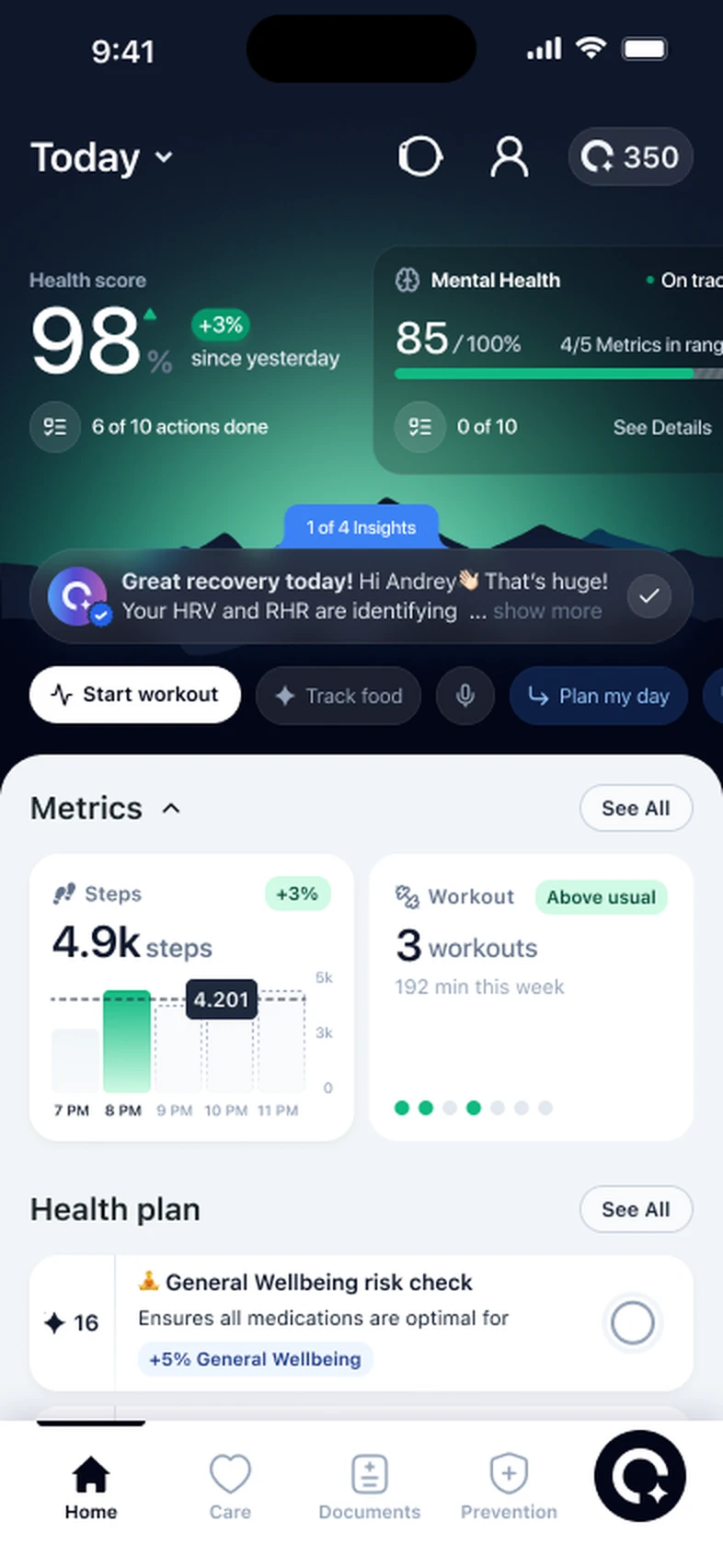
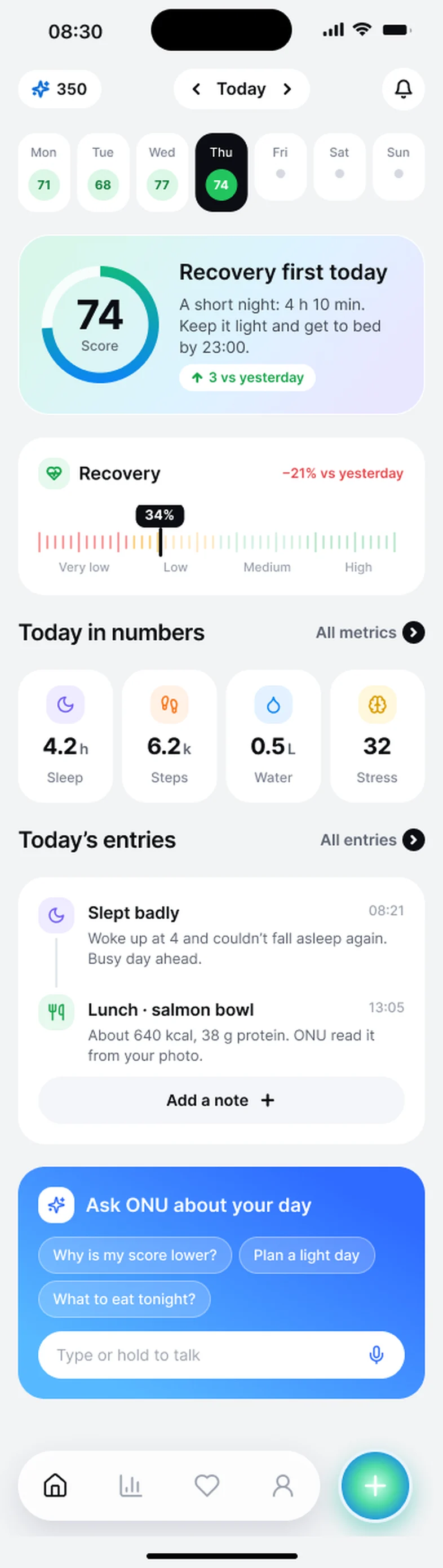
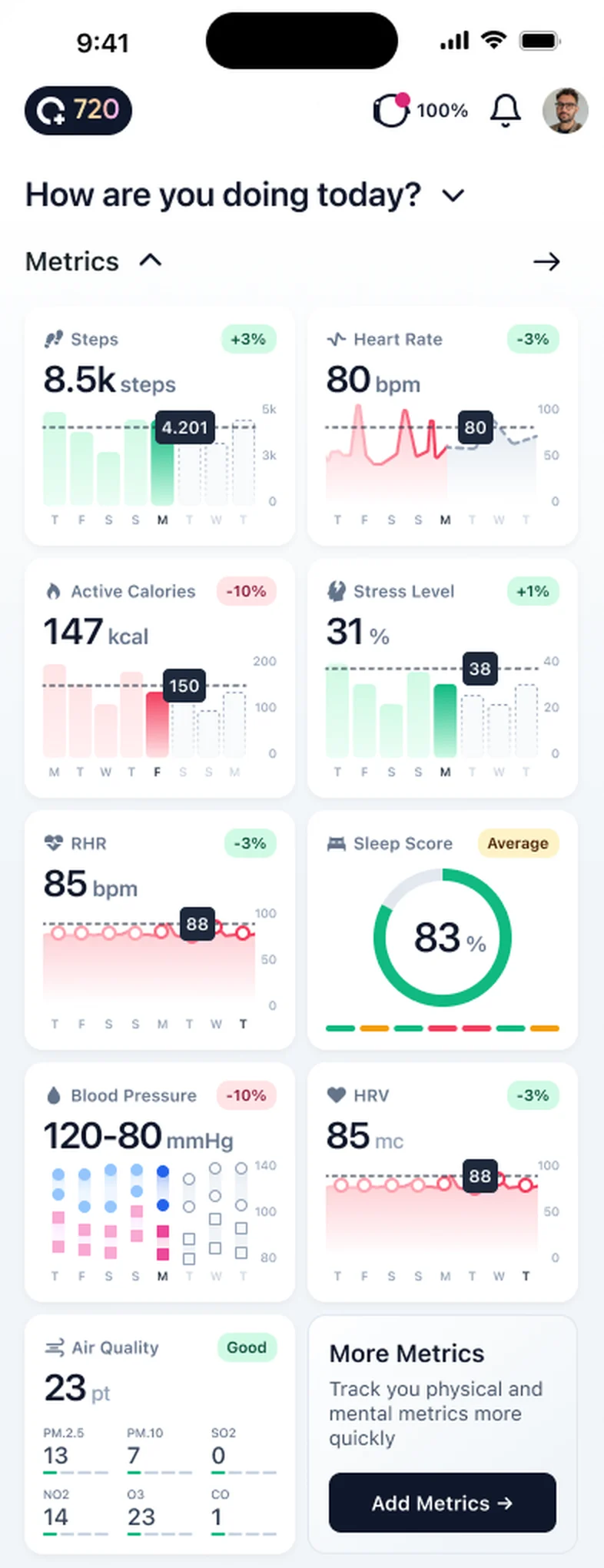
ONU tracks resting heart rate alongside sleep and HRV, from the ONU Bracelet or from WHOOP, Garmin or Apple Health on iPhone. It compares each day with your own baseline, so you can see whether a rise lines up with a bad night or a heavy week, and how long it has lasted. It can help you describe the pattern to a clinician. It cannot tell you the cause, and as a wellness product it does not diagnose anything.
Common questions
Does a higher resting heart rate always mean I am getting ill?
No. Sleep, stress, alcohol, heat, caffeine and exercise can all raise it. Illness is one possibility among several, and it usually comes with other signs such as feeling run down.
How much of a rise is normal?
A few beats for a night or two is common. A clear rise that lasts for days without a reason is worth more attention than the exact number of beats.
How long is too long for it to stay raised?
There is no fixed rule. If it stays up for several days with no clear reason, or you feel unwell, get it checked.
Can caffeine raise my resting heart rate?
It can make your heart feel faster, and the NHS lists caffeine among common triggers for palpitations. Late-day caffeine can also disturb sleep, which can show up in your overnight numbers.
Should I use HRV to decide whether the change is safe?
No. HRV adds context but cannot rule out a problem. Symptoms decide, not scores.
Is a resting heart rate of 95 normal?
It is inside the 60 to 100 range the American Heart Association gives for adults. If it is much higher than your usual, or comes with symptoms, talk to a clinician.
What to do next
Sources and further reading
General educational information, not a diagnosis or a personal treatment plan. Device information is identified separately from independent health guidance. Speak to a qualified professional about anything that concerns you.