Key takeaways
Stress is a normal reaction to pressure, and short bursts of it can even help you rise to a deadline or a hard conversation. The US National Institute of Mental Health describes acute stress as coming from a one-off event or brief situation, and chronic stress as coming from pressures that keep returning or last a long time. Many symptoms overlap, so the difference is found in the pattern: how long it lasts and whether you recover in between.
Long-running stress can make existing health problems worse. Practical habits help, but they cannot fix a situation that stays the same. If stress feels unmanageable or affects daily life, talk to a professional.
Acute vs chronic stress: the difference is the pattern
A tense meeting can leave you wired for an hour. That is acute. Months of overload at work, caring for someone, or money worries that never let up can keep the same response running.
That is chronic. MedlinePlus describes chronic stress as lasting weeks or months, and notes that people can get so used to it that they stop noticing it as a problem. Headaches, irritability, poor focus and bad sleep show up in both, so a symptom list will not tell you which you have.
Write down the trigger, how often it happens and whether you recover in between.
What stress actually is
Stress is your body and mind reacting to something that demands more of you: a heavy workload, a move, an illness in the family, money pressure or a frightening event. MedlinePlus explains that your body releases hormones that sharpen your attention, tense your muscles and raise your pulse. In the short term that response is useful.
It helps you brake in time, focus before an exam or push through a tough day. The problem is not the response itself. It is when the response stays switched on, or keeps switching back on, without enough time to settle in between.
What acute stress feels like
A faster heartbeat, tight shoulders, quicker breathing, a dry mouth, worry and trouble concentrating, all tied to something in front of you. Your stomach may churn before a presentation, or you may feel shaky after a near miss in traffic. If the moment passes and you feel like yourself again within hours, it was probably short-lived.
Acute stress can happen often and still be acute, as long as you get a chance to recover. But never assume severe chest pain, fainting or serious trouble breathing is stress. Those need urgent medical help, whatever you think the cause might be.
When stress becomes a standing burden
There is no home test and no set number of days that proves stress is chronic. Watch for the signs that it is costing you: poor sleep most nights, ordinary tasks feeling harder, pulling away from people, leaning more on alcohol or other things to cope. The CDC lists changes in appetite and energy, trouble concentrating and making decisions, sleep problems, headaches, body pain, stomach problems and increased use of alcohol or other substances among the effects of stress.
It also notes that ongoing stress can make chronic illness and mental health conditions worse. That is a reason to ask for support now, not to wait for proof.
Signs that stress is building up
Stress rarely announces itself by name. MedlinePlus lists physical signs such as headaches, general aches, a stiff jaw or neck, an upset stomach, diarrhoea or constipation, tiredness, changes in sleep and weight, and sexual problems. Mental and behavioural signs include forgetfulness, low energy, poor focus and using alcohol or medicines to relax.
Any one of these can have other causes, so they are clues rather than proof. What matters is the cluster and the timing. If several appear together during a hard stretch and ease when it passes, stress is a likely driver.
If they linger, or new symptoms appear, get them checked properly.
Questions to tell acute from chronic stress
A few honest questions usually sort it out. Can I name a specific trigger, and will it end? Do I feel like myself again within a day or two after the pressure passes?
Am I sleeping reasonably most nights? Have I dropped things I used to enjoy, or pulled away from people? Am I relying more on alcohol, snacks or scrolling to get through the evening?
If the trigger is clear and temporary and you bounce back, you are dealing with acute stress. If the answers point to a load that never lifts and recovery that never quite arrives, treat it as chronic and plan accordingly.
Common causes, including good news
The NHS describes stress as usually a response to mental or emotional pressure, often tied to a feeling that you are losing control, and notes that sometimes there is no obvious cause at all. The triggers it lists are familiar: pressure at work, losing a job or retiring, relationship problems, divorce, caring for someone, unexpected bills or borrowing, illness, injury and bereavement. It also points out that happy events can be stressful too, such as buying a home, having a baby or planning a wedding.
That matters for telling acute from chronic stress. A wedding has a date, so the pressure is likely to pass. Caring for a parent may not, so plan for the long haul rather than waiting for it to end.
How long-running stress affects the body
Because chronic stress keeps the body on alert, its effects build up over time. MedlinePlus links long-term stress with high blood pressure, heart disease, diabetes and obesity, as well as depression and anxiety, skin problems such as acne or eczema, and menstrual problems. NIMH adds that persistent anxiety can affect sleep and the immune, digestive and cardiovascular systems.
None of this means a stressful month will make you ill. It does mean that stress which never eases is a health issue in its own right, and that it is worth taking seriously alongside the other things you do to look after yourself.
Stress and anxiety are not the same
The words get used interchangeably, but NIMH draws a useful line. Stress is usually a reaction to a specific outside cause and tends to fade when that situation is resolved. Anxiety is more internal: a lasting sense of worry or dread that can continue even when there is no immediate threat.
Both can bring tension, headaches, poor sleep and a racing mind. If you notice that the worry stays even after the deadline has passed or the problem is solved, or that you start avoiding everyday activities, that is a sign to talk to a professional rather than simply waiting for things to calm down.
Where burnout fits
Burnout is a specific case. The World Health Organization describes it as an occupational phenomenon resulting from chronic workplace stress that has not been successfully managed, not as a medical condition. It has three parts: feeling drained or exhausted, growing mental distance or cynicism about your job, and feeling less effective at work.
The WHO also says the term should only be used for work, not other areas of life. If your exhaustion and dread are tied to work, list the pressures: workload, hours, unclear expectations, conflict, lack of say. Then pick one concrete thing to raise.
What a wearable can and cannot show
Heart rate and HRV may shift on a hard day. So do they after exercise, illness, caffeine, alcohol or a bad night. WHOOP, for instance, describes its stress feature as an interpretation of body signals against your personal baseline.
Several days with a higher resting heart rate and lower HRV can be a prompt to look at what is going on, but a wearable cannot know why you feel the way you do. It cannot tell acute from chronic stress, and it cannot diagnose burnout, anxiety or depression. Use it as a mirror for patterns, and let your own experience lead.
Common myths about stress
One myth is that all stress is bad. Short-term stress helps you perform, and NIMH notes that it can motivate you to meet a deadline. Another is that if you are coping, it is not chronic.
People often adapt to constant pressure and only notice the cost later, in their sleep, their mood or their relationships. A third is that a relaxation app or a better evening routine can solve any stress. Those tools help with the response, but they cannot change a workload or a situation that stays the same.
A fourth is that a wearable can tell you how stressed you are. It can show body signals, not causes.
Practical steps for acute stress
When stress hits in the moment, the goal is to help your body settle. Slow your breathing, with a longer out-breath than in-breath, for a minute or two. Step away from the screen, get some air or walk around the block.
Name what is happening in plain words, such as I am anxious about this call. Afterwards, give yourself a short buffer before the next demand if you can. NIMH suggests relaxation tools such as deep breathing, visualisation or mindfulness, and limiting excess caffeine.
These do not remove the cause, but they shorten the time your body stays on alert.
A five-minute breathing exercise
When you feel the stress response building, slow breathing is one of the simplest tools you have, and you can do it anywhere. The NHS suggests getting comfortable, sitting, standing or lying down, and loosening anything tight. Breathe in through your nose and out through your mouth, letting the breath go down into your belly only as far as feels comfortable, without forcing it.
Breathe in gently while counting slowly from one to five, then breathe out gently for the same count. You may not reach five at first, and that is fine. Keep going for at least five minutes.
The NHS says you get the most benefit by practising regularly, as part of your daily routine, not only in a crisis.
Practical steps for chronic stress this week
Long-running stress needs a different approach, because it is about the load, not one moment. This week, write down the three things that press on you most. For each, ask whether it can be reduced, shared, delayed or simply accepted for now.
Protect the basics the CDC recommends: a regular sleep schedule with at least seven hours for adults, building up to about two and a half hours of physical activity a week, balanced meals and less alcohol. Tell one trusted person how things really are. Choose one small boundary, such as no work email after a set time, and keep it.
Change what you can, accept what you cannot
Feeling powerless tends to make stress worse, so the NHS suggests taking control of the parts of a problem you can act on, and finding a solution that works for you rather than one that suits someone else. It pairs this with accepting what you cannot change. Its own example is redundancies at your company: you cannot stop them, but you can start looking for a new job.
In practice, sort the things pressing on you into two lists. On the first, write one small action for each item, such as asking for a meeting or making a phone call. On the second, write what you will stop spending energy on for now.
The NHS also suggests prioritising the tasks that make the biggest difference and accepting that not everything will get done.
A daily routine as an anchor
When pressure runs for weeks, a simple routine can give you back a sense of control. The World Health Organization suggests scheduling regular times for meals, time with family, exercise, chores and things you enjoy. It also recommends eating balanced meals at regular times, drinking enough water, including plenty of fruit and vegetables, and being active every day, whether that means a walk or something more intense.
If the news or social media leaves you more tense, the WHO suggests cutting back. A routine will not remove a demanding job or a family crisis. What it does is protect the basics, such as sleep, food and movement, which are often the first things to slip when stress drags on.
What helps your body recover
Recovery is not only rest. The CDC suggests regular movement, time to relax through deep breathing, stretching, meditation or time outdoors, hobbies you enjoy and staying connected with people you trust. It also suggests a daily moment of gratitude.
Physical activity is one of the most reliable ways to work off the tension stress builds up, even in short sessions such as a brisk ten-minute walk at lunch. Eating regular meals helps keep your energy steady. NIMH adds that noticing and questioning unhelpful thoughts can ease the pressure you put on yourself.
Pick the two that suit you and repeat them, rather than trying everything at once.
Sleep and stress feed each other
Stress makes it harder to fall asleep and easier to wake at four in the morning with your mind racing. Poor sleep then makes the next day feel harder, which adds to the stress. The CDC links getting enough sleep with lower stress and better mood, and recommends going to bed and waking at the same time each day, keeping the bedroom quiet and cool, putting screens away at least 30 minutes before bed, and avoiding caffeine late in the day and alcohol before bed. If worries keep you awake, writing them down earlier in the evening, with one next step for each, can help them feel less urgent at night.
Habits that make stress worse
Some ways of coping feel helpful in the moment but add to the load over time. The NHS warns against using alcohol, cigarettes, gambling or drugs to deal with stress, because they can make your mental health worse, and its stress tips note that leaning on caffeine brings the same trade-off of short relief and new problems later. Two other traps are less obvious.
One is trying to do everything at once. The NHS suggests setting small goals you can actually reach instead. The other is believing you are the only one struggling.
Stress is common, and support exists. If you notice that a drink every evening or an extra coffee each afternoon has become your main way of getting through, take that as a signal rather than a solution.
Support at work and at home
For stress tied to work, the most effective changes often sit outside your evening routine. Ask for clearer priorities, a realistic deadline, help with a specific task or time back after a heavy stretch. If your workplace has occupational health or an employee support programme, use it.
At home, chronic stress often comes from caring roles, money or relationships. Sharing the load, getting practical advice on debt, or finding respite care can lower the pressure in ways that breathing exercises cannot. The CDC also suggests limiting news and social media and staying connected with friends, family or community groups.
Two-week check-in
Keep a brief note of what keeps pressing on you, when it happens, how you slept, your energy and mood, and what made a day easier or harder. NIMH suggests a journal as a way to identify your triggers and the techniques that help. After a week or two, look for a pattern you can say in plain words, such as I wake at four before workdays and cannot focus in the afternoon.
That sentence is far more useful to you, your manager or a clinician than a general feeling of being stressed. If tracking makes you more anxious, stop. It is a tool, not homework.
A worked example
Jonas has a big product launch. For two weeks he sleeps badly, drinks more coffee and snaps at his partner. The launch goes well, he takes a long weekend, and by midweek he is sleeping normally.
That was acute stress, intense but temporary. Six months later the launch has turned into a permanent workload with no extra staff. He wakes at four most nights, dreads Sunday evenings, has stopped going to football and feels detached at work.
That is chronic, and it fits the WHO description of burnout. Breathing exercises help a little, but what changes things is a conversation with his manager and a visit to his GP.
When to talk to a professional
Get help when the pressure does not let up, when it interferes with daily life, or when it comes with lasting low mood, anxiety, sleep problems or physical symptoms. MedlinePlus suggests contacting a provider if you feel overwhelmed, if stress is affecting your health, if you have new or unusual symptoms, if you have panic symptoms such as dizziness, rapid breathing or a racing heartbeat, or if you cannot function at home or work. You do not need to name a single cause first. NIMH notes that talk therapy and medication are the main treatments for anxiety, and many people benefit from both.
What to bring to an appointment
You do not need a perfect account. A short note covering when the stress started, what drives it, how long it has lasted and how it affects your sleep, mood, appetite, work and relationships is enough. Add any physical symptoms, such as headaches, stomach problems or palpitations, and any changes in alcohol, caffeine or medicines.
If you have kept a journal or tracked sleep, bring a summary rather than every entry. Be honest about how you are coping, including any thoughts of self-harm. A clinician can then look for other causes, discuss talk therapy or other support, and help you plan what to change.
If you are in crisis
If you feel at risk of harming yourself or someone else, contact local crisis or emergency services straight away. In the United States, the CDC and NIMH point to the 988 Suicide and Crisis Lifeline, which you can call or text on 988. In the UK, you can call 999 in an emergency or 111 for urgent advice.
Elsewhere, use your local emergency number. Chest pain, fainting or severe breathlessness should always be treated as a possible emergency, even if you think stress is the cause. It is always better to be checked and reassured than to wait.
How ONU fits
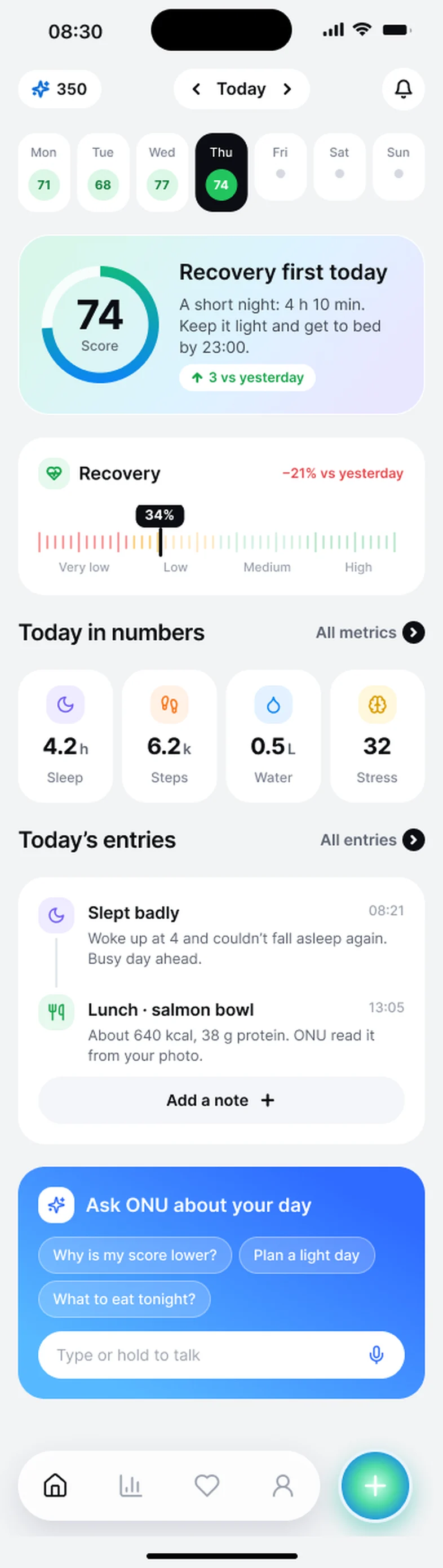
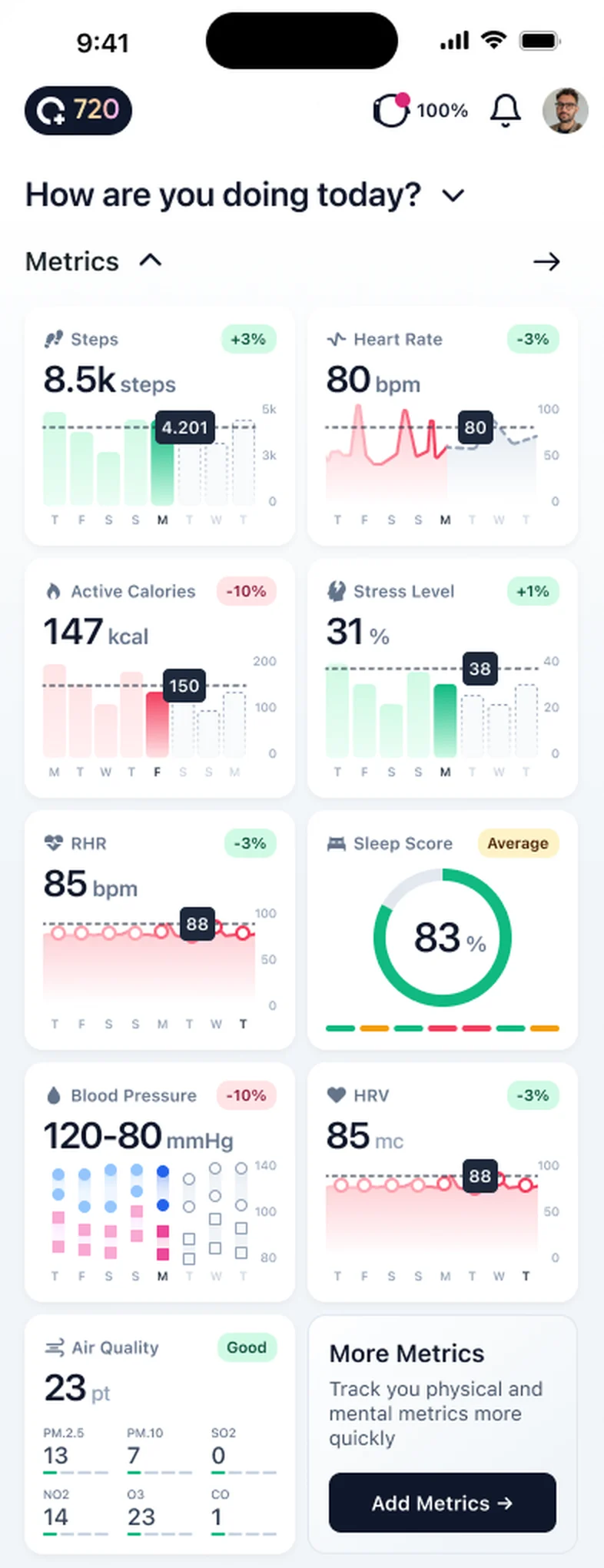
ONU brings your sleep, HRV, resting heart rate and activity into one daily ONU Score compared with your own baseline, and shows weekly and monthly trends. That can help you see whether a demanding period is showing up in your recovery signals and whether things settle afterwards. On the site there is also a free stress and burnout prevention check that ends with a summary you can take to a doctor.
ONU is a wellness product, not a medical device. It cannot diagnose stress, burnout, anxiety or depression, and it does not replace professional support.
Common questions
Can acute stress happen every day?
Yes. Short episodes can repeat often. If the pressure behind them is constant or you barely recover in between, describe the whole pattern to a professional.
How long does stress have to last to be chronic?
There is no fixed cut-off. MedlinePlus describes chronic stress as lasting weeks or months. The more useful question is whether you get time to recover in between.
Is burnout the same as chronic stress?
Not quite. The WHO defines burnout specifically as the result of chronic workplace stress that has not been managed. Chronic stress can come from any part of life.
Is some stress good for you?
Short bursts can help you focus and meet a challenge. Problems come when stress is constant and you have little chance to recover.
Can good events cause stress?
Yes. The NHS lists happy life events, such as buying a home, having a baby or planning a wedding, among common causes of stress. Because they usually have an end point, the stress they bring is often temporary.
Does a low HRV mean I have chronic stress?
No. Many things affect HRV, including sleep, alcohol, exercise and illness. One reading cannot show the cause or the duration of stress.
Can chronic stress cause physical symptoms?
Yes. Headaches, aches, stomach problems, tiredness and sleep changes are common. New or unusual symptoms should still be checked rather than assumed to be stress.
What is the quickest way to calm acute stress?
Slow breathing with a longer out-breath, a short walk or a change of scene can help your body settle. It does not remove the cause, but it shortens the response.
When should I see a doctor about stress?
When it feels unmanageable, affects your daily life, makes you avoid things, or comes with low mood, anxiety, panic symptoms or sleep problems that do not ease.
Can I get help for stress without seeing a GP first?
In England, the NHS says adults can refer themselves to NHS talking therapies for anxiety and depression, which may help with stress; in some areas this starts at 16. Elsewhere, check what your local health service offers, or start with your doctor.
What to do next
Sources and further reading
- CDC: Managing Stresscdc.gov
- NIMH: I'm So Stressed Out!nimh.nih.gov
- WHOOP: How to Manage Stresswhoop.com
- WHO: Burn-out an occupational phenomenonwho.int
- MedlinePlus: Stress and your healthmedlineplus.gov
- NHS: Get help with stressnhs.uk
- NHS: Breathing exercises for stressnhs.uk
- NHS: 10 stress bustersnhs.uk
- WHO: Stress, questions and answerswho.int
General educational information, not a diagnosis or a personal treatment plan. Device information is identified separately from independent health guidance. Speak to a qualified professional about anything that concerns you.