Haemoglobin carries oxygen
MedlinePlus describes it as an iron-rich protein in red blood cells. It is usually measured as part of a full blood count.
 Written and medically reviewed by Dr. Arup Sen, Consultant physician, internal medicine
If you are searching for low haemoglobin levels meaning, you probably have a full blood count in front of you with one number flagged. Haemoglobin is the iron-rich protein in your red blood cells that carries oxygen from your lungs to the rest of your body. A low level is the main sign of anaemia.
Typical haemoglobin ranges, with units
MedlinePlus describes it as an iron-rich protein in red blood cells. It is usually measured as part of a full blood count.
The WHO defines anaemia as a haemoglobin concentration in red blood cells that is lower than normal.
says the WHO. Low folate or vitamin B12, blood loss, chronic illness and inherited blood conditions can also lower it.
Every red blood cell is packed with haemoglobin. It picks up oxygen in your lungs and drops it off wherever your body needs it. When haemoglobin is low, less oxygen reaches your muscles and organs, which is why anaemia so often shows up as tiredness and breathlessness.
MedlinePlus says the test may be called Hb or Hgb, and that it is usually part of a complete (full) blood count. It is not the same as the HbA1c test, which measures average blood sugar. If that is the marker you want, see HbA1c explained.
MedlinePlus says doctors check haemoglobin as part of a routine exam, or when someone has symptoms of anaemia, a family history of an inherited blood disorder, a diet low in iron and other minerals, a long-term infection, or heavy blood loss from an injury or surgery. It is also used to follow up treatment for anaemia.
The NHS lists the full blood count among the most common blood tests, used to check blood cell numbers, including checks for anaemia.
A low result tells you there is less haemoglobin than expected. It does not tell you why. MedlinePlus lists these possible causes:
The WHO says iron deficiency, mainly from low iron intake, is the most common nutritional cause of anaemia worldwide. The NHS says heavy periods and pregnancy are very common causes of iron deficiency anaemia, and that bleeding from the stomach or intestines is another common cause. That can be linked to medicines such as ibuprofen and aspirin. Our ferritin page covers iron stores in detail.
The NHS says the most common cause of vitamin B12 deficiency in the UK is pernicious anaemia, an autoimmune condition that stops your body absorbing B12. Diet can also play a part, for example a vegan diet without B12 supplements or fortified foods. Some medicines, including anticonvulsants and proton pump inhibitors, can lower how much B12 and folate you absorb. The NHS says B12 deficiency affects around 1 in 10 people aged 75 or over and 1 in 20 people aged 65 to 74.
The WHO adds infections such as malaria, tuberculosis and HIV, and inherited conditions such as thalassaemia and sickle cell disorders.
Anaemia is common worldwide. The WHO estimates it affects:
Figures from the WHO anaemia fact sheet.
This page explains what haemoglobin measures, the ranges trusted sources publish, the common reasons a result can be low or high, and what can shift it, such as altitude, smoking, dehydration and pregnancy.
Labs use different ranges and units, and ranges vary with age and sex. Your lab report shows the range your lab uses, so compare your number with that, and ask the doctor who ordered the test what it means for you.
These are the ranges MedlinePlus publishes. They give the same values in two units, g/dL and g/L, because labs use both. Your lab report shows the range your lab uses, and that is the range your result should be read against.
| Group | Typical range (g/dL) | Typical range (g/L) | Source |
|---|---|---|---|
| Adult males | 13.8 to 17.2 | 138 to 172 | MedlinePlus |
| Adult females | 12.1 to 15.1 | 121 to 151 | MedlinePlus |
| Newborns | 14 to 24 | 140 to 240 | MedlinePlus |
| Infants | 9.5 to 14 | 95 to 140 | MedlinePlus |
MedlinePlus says ranges may vary slightly among laboratories, and its lab test page adds that ranges vary by age, sex and race. The WHO notes that cut-offs for anaemia are set by age, sex and physiological status, such as pregnancy.
The WHO lists common symptoms as tiredness, dizziness or light-headedness, cold hands and feet, headache, and shortness of breath when you exert yourself. The NHS adds palpitations and paler skin for iron deficiency anaemia.
When anaemia is severe, the WHO lists pale skin and inner eyelids, pale fingernails, fast breathing and heart rate, dizziness when standing up, and bruising easily.
With B12 or folate deficiency, the NHS says you may also notice pins and needles, a sore red tongue, mouth ulcers, muscle weakness, problems with your vision, and changes in mood, memory or judgement. Some of these can happen even before anaemia shows up.
MedlinePlus says a high haemoglobin is most often caused by long-term low oxygen levels in the blood. Possible causes include:
The NHS calls a high concentration of red blood cells erythrocytosis, or polycythaemia. It makes the blood thicker. The NHS separates types: some are apparent, where the plasma volume is low rather than the red cell count high, often linked to being overweight, smoking, drinking heavily or diuretics. Others are linked to dehydration, conditions such as COPD or kidney problems, or polycythaemia vera, a rare, slow-growing blood cancer.
Losing weight, stopping smoking, cutting back on alcohol and managing blood pressure can lower the risk of clots, the NHS says.
Low haemoglobin has many causes, and the right next step depends on which one applies. Iron, B12 and folate are treated differently.
The WHO recommends eating iron-rich, varied foods and taking supplements only if a healthcare provider recommends them. The NHS lists dark-green leafy vegetables, cereals and bread with added iron, meat, dried fruit and pulses.
The NHS says B12 is found in meat, fish, eggs, dairy and fortified foods, and folate in green vegetables such as broccoli, Brussels sprouts and peas.
The NHS says iron tablets are usually taken for about 6 months, folic acid tablets usually for 4 months, and B12 is often started as injections. Some people need treatment for life.
The NHS says stopping smoking, cutting back on alcohol, losing weight if needed and managing blood pressure lower the risk of clots.
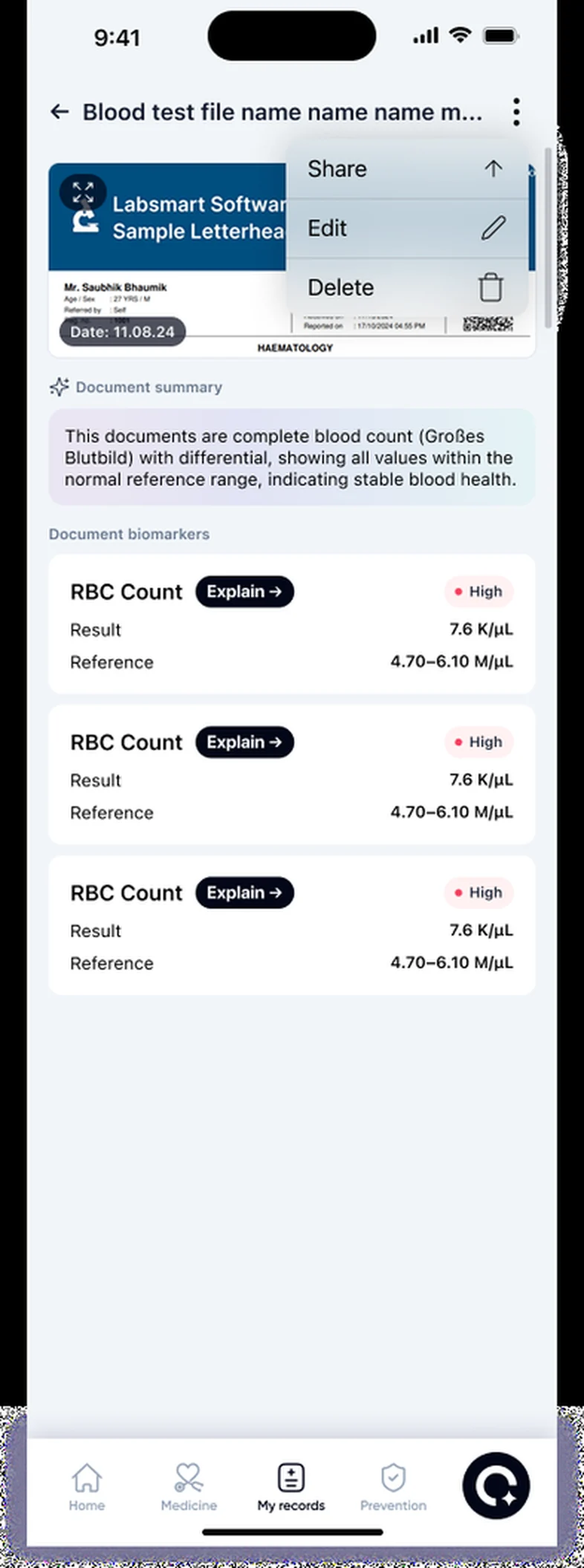
Repeat full blood counts are common during treatment. Seeing them side by side makes it easier to follow the trend with your doctor.
ONU does not sell lab tests, and it does not read or interpret your results. That is for the doctor who ordered your test.
In the free ONU app on iPhone, you can upload and store your lab reports, including every full blood count, and see them next to your daily sleep, recovery and activity trends. If tiredness is what sent you to the doctor, it can help to bring both your sleep data and your blood results to the same conversation.
If you are unsure whether to ask about anaemia, try the free anaemia check. It ends with a summary to take to your doctor. For the rest of your report, see blood test results explained.
See a GP if you think you may have anaemia, or a vitamin B12 or folate deficiency, or if your haemoglobin is outside your lab’s range and nobody has explained it yet. The NHS stresses early diagnosis for B12 deficiency because some of the problems it causes can be irreversible, and says adults with severe anaemia are at risk of heart failure.
With a high red cell count, the NHS says to get emergency help right away for signs of a clot, heart attack or stroke. These include a swollen, painful leg, breathlessness, chest pain, coughing up blood, fainting, or stroke symptoms. Call your local emergency number. See emergency information.
Bring your everyday signals and health information into a clearer picture.