

Signs of GI bleeding: the history a doctor needs
 Written and medically reviewed by Dr. Arup Sen, Consultant physician, internal medicine
The signs of GI bleeding, such as black or bloody stools or vomiting blood, can be an emergency. This questionnaire sets out the history that decides how quickly you need to be seen.
Bleeding anywhere in the digestive tract shows up as vomited blood, black tarry stools, or visible blood when passing stool. Anti-inflammatory medicines, anticoagulants, alcohol, ulcers and liver disease are the usual contributors, and which of them apply changes both the urgency and the investigation.
Worth answering for a history of intermittent or past bleeding you are taking to an appointment.
- Vomiting blood, or something that looks like coffee grounds
- Black, tarry, strong-smelling stools
- Bright red blood when you open your bowels
- Feeling faint, dizzy or breathless on standing
- Being told you are anemic with no obvious reason
Vomiting blood, black tarry stools, or feeling faint with visible bleeding is an emergency. Call for help now; this questionnaire is for afterwards.
Three steps, in the order a clinician takes them.
- 1
How fast this moves is decided by the history
What you saw, when, how much, and what you take — anti-inflammatories, aspirin, anticoagulants, steroids — along with alcohol, previous ulcers and liver disease. Those answers set the urgency before any test is done.
- 2
Bloods and an assessment of how much has been lost
Full blood count, urea, clotting and a group-and-save. Pulse and blood pressure matter as much as the numbers, because they show whether the bleeding is ongoing.
- 3
Then endoscopy, to find it and treat it
A camera test locates the source and can stop the bleeding in the same procedure. Which end it starts from depends on what the history suggested.
You walk away with a page you can hand over.
About two minutes. It asks about your history only, scores it the way the source document scores it, and gives you the answers back as something worth mentioning, worth bringing and worth asking — in a file you can download. It is not a diagnosis, and it does not predict anything.
Take the questionnaire- What you actually saw, and when — color and amount both matter
- Every anti-inflammatory, aspirin and blood thinner, with doses
- Any previous ulcer, endoscopy or liver diagnosis
- An honest account of alcohol
Educational information to prepare a conversation with your doctor. ONU does not diagnose, predict or prevent disease.
The gastrointestinal bleeding questionnaire
Fifteen questions about digestive history, liver health, alcohol and medicines. If you are bleeding now, this is not the right place — contact a clinician or emergency services.
- A few short questionsabout you and your routine
- two minutes.to finish
- Nothing savedanswers stay in this tab
This is the questionnaire domain of ONU’s own model, not a diagnosis and not a probability. Gastrointestinal bleeding is confirmed by examination and endoscopy, not by a set of questions.
Straight answers, including the awkward ones.
What do black stools mean?
Black, tarry, strongly smelling stools usually mean blood from higher up the digestive tract that has been digested on the way through. It is a reason for urgent assessment the same day. Iron tablets and some foods also darken stool, but they do not make it tarry or foul-smelling — and that is not a distinction worth making at home.
Is bright red blood less serious than black?
Not necessarily. Bright red blood is more often from lower down and is commonly hemorrhoids or a fissure, but heavy bleeding from higher up looks bright red too. Amount, and whether you feel faint, matter more than color.
Which medicines make bleeding more likely?
Anti-inflammatories such as ibuprofen, naproxen and diclofenac, aspirin, steroids, and anticoagulants including warfarin and the newer agents — particularly in combination. Do not stop a prescribed blood thinner on your own; the risk of stopping can be worse than the risk of continuing. Ask the prescriber.
When do I need an ambulance rather than an appointment?
Vomiting blood, black tarry stools, or heavy visible bleeding — and especially any of those with faintness, breathlessness or a racing pulse. Call emergency services. This questionnaire is for a history you are taking to an appointment, not for a bleed happening now.
One domain of a larger model.
This is one of three domains. The others — eleven blood markers and three resting measurements — need results a clinician interprets, so the full score cannot be produced here.
Questionnaire source: GI bleeding risk model.docx — questionnaire domain, negative impact
Independent health information: NIDDK: GI bleeding. This source explains the condition; it does not validate the questionnaire as a diagnostic test.

Anemia and iron
Low iron is one of the most common reasons people feel persistently drained — and one of the most straightforward to identify.
Read the area
Heart and circulation
Cardiovascular risk is the most studied prevention area in medicine — and the one where a made-up number does the most harm.
Read the area
Ascites
Worth answering if your abdomen has been swelling, if you have a known liver condition, or if you are preparing for an appointment about either.
Open the check
Jaundice
Worth answering if you or someone you look after has noticed yellowing, dark urine or pale stools, and wants to arrive at an appointment with the history already straight.
Open the check
Crohn’s disease
Worth answering if you have had months of abdominal pain, diarrhea, weight loss or fatigue and are trying to describe it accurately to a clinician.
Open the checkA questionnaire is a snapshot. A night is not.
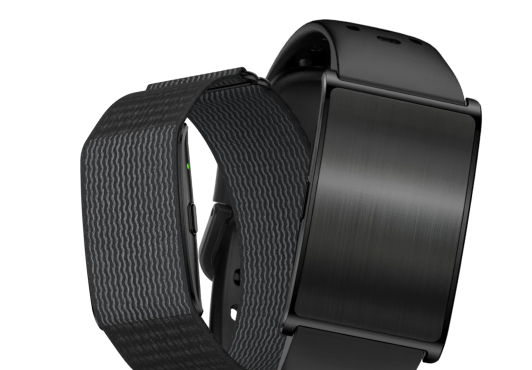
This was your history, written down once. The bracelet is the part that keeps watching — sleep, resting heart rate, temperature and movement, night after night, in one place.
Key takeaways
The signs of GI bleeding range from obvious, such as vomiting blood or passing black, tarry stools, to quiet, such as tiredness and breathlessness from slow blood loss you never see. NIDDK describes gastrointestinal bleeding as any bleeding that starts in the digestive tract, and says that if you have symptoms you should seek medical help right away. The questionnaire above is for the history around past or intermittent bleeding, not for an active bleed.
- Vomiting blood, black tarry stools, or feeling faint with any bleeding is an emergency. Call your local emergency number.
- GI bleeding is a symptom of something else. NIDDK lists peptic ulcers, enlarged veins in the esophagus (varices), diverticular disease, gastritis, hemorrhoids and cancer among the causes.
- Slow bleeding can show up only as anemia: tiredness, pale skin, breathlessness on stairs.
- Anti-inflammatory painkillers, steroids, alcohol and liver disease all change both the risk and the urgency.
- The questionnaire is the 15-question history domain of ONU’s GI bleeding model, the longest of the condition questionnaires.
What GI bleeding is
Your digestive tract runs from the mouth to the anus. NIDDK describes it as a series of hollow organs joined in a long, twisting tube. Bleeding can start anywhere along it. NIDDK notes it may be acute, meaning sudden, or chronic, meaning slow and ongoing, and may come from the upper, middle or lower GI tract.
Doctors often split it by where it starts. Upper GI bleeding comes from the esophagus, stomach or first part of the small intestine. Lower GI bleeding comes from the colon, rectum or anus. Where it starts affects what you see. Blood that has passed through the gut is digested and turns stools black and sticky; blood from near the end of the bowel stays red.
Signs of GI bleeding and how they show up
NIDDK says symptoms depend on how severe the bleeding is and whether it is sudden or slow. In practice the signs of GI bleeding fall into what you see and what you feel.
- Vomiting blood. It can be bright red, or dark and grainy, often described as looking like coffee grounds.
- Black, tarry stools. Sticky, very dark and with a strong smell. This usually means blood from higher up in the gut.
- Red or maroon blood in or on the stool. Bright red on the paper often comes from near the anus; darker red mixed in can come from further up.
- Feeling weak, dizzy or faint, especially when standing up, or a fast heartbeat.
- Slow-bleed signs. Tiredness, pale skin, breathlessness on exertion, and low iron on a blood test, sometimes with no visible blood at all. Our anemia check covers that side.
- Abdominal pain, depending on the cause, for example burning upper abdominal pain with an ulcer.
What else can change the color of stool or vomit
Not everything dark is blood. Iron tablets and bismuth-containing stomach remedies commonly turn stools black. Beetroot, red food coloring, black licorice and blueberries can change the color of stools or vomit. Tomato skins and red peppers can look alarming in vomit.
The difference is usually texture and context. Medicine-related black stools are typically formed rather than tarry, and you will know you took the tablet. If you are not sure, treat it as possible bleeding and get advice. A clinician can test a stool sample for hidden (occult) blood.
If bleeding comes with weeks of diarrhea, the ulcerative colitis and Crohn’s disease questionnaires ask about that pattern.
Who is more likely to have GI bleeding
The questionnaire asks about the history ONU’s GI bleeding model weighs:
- A previous GI bleed (3 points) or a chronic condition of the digestive tract.
- Liver cirrhosis (4 points) and hepatitis (3 points). NIDDK lists bleeding from enlarged veins in the esophagus, stomach or intestines as a sign of worsening cirrhosis.
- Alcohol, scored from never to daily.
- Regular medicines that can cause stomach ulcers, such as corticosteroids and anti-inflammatories like ibuprofen or aspirin.
- Cancer of the digestive tract (5 points, the heaviest single item).
- Abnormal findings on an abdominal ultrasound, gastroscopy or colonoscopy, X-ray, CT or MRI of the digestive tract.
- Family history, and previous blood in vomit or stool.
How doctors find the source of bleeding
NIDDK says your doctor will take a medical and family history, examine you, and may use blood tests, stool tests, endoscopy and imaging to find where the bleeding is, how severe it is and what is causing it.
Assessment and blood tests
Pulse, blood pressure and a blood count to see how much blood has been lost. ONU’s model lists 11 blood markers in its biomarker domain, read by a clinician.
Stool tests
A fecal occult blood test can detect blood you cannot see. In the full ONU model, a positive result moves the overall risk to high automatically.
Endoscopy
An upper endoscopy (gastroscopy) looks at the esophagus, stomach and duodenum. A colonoscopy or flexible sigmoidoscopy looks at the large bowel. Both can find the source and often treat it at the same time.
Imaging
CT scans, angiography or capsule endoscopy may be used when the source is not found by the first tests.
What this questionnaire does and does not tell you
Fifteen questions, scored 0 to 41 as the source document scores them. Bands are 0 to 1 low, 2 to 3 medium, and 4 to 41 high. A single previous bleed with regular ibuprofen use already reaches the high band. It is one of three domains; the others, 11 blood markers and three resting measurements, need a clinician, so the full score cannot be produced here.
The source document is explicit that it is not a diagnostic replacement, and that a consultation with a GP or gastroenterologist is a must at medium or high risk. A low band does not make a visible bleed safe to ignore. The questionnaire’s purpose is to make the history quick to hand over, so the conversation can move to examination and tests.
Preparing for the appointment
Describe what you saw
Color (bright red, dark red, black), where (on the paper, in the bowl, mixed in, in vomit), how much, and how many times. A photo is acceptable and often helpful.
List every medicine
Especially aspirin, ibuprofen and other anti-inflammatories, steroids, blood thinners and iron. Do not stop a prescribed blood thinner on your own; ask first.
Note other symptoms
Dizziness, breathlessness, tiredness, indigestion or upper abdominal pain, and any weight loss.
Bring past results
Endoscopy and colonoscopy reports, scan results and blood counts. If you store them in the ONU app, have them open.
What usually happens next
NIDDK says doctors often use endoscopy or angiography to treat the bleeding, and sometimes recommend medicines or surgery. Depending on the cause, they may also suggest diet or lifestyle changes to lower the chance of bleeding again.
After the bleeding is controlled, the focus moves to the cause: treating an ulcer, managing liver disease, reviewing medicines that irritate the stomach, or following up a finding in the bowel. Repeat blood counts are common to check that iron and hemoglobin recover.
When it is an emergency
Call your local emergency number or go to an emergency department now if there is:
- Vomiting blood or material that looks like coffee grounds
- Black, tarry stools, or a large amount of red blood from the back passage
- Feeling faint, collapsing, confusion, cold clammy skin or a racing heart alongside any bleeding
- Bleeding while taking a blood thinner, or with known liver cirrhosis
Do not drive yourself. See emergency information. The questionnaire is for afterwards.
Questions people ask
- Can GI bleeding happen without visible blood?
- Yes. Slow bleeding can go unnoticed and show up only as anemia, with tiredness, pale skin or breathlessness. A stool test for hidden blood or a blood count may be the first clue. Unexplained low iron in an adult is usually investigated for this reason.
- Is a little blood on the toilet paper GI bleeding?
- Technically yes, it is bleeding from the lower end of the digestive tract, and hemorrhoids are a common cause. It is not usually an emergency, but new or repeated bleeding should be checked by a doctor rather than assumed to be piles.
- Why does the questionnaire ask about my liver?
- Because liver cirrhosis can cause enlarged veins in the esophagus and stomach, and NIDDK lists bleeding from these varices as a sign of worsening cirrhosis. ONU’s model scores cirrhosis, hepatitis and alcohol for that reason.
- Can iron tablets make stools look like bleeding?
- Yes. Iron tablets and bismuth stomach remedies commonly turn stools black. Those stools are usually formed rather than sticky and tarry. If you are unsure, get advice rather than guessing.
- Should I stop aspirin if I have had a bleed?
- Not on your own. Aspirin and other blood thinners are often prescribed for important reasons, such as protecting the heart. Tell your doctor about any bleeding and let them weigh the risks.
- What does a high band on this questionnaire mean?
- That your history includes several things the model associates with GI bleeding. It is not a diagnosis and it says nothing about whether you are bleeding now. The source document says a consultation with a doctor is a must at medium or high risk.
- Can a wearable detect internal bleeding?
- No. A fast heart rate can accompany blood loss, but a tracker such as the ONU Bracelet cannot tell bleeding apart from exercise, stress, illness or a poor night. ONU is a wellness product, not a medical device. If you have signs of bleeding, act on the signs, not on a reading.