

Stress and cortisol articles
 Written and medically reviewed by Dr. Kirill Rudinsky, Head of Research
Is stress building up?
Tick anything you have noticed in the past few weeks.
Short stress or the long kind? Take the free stress and burnout check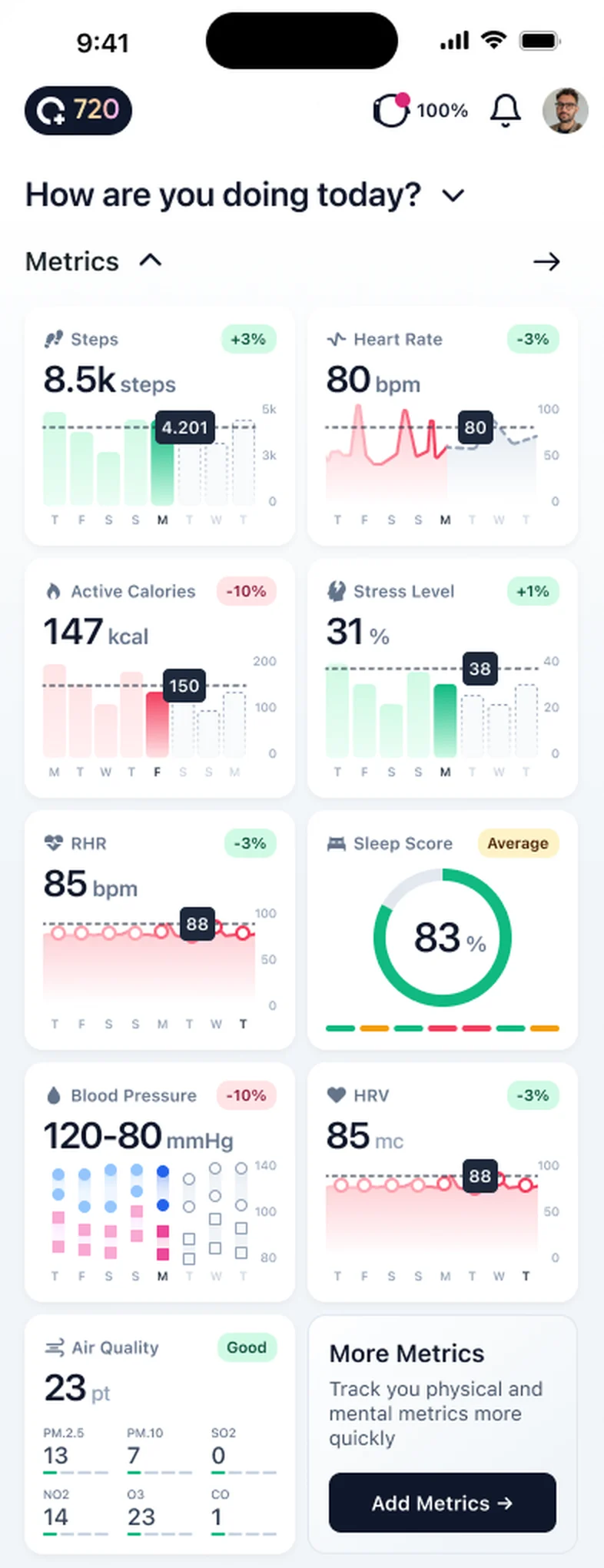 Dr. Kirill Rudinsky16 min readStressCortisol Face and Cortisol Belly: What Is RealCortisol face and cortisol belly are all over social media. Here is what cortisol does, when it truly changes how you look, and how it is tested.
 Dr. Lena Hoffmann16 min read
Start here: which article answers your question
Each article starts from a real question. Pick the one closest to yours.
- I have felt wired for weeks. Is this normal stress, chronic stress or burnout? Read Acute vs chronic stress. It shows how to tell a short burst from a load that never lifts, where burnout fits, and what helps each one.
- A video says my puffy face or belly fat is caused by cortisol. Read Cortisol face and cortisol belly. It explains what cortisol does, what real long-term high cortisol looks like, how it is tested, and why supplements sold to lower it deserve caution.
What these stress and cortisol articles explain
Stress is a normal response. MedlinePlus explains that your body releases hormones that sharpen attention, tense your muscles and raise your pulse. In short bursts that helps. The US National Institute of Mental Health describes acute stress as coming from a one-off event and chronic stress as coming from pressures that keep returning or last a long time. Symptoms overlap, so the difference is the pattern: how long it lasts, and whether you recover in between.
Burnout is about work. The World Health Organization describes burnout as an occupational phenomenon resulting from chronic workplace stress that has not been successfully managed. It has three parts: exhaustion, growing mental distance or cynicism about your job, and feeling less effective at work.
Cortisol is not a villain. It helps control inflammation, blood sugar and blood pressure, and it is usually highest in the morning. Truly high cortisol over a long time is called Cushing's syndrome. When it is not caused by medicines it is rare: NIDDK estimates about 40 to 70 cases per million people. The most common cause is long-term use of steroid medicines. A fuller face or a softer middle has many everyday explanations, and neither a mirror nor a wearable can tell you your cortisol level.
Signs that stress is building up
Stress rarely introduces itself by name. It tends to show up as a cluster of small changes that you notice before you connect them.
In the body. MedlinePlus lists headaches and general aches, a stiff jaw or neck, an upset stomach, tiredness, and changes in sleep and weight among the physical signs.
In your head and habits. It adds forgetfulness, low energy and poor focus, and leaning on alcohol or medicines to relax.
Any one of these has other possible causes, so treat them as clues. What points to stress is the timing: several appearing together during a hard stretch and easing when it passes. Signs that linger, or new symptoms, deserve a proper check. Acute vs chronic stress walks through how to tell a passing burst from a load that has become chronic.
Practical steps for this week
Breathe slowly for five minutes
The NHS suggests breathing in gently while counting to five, then out for the same count, for at least five minutes. Practise it daily, not only in a crisis.
List what presses on you
Write down the three biggest pressures. For each, ask whether it can be reduced, shared, delayed or accepted for now.
Protect the basics
The CDC suggests at least seven hours of sleep, building up to about two and a half hours of activity a week, balanced meals and less alcohol.
Keep a two-week note
Note triggers, sleep, energy and mood. NIMH suggests a journal to spot triggers and what helps.
Measure your waist, not your cortisol
The NHLBI says a waist over 35 inches (about 89 cm) for women or 40 inches (about 102 cm) for men raises the risk of heart disease and type 2 diabetes.
Pause cortisol supplements
The NIH Office of Dietary Supplements notes that supplements do not need FDA approval before they are sold. Ask a pharmacist first.
Habits that quietly make stress worse
Some ways of coping bring relief tonight and a bigger load next week. The NHS warns against using alcohol, cigarettes, gambling or drugs to deal with stress, and notes that relying on caffeine has the same trade-off. It also suggests setting small goals you can actually reach rather than trying to fix everything at once.
If you notice that a drink every evening or an extra coffee every afternoon has become the main way you get through, read it as a signal, not a solution. A short note of what you reached for and when often makes the pattern obvious.
What a wearable can and cannot show about stress
A wearable sees your body, not your situation. Several days of a higher resting heart rate and lower HRV can be a fair prompt to look at what is going on: sleep, workload, alcohol, a coming cold. The same signals move after hard exercise, illness, caffeine or a bad night, so they cannot tell acute from chronic stress, and they cannot measure cortisol or diagnose burnout, anxiety or depression.
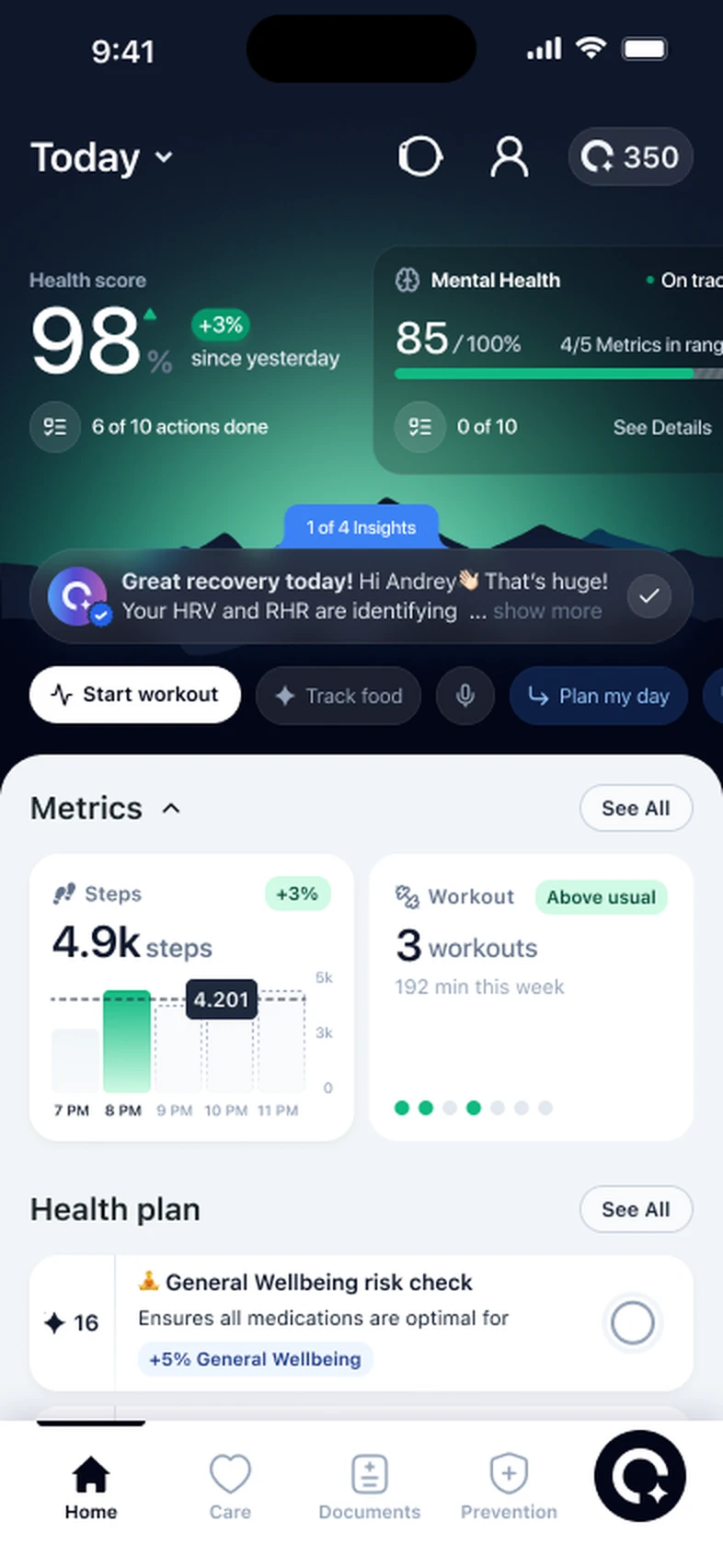
ONU folds those signals into one daily ONU Score compared with your own baseline, with weekly and monthly trends, so you can see whether a demanding period is showing up and whether it settles afterwards. ONU is a wellness product, not a medical device. Use it as a mirror for patterns and let how you feel lead. What a good HRV is explains why one low reading means little.
When to talk to a professional
MedlinePlus suggests contacting a provider if you feel overwhelmed, if stress is affecting your health, if you have new or unusual symptoms, panic symptoms such as dizziness or a racing heartbeat, or if you cannot function at home or work. See a clinician if your face or body shape changes without explanation, especially with easy bruising, wide purple stretch marks, muscle weakness, or new high blood pressure or blood sugar. Never stop a prescribed steroid on your own.
If you feel at risk of harming yourself or someone else, contact emergency services now. In the US you can call or text 988. In the UK, call 999 in an emergency or 111 for urgent advice. Treat chest pain, fainting or severe breathlessness as a possible emergency, even if you think stress is the cause.
Questions people ask
- How long does stress have to last to be chronic?
- There is no fixed cut-off. MedlinePlus describes chronic stress as lasting weeks or months. The better question is whether you recover in between.
- Is burnout the same as chronic stress?
- Not quite. The WHO defines burnout as the result of chronic workplace stress that has not been managed. Chronic stress can come from any part of life.
- Can I tell my cortisol is high from how I look?
- No. The features called cortisol face have many causes. Only a clinical test, interpreted by a clinician, can show your cortisol level.
- Does a low HRV mean I have chronic stress?
- No. Sleep, alcohol, exercise and illness all affect HRV. A wearable shows body signals, not causes.
- Can supplements lower cortisol?
- Supplements are not tested to treat disease before they are sold. Talk to a doctor or pharmacist first, especially if you take other medicines.
- Can good events cause stress?
- Yes. The NHS lists buying a home, having a baby or planning a wedding among common causes. Because they have an end point, that stress often passes.
Get to know a healthier you.
Bring your everyday signals and health information into a clearer picture.