Educational information to prepare a conversation with your doctor. ONU does not diagnose, predict or prevent disease.
Explore practical details
A CLOSER LOOK
Health areas: the essentials.
What matters, what to check, and where to go from here.
Preventive decisions start with your circumstances
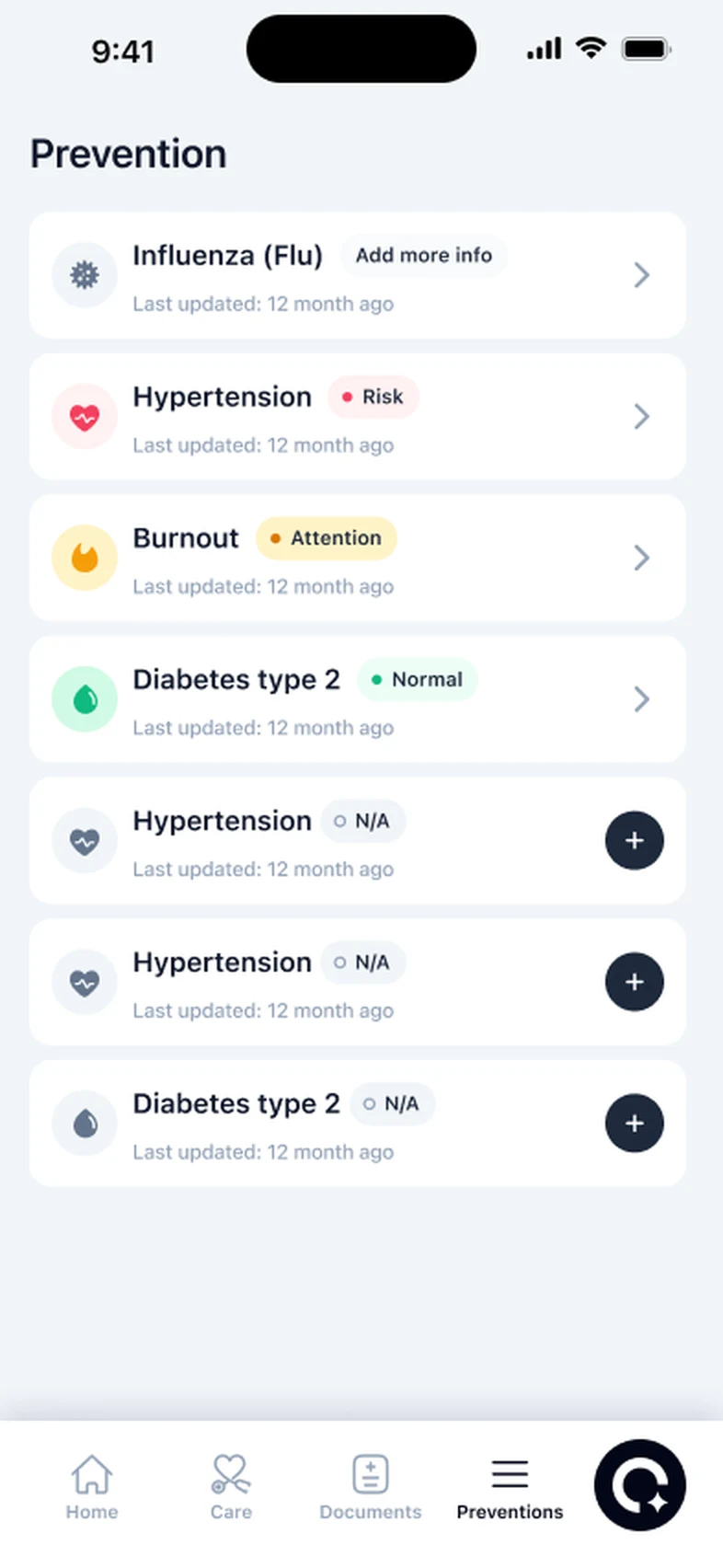
Prevention is not predicting every illness from a wearable. Relevant screening, vaccinations and risk-factor review depend on age, history, family history, symptoms and local guidance. Use the topic pages to prepare questions for a qualified professional rather than to assign yourself a diagnosis or risk score.
Why symptoms and numbers need different approaches
Some concerns require a measured test rather than symptom guessing: blood pressure needs appropriate measurement and cholesterol usually needs a blood test. A normal wearable reading cannot rule out either. The condition resources explain the information to bring and the limits of consumer estimates.
Choose a specific topic
Explore diabetes, blood pressure, weight, circulation, cholesterol, thyroid, anemia or stress according to the question you want to discuss. Keep original reports, medicines and relevant dates together. A clinician can determine whether testing or follow-up is appropriate and what result would change the plan.
Follow through on an agreed plan
Know who reviews results, how you receive them and when to return. Ask what to do if a result does not arrive or symptoms change. Healthy routines can support wellbeing, but should not replace recommended assessment or treatment. For emergencies, use local services rather than a checklist.
YOUR NEXT STEP
Reflect on the areas that matter in your everyday.
Disease prevention checks are short, honest tools for one job: helping you decide whether something is worth raising with a doctor, and what to bring when you do. They are not diagnoses, and none of them invents a risk percentage.
There are eight checks, covering type 2 diabetes, blood pressure, weight and metabolic health, heart and circulation, cholesterol, thyroid, anaemia, and stress and burnout.
Each takes a few minutes, shows its working, and ends with a summary you can take to an appointment.
Most long-term conditions develop quietly. The CDC notes that most chronic diseases are caused by a short list of risk factors: tobacco use, poor nutrition, physical inactivity and excessive alcohol use.
A check can point you towards a blood test or a blood pressure reading. Only those, read by a clinician, can tell you what is actually going on.
If you have symptoms that worry you, especially chest pain, breathlessness, sudden weakness or heavy bleeding, contact a healthcare professional or emergency services rather than taking a check.
What disease prevention checks are
Most of the conditions these checks cover share two features. They build slowly, often over years, and for a long time they cause no symptoms or only vague ones. Raised blood sugar, high blood pressure and high cholesterol can all sit unnoticed until they cause harm. Thyroid problems and low iron hide behind tiredness that everyone has. Burnout creeps in one long week at a time.
That quiet build is also what makes prevention possible. The CDC lists the steps that help prevent chronic disease: not smoking, eating a balanced diet, regular physical activity, limiting alcohol, getting enough sleep, knowing your family history, and having the screenings and preventive visits that suit your age and risk.
The checks on this site sit in the space before a diagnosis. They help you notice which risk factors apply to you, which numbers you are missing, and which questions are worth asking, so that a short appointment can be a useful one.
In short, a check is the first step of a conversation, never the last word in it.
The eight disease prevention checks
Each check works differently, depending on what its source material can honestly support. Some do arithmetic on your own measurements, some are structured questionnaires, and some produce a preparation sheet instead of a score.
Check
What it does
What you need
Time
Open
Type 2 diabetes risk test
A worksheet that adds up the habits and history linked to type 2 diabetes, line by line
Your age and what you know about your history and routine
If you are not sure where to start, start with what is already on your mind. These are some common starting points.
You are 40 or over and do not know your blood pressure. Start with the blood pressure average calculator, after a few days of home readings. The NHS notes that checks are particularly important from 40.
A parent or sibling has type 2 diabetes, or you had gestational diabetes. Start with the type 2 diabetes risk test.
Someone in your family had a heart attack or stroke young. Start with the heart disease risk check.
You are tired all the time and sleep does not fix it. Try the anaemia symptoms test and the thyroid symptoms test; both point to blood tests that can answer the question.
Work has worn you down for months. Try the burnout test.
Many risk factors travel together. Blood pressure, blood sugar, cholesterol and weight affect each other, so if one check raises a question, the related ones are worth a few more minutes.
Which screenings to expect, and when
Disease prevention checks work best alongside the routine screenings your doctor offers. The American Heart Association sets out a simple schedule for adults, and the NHS adds that blood pressure checks are particularly important from age 40. Use this as a prompt for what to ask about, not as a replacement for your own doctor's advice, which takes your history into account.
Screening
Usually starts
How often, if results are normal
Blood pressure
Every routine visit, at any age
At least once a year
Cholesterol (lipid panel)
Age 20
Every 4 to 6 years
Blood glucose or HbA1c
Age 45, or earlier if overweight with another risk factor
At least every 3 years
Weight, BMI and waist
Every routine visit
Waist checked when BMI is 25 or more
10-year cardiovascular risk estimate
Age 40
As your numbers change
If a result is outside the normal range, or you have a strong family history or an existing condition, your doctor will usually suggest checking more often. Thyroid and iron tests are not part of routine adult screening for everyone; they are usually done when symptoms or history point to them, which is where the thyroid and anaemia checks help.
What the checks can and cannot tell you
Every check is built on a source document: one of ONU's reference risk models, reviewed before anything was published. Where a model's scoring could be reproduced faithfully, the check shows its points and the band the model itself defines. Where a model had gaps or contradictions, or reworked a licensed clinical instrument, ONU publishes no score at all and gives you a preparation sheet instead. A confident number with nothing solid behind it would do more harm than no number.
So be clear about what you get. A check can show which of your answers matter, do arithmetic on numbers you enter, and give you a written summary. It cannot diagnose a condition, predict whether you will develop one, or replace a blood test, a blood pressure reading or a clinician's judgment. Several of the full reference models rely mainly on laboratory results, which need a doctor to interpret, so the questionnaire you see covers one part of the picture.
ONU is a wellness company, not a medical service. Its products are not medical devices and do not diagnose, treat or prevent disease.
Using a result with your doctor
ONU Pro includes a call with a doctor if you need help understanding your results. Take your summary to your own GP, family doctor or clinic. If you are unsure whether something is urgent, the emergency information page explains when not to wait.
Each check ends with a summary of what to mention, what to bring and what to ask. Keep it on your phone or print it.
Gather the numbers it points to
A week of blood pressure readings, an old lipid panel or HbA1c result, your height, weight and waist, and a list of every medicine and supplement you take.
Lead with symptoms
If anything has changed in how you feel, say that first. Appointments are short, and symptoms change what a doctor does next.
Ask the specific question
Each summary includes one, such as whether an HbA1c test, a lipid panel, TSH or ferritin makes sense now. Specific questions get specific answers.
Agree when to check again
Most of these numbers move with time and with changes you make. Knowing when to repeat a test makes the next result meaningful.
How the checks fit with the ONU app
A check is a moment. Health happens across weeks. The ONU app is built for the weeks in between.
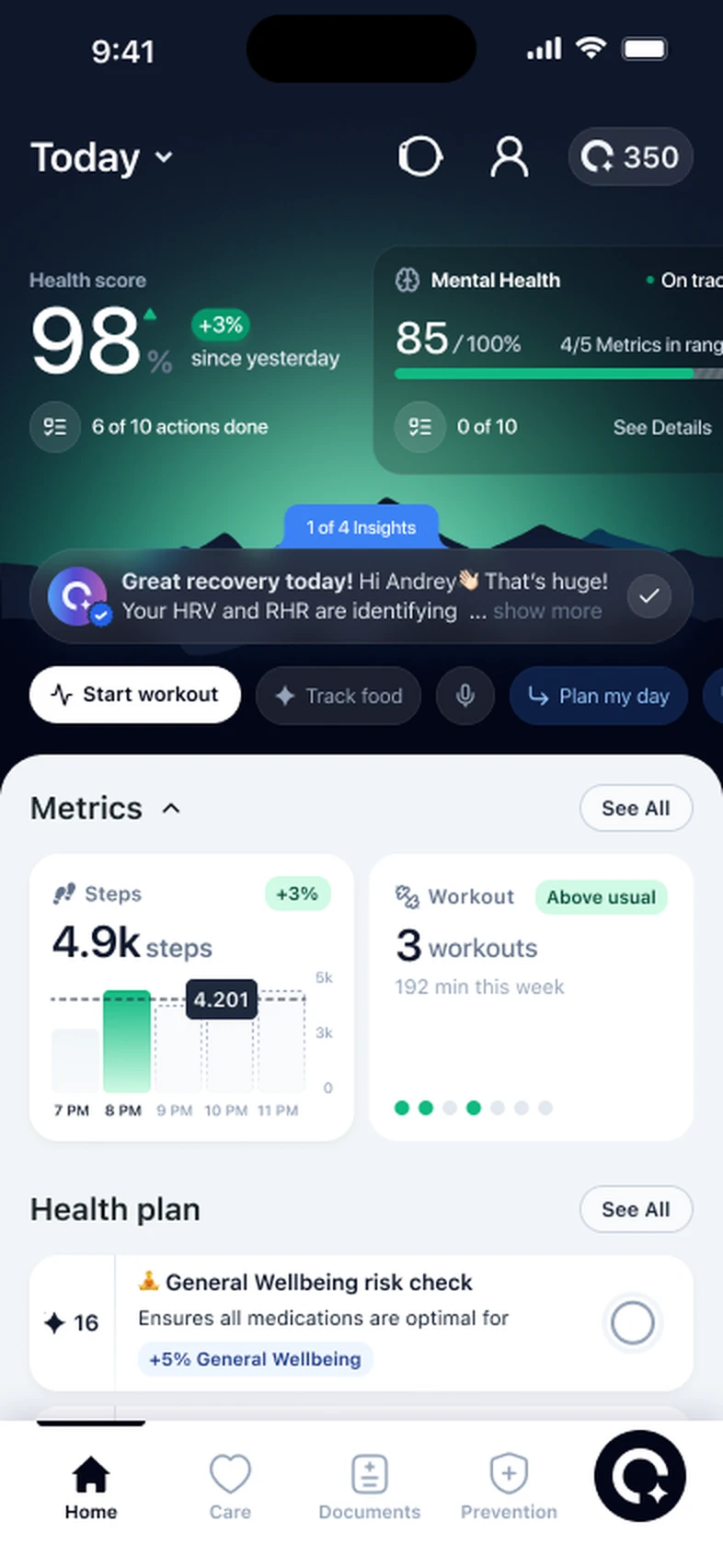
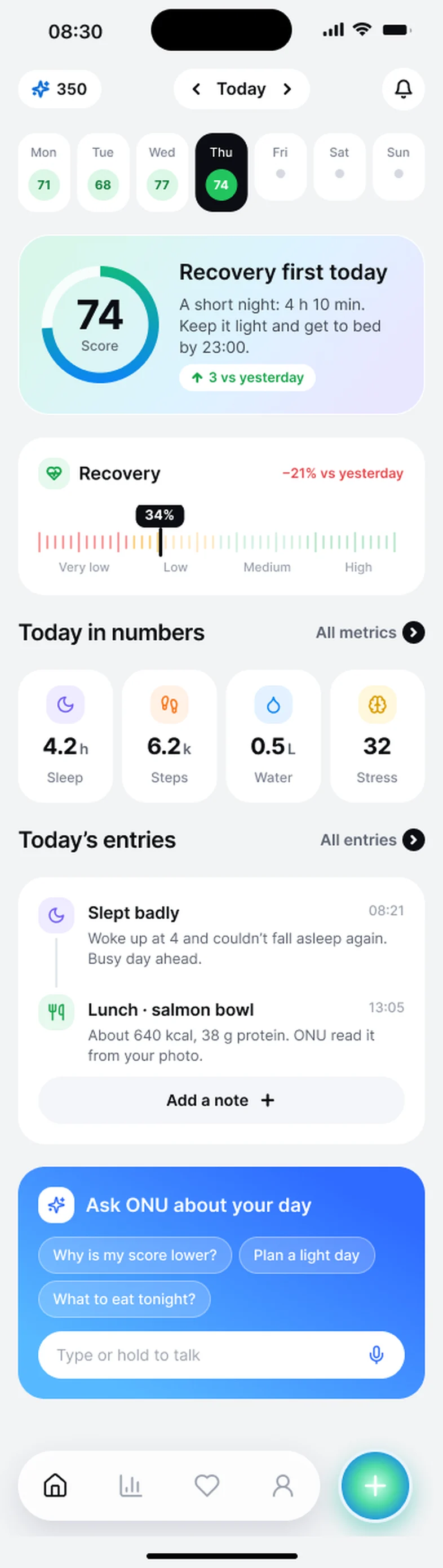
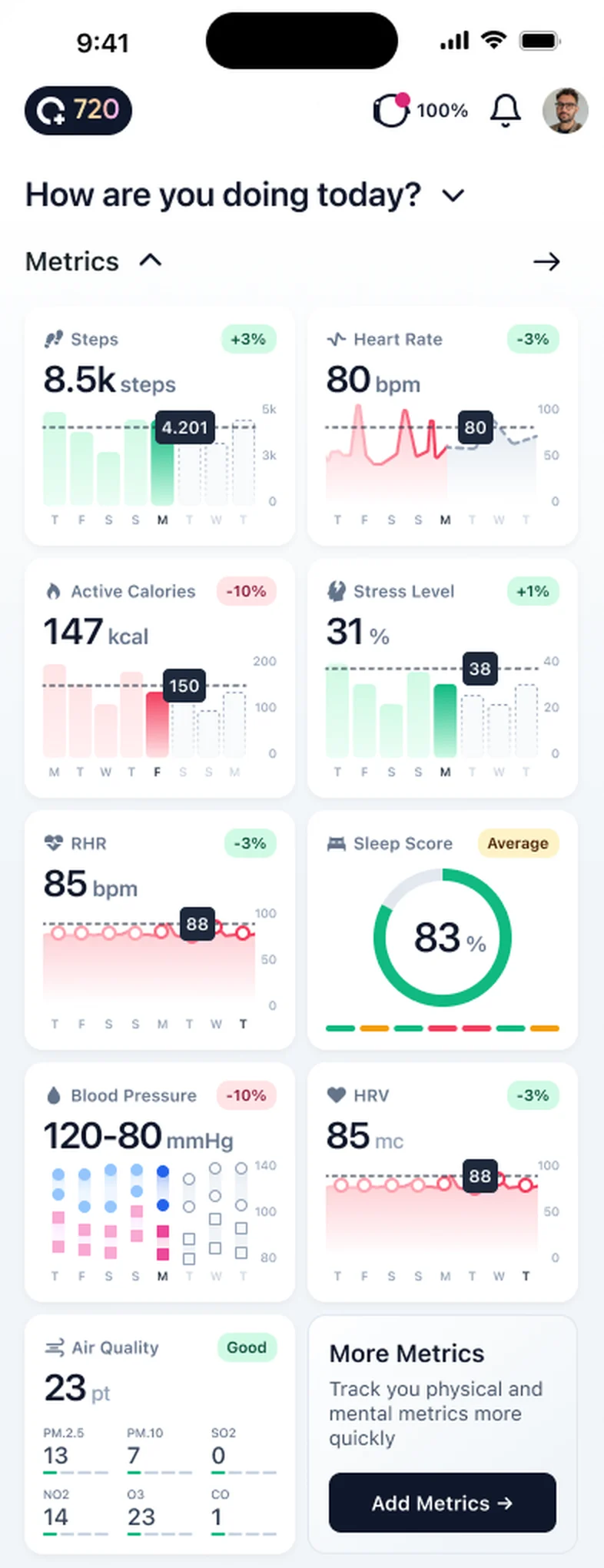
It runs on iPhone, with every feature free for 3 days before ONU Pro, and builds a daily ONU Score from your sleep, recovery signals such as heart rate variability and resting heart rate, and activity, compared with your own baseline. It suggests one small step a day and shows weekly and monthly trends, so you can see whether the walking, the earlier nights or the weeks without alcohol are actually happening. It connects to Apple Health, WHOOP and Garmin, and Apple Watch, Oura and others can reach it through Apple Health. You can also upload lab reports, so your HbA1c, lipid panels, thyroid and blood count results sit in one place with their dates.
ONU Pro adds deeper biomarker insights and longer historical trends, and the ONU Bracelet tracks sleep, heart rate variability, resting heart rate, recovery and activity with no screen and no notifications. None of these is needed to use the checks, and none of them diagnoses anything.
Beyond prevention: symptom questionnaires
Alongside these eight disease prevention checks, the health check section has questionnaires for nine specific conditions, including irritable bowel syndrome, Crohn's disease, ulcerative colitis, jaundice and allergy. They work the same way: a short set of questions and a summary to take to a doctor, never a diagnosis. If you are not sure which applies to you, start there.
When not to use a check
Some situations need a person, not a form. Call local emergency services for chest pain or pressure, sudden breathlessness, signs of stroke such as a drooping face, arm weakness or slurred speech, fainting, heavy bleeding, vomiting blood or black stools, or thoughts of harming yourself.
Contact a doctor promptly, rather than taking a check, if you are pregnant and have new symptoms, if you already have a diagnosed condition and it is changing, or if you have lost weight without trying.
Questions people ask
Are these disease prevention checks free?
Yes. All eight checks are free to use, and you do not need an ONU account, app or bracelet to take them.
Do the checks diagnose anything?
No. They help you decide what to raise with a doctor and what to bring. Diagnosis needs measurements, blood tests and a clinician.
Why does ONU not give me a risk percentage?
Because a percentage needs a validated model and measured inputs. Where ONU's source models could not support one honestly, the check gives you a preparation sheet instead of a number that looks precise and means little.
Whenever something changes: a new result, a new symptom, a change in habits or a birthday that moves you into a new screening age. The tests themselves should be repeated at the intervals your doctor suggests.
Does ONU sell blood tests or doctor appointments?
ONU does not sell blood tests. ONU Pro includes a call with a doctor if you need help understanding your results. The checks tell you which tests to ask your own doctor about, and the ONU app lets you store the reports you upload.
Is my health data safe in the ONU app?
Health data in the app is encrypted in transit and at rest, and you choose which sources ONU can read. See the privacy policy for more.
Can a wearable replace these checks?
No. A wearable shows sleep, activity and recovery trends, which are useful context. It cannot measure blood sugar, cholesterol, thyroid hormones or iron, and it cannot replace a blood pressure cuff.