ONU Health

Health Guides

The knowledge collection

A good place
to begin.

Hands gently checking a wrist pulse.

Heart Rate Variability: What HRV Means & How to Use It

Learn what heart rate variability measures, why your baseline matters, what can change HRV, and how to interpret a low reading without chasing a score.

A sleep mask, bedside clock and diary on blue linen.

Sleep Scores Explained: Accuracy, Meaning & Limits

Understand how sleep scores are estimated, why a good score may not match how you feel, and how to use wearable sleep trends more effectively.

Gloved hands arranging capped sample tubes in a laboratory.

How to Read Blood Test Results: Ranges, Units & Flags

Learn how to read a blood test report, understand reference ranges and abnormal flags, compare results, and prepare useful questions for your clinician.

Morning light falling across an hourglass and fern.

Cortisol Explained: Symptoms, Testing & Stress Myths

Understand what cortisol does, why symptoms alone cannot diagnose high cortisol, how testing works, and what wearable stress scores can really tell you.

An adult resting at a kitchen table in afternoon light.

Always Tired? Understanding Fatigue & Low Energy

Explore persistent fatigue, how it differs from sleepiness, what to record, and when a healthcare review is more useful than another wearable score.

A closed laptop and glasses set aside at the end of a workday.

Burnout & Chronic Stress: Signs, Differences & Support

Understand burnout as a work-related phenomenon, how it differs from everyday stress, and practical ways to seek support and address ongoing demands.

Two generations walking together through an olive grove.

Biological Age Tests: Meaning, Limits & Healthy Aging

Understand what biological age estimates measure, why different tests disagree, and how to focus on useful preventive health decisions.

A clinician listening during a routine health check.

Preventive Checkups: What to Discuss & How to Prepare

Prepare for a preventive health visit with a clear history, medication list, screening questions and a follow-up plan tailored to your circumstances.

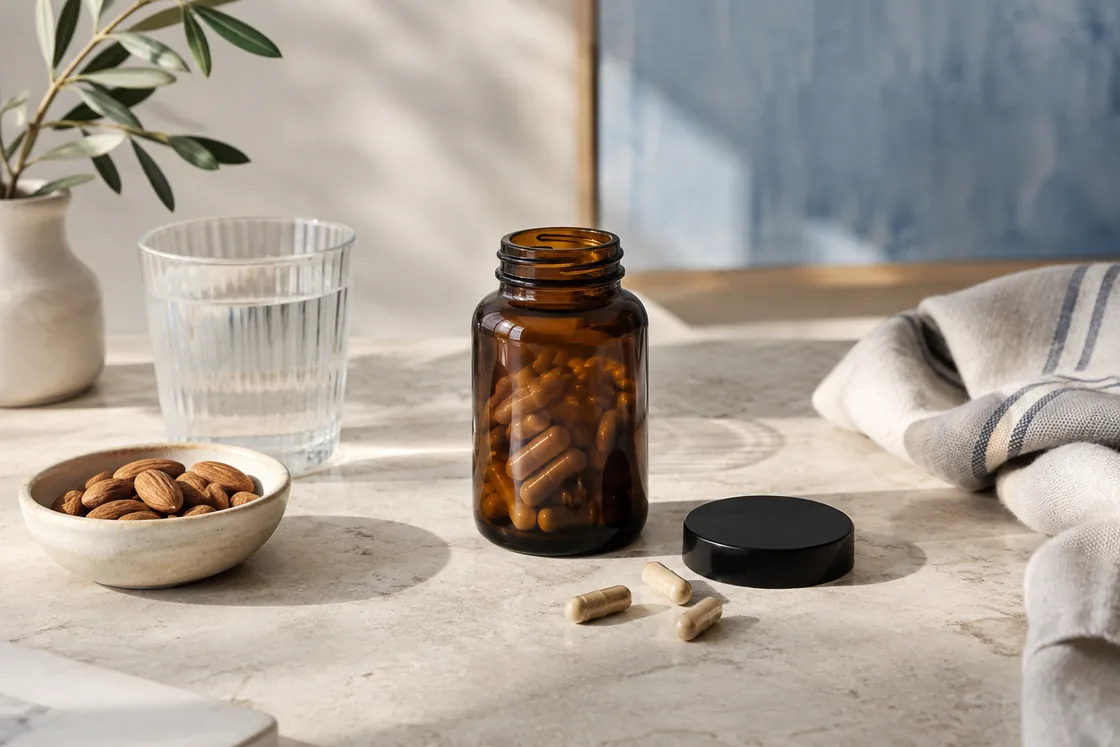
An unbranded supplement bottle beside almonds and water.

Supplements: Evidence, Labels, Interactions & Safer Choices

Learn how to assess supplement claims, read doses and ingredients, check interactions, and decide when testing or professional advice is more useful.

A walker pausing quietly on a park bench.

Resting Heart Rate Higher? Causes & Next Steps

Understand a rise in resting heart rate, check measurement conditions, recognize symptoms that need care, and compare trends without self-diagnosing.

An adult sitting on the edge of a bed in morning light.

Tired After 8 Hours of Sleep? Causes & Next Steps

Still tired after eight hours of sleep? Understand sleep quality, common causes of daytime fatigue, what to track, and when to seek medical advice.

A wave washing around a smooth stone on wet sand.

Acute vs Chronic Stress: Differences & Next Steps

How is acute stress different from chronic stress? Compare duration, common signs, what to track, and when ongoing stress calls for support.

Follow your curiosity.

Practical details

Practical details

  1. Choose a guide by the question you want answered

    Use Sleep for routine and daytime-function questions, Stress for ongoing demands, Recovery for activity context, Labs for report-reading questions, and Nutrition for food and supplement decisions. Weight Management and Preventive Care explain how to prepare for appropriate professional support rather than prescribing a program.

  2. Start with a definition when a metric is unfamiliar

    The library explains HRV, sleep scores, cortisol and blood-test fields. A device’s label can sound clinical while representing an estimate. Learn what is measured and what remains unknown before using a number to justify a change in routine or a purchase.

  3. Turn reading into a practical question

    Identify one observation to record and one question the information does not answer. Several ordinary days can be more useful than a dramatic single reading. The guides suggest concise diaries, original records and questions to take into care instead of asking you to collect every possible metric.

  4. Know when a guide is not enough

    These resources are general education. Persistent or disruptive symptoms deserve professional assessment, and emergencies need local emergency services. A reassuring score does not rule out a condition. Use the cited independent sources for further reading and the relevant clinician for an individual plan.

Reflect on your routine in five questions.

Take your health check

Common questions

Are these guides medical advice?+

They are educational resources. Bring individual symptoms, test results, and treatment questions to a qualified healthcare professional.

How can I use this in ONU?+

Connect your supported sources and organize records in the app. Use the context to notice patterns and prepare questions.

A GOOD PLACE TO START · FREE DOWNLOAD

Less guessing.
More understanding.

Meet your Health Clarity Planner. Seven days of simple reflection prompts, a place for your everyday observations, and a checklist to prepare your next health conversation.


  • A printable weekly reflection page
  • A health-records organization checklist
  • Space for the questions that matter to you
Download your free planner No email required. This planner is for reflection, not medical assessment.

Your health is personal.
It stays that way.

How ONU protects your data

Protected in transit and at rest

Health data is encrypted in transit and at rest, from your device to ONU’s systems.

Access with a purpose

Access to identifiable health data is limited to what’s operationally necessary.

Questions about your data?

See our Privacy Policy for how to request access, export or deletion.

Find a starting point that feels like yours.

Reflect on sleep, stress, movement and energy in five questions.