A soft lump that moves is usually exactly that.
A lipoma is a benign growth of fat cells under the skin: soft, mobile, slow-growing and painless. They are common, often multiple, and frequently run in families. The features that argue against a lipoma — rapid growth, hardness, fixation, pain, size beyond about five centimetres — are exactly the ones worth reporting.
Worth answering if you have found a soft lump and want to describe it precisely to a doctor.
- A soft lump under the skin that moves when you press it
- Growing slowly over months or years, if at all
- Painless, and no change to the skin over it
- Often more than one, and often in the family
- Most commonly on the trunk, shoulders, neck, arms or thighs
Any lump that is growing quickly, hard, fixed in place or painful should be examined, whatever this questionnaire returns.
Three steps, in the order a clinician takes them.
- 1
Most of this is settled by examination
Soft, mobile, well-defined, painless, slow-growing, with normal skin over it — a clinician can usually recognise a lipoma by feel, and no further test is needed.
- 2
Imaging when a feature does not fit
Ultrasound or MRI when a lump is large, deep, firm, fixed, painful or growing quickly. Those features are the ones that need excluding something else, and they are exactly what is worth reporting.
- 3
Removal is a choice, not usually a necessity
A lipoma is benign, so removal is for discomfort, pressure on something, or appearance. Where the diagnosis is uncertain, it is removed to be examined rather than watched.
You walk away with a page you can hand over.
Under a minute. It asks about your history only, scores it the way the source document scores it, and gives you the answers back as something worth mentioning, worth bringing and worth asking — in a file you can download. It is not a diagnosis, and it does not predict anything.
Take the questionnaire- How long it has been there, and whether it has changed size
- Whether it hurts, and whether it moves when you press it
- A photograph with something for scale beside it
- Whether anyone else in the family gets them
The lipoma questionnaire
Four questions about your history and three about activity. Lipomas are benign fatty lumps; this is about the pattern the model associates with them, not about any individual lump.
- 7questions
- Under a minute.to finish
- Nothing savedanswers stay in this tab
This is the questionnaire domain of ONU’s own model, not a diagnosis and not a probability. A lipoma is confirmed by examination, and imaging where needed, not by a set of questions.
Straight answers, including the awkward ones.
How do I tell a lipoma from something worth worrying about?
You do not have to, and that is the point of getting it looked at. The features that argue against a simple lipoma are rapid growth, firmness, being fixed in place, pain, size beyond about five centimetres, and skin changes over it. Any of those and it should be examined and probably imaged.
Are lipomas cancerous?
No, lipomas are benign growths of fat cells. A rare malignant tumour of fat tissue, liposarcoma, can resemble one, which is why a lump that is deep, large, firm or growing quickly is imaged rather than assumed.
Do lipomas need removing?
Usually not. They are removed when they are uncomfortable, press on something, catch on clothing, bother you to look at, or when the diagnosis is not certain. Leaving a confirmed lipoma alone is a legitimate choice.
Do they come back?
A completely removed lipoma rarely returns in the same place, though people who get one often get others elsewhere. That is the pattern this questionnaire asks about.
One domain of a larger model.
This is one of four domains. The others — eight blood markers, two body measurements and a sex term — need results a clinician interprets, so the full score cannot be produced here.
Questionnaire source: Lipomas.docx — questionnaire domain, negative and positive impact
Independent health information: NHS: Lipoma. This source explains the condition; it does not validate the questionnaire as a diagnostic test.

Weight and metabolic health
Weight on its own explains very little. Alongside movement, sleep and what you eat, it starts to describe something useful.
Read the area
Ascites
Worth answering if your abdomen has been swelling, if you have a known liver condition, or if you are preparing for an appointment about either.
Open the check
Jaundice
Worth answering if you or someone you look after has noticed yellowing, dark urine or pale stools, and wants to arrive at an appointment with the history already straight.
Open the check
Crohn’s disease
Worth answering if you have had months of abdominal pain, diarrhoea, weight loss or fatigue and are trying to describe it accurately to a clinician.
Open the checkA questionnaire is a snapshot. A night is not.
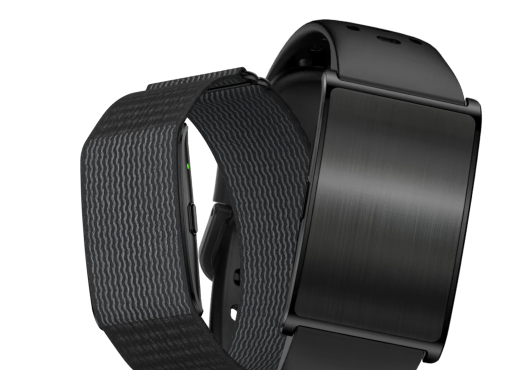
This was your history, written down once. The bracelet is the part that keeps watching — sleep, resting heart rate, temperature and movement, night after night, in one place.