The pattern matters more than any single bad week.
Crohn’s disease is a form of inflammatory bowel disease in which inflammation can affect any part of the digestive tract, often in patches and through the full thickness of the wall. It typically appears in adolescence or early adulthood, runs in families, and is diagnosed with endoscopy, imaging and laboratory work — never with a questionnaire.
Worth answering if you have had months of abdominal pain, diarrhoea, weight loss or fatigue and are trying to describe it accurately to a clinician.
- Abdominal pain that keeps returning, often low and on the right
- Diarrhoea lasting weeks rather than days
- Losing weight without trying to
- Tiredness that rest does not fix
- Mouth ulcers, sore joints, or painful red lumps on the shins
- Waking in the night with pain or needing the toilet
Blood in the stool, severe pain or an inability to keep fluids down is a reason to be seen now.
Three steps, in the order a clinician takes them.
- 1
A pattern over months, not a bad week
How long, how often, what makes it worse, whether you wake at night with it, whether weight has changed, and who else in the family has inflammatory bowel disease. A single appointment captures a bad week badly, which is why writing the pattern down first changes the conversation.
- 2
Blood and stool tests to see if inflammation is there at all
Inflammatory markers, a full blood count, iron and B12, and a stool calprotectin — which is good at separating inflammation from irritable bowel syndrome and decides who needs a camera test.
- 3
Then endoscopy and imaging to see where and how much
Colonoscopy with biopsies is what makes the diagnosis; MRI or a capsule study looks at the small bowel, which colonoscopy cannot reach. Crohn’s is diagnosed on what those find, not on symptoms alone.
You walk away with a page you can hand over.
About a minute. It asks about your history only, scores it the way the source document scores it, and gives you the answers back as something worth mentioning, worth bringing and worth asking — in a file you can download. It is not a diagnosis, and it does not predict anything.
Take the questionnaire- A rough diary: how many times a day, for how many weeks, and what the stool was like
- Your weight now and a few months ago
- Whether the pain or the toilet wakes you at night — this matters more than it sounds
- Family history of Crohn’s, ulcerative colitis or coeliac disease
The Crohn’s disease questionnaire
Seven questions about bowel history and what previous investigations have shown. Two of them are scored in reverse — a normal stool culture counts towards the score, because it makes an infection a less likely explanation.
- 7questions
- a minute.to finish
- Nothing savedanswers stay in this tab
This is the questionnaire domain of ONU’s own model, not a diagnosis and not a probability. Crohn’s disease is confirmed by endoscopy, biopsy and laboratory tests, not by a set of questions.
Straight answers, including the awkward ones.
How is Crohn’s disease different from ulcerative colitis?
Both are inflammatory bowel disease. Crohn’s can affect any part of the digestive tract, in patches, and through the full thickness of the wall — so complications like narrowing and fistulas occur. Ulcerative colitis affects the colon and rectum continuously and only the lining, and bleeding tends to be the leading symptom. The distinction is made with endoscopy and biopsy, and it changes treatment.
Could this just be IBS?
It could, and IBS is far more common. What argues against IBS is bleeding, weight loss you did not intend, waking at night with symptoms, fever, or raised inflammatory markers and stool calprotectin. Those features are the reason a stool test is worth doing rather than assuming either answer.
How long does a diagnosis usually take?
Longer than it should, and part of the reason is that the history arrives in fragments. Blood and stool tests come back in days; a colonoscopy depends on local waiting times. Arriving with the pattern already written down is the part you can control.
What should not wait?
Blood in the stool, severe pain, a swollen tender abdomen, being unable to keep fluids down, or a fever alongside the symptoms. Those are reasons to be seen now rather than to fill in a questionnaire.
One domain of a larger model.
This is one of three domains. The others — sixteen blood and stool markers and three resting measurements — need results a clinician interprets, so the full score cannot be produced here.
Questionnaire source: Crohn’s disease.docx — questionnaire domain, negative impact
Independent health information: NIDDK: Crohn’s disease. This source explains the condition; it does not validate the questionnaire as a diagnostic test.

Weight and metabolic health
Weight on its own explains very little. Alongside movement, sleep and what you eat, it starts to describe something useful.
Read the area
Anaemia and iron
Low iron is one of the most common reasons people feel persistently drained — and one of the most straightforward to identify.
Read the area
Ascites
Worth answering if your abdomen has been swelling, if you have a known liver condition, or if you are preparing for an appointment about either.
Open the check
Jaundice
Worth answering if you or someone you look after has noticed yellowing, dark urine or pale stools, and wants to arrive at an appointment with the history already straight.
Open the check
Ulcerative colitis
Worth answering if you have had weeks or months of bloody or urgent diarrhoea and want the history in one place before a referral.
Open the checkA questionnaire is a snapshot. A night is not.
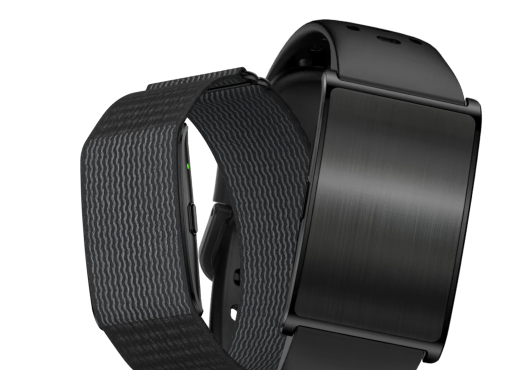
This was your history, written down once. The bracelet is the part that keeps watching — sleep, resting heart rate, temperature and movement, night after night, in one place.