Six questions about a pattern, not a bad day.
Ulcerative colitis is an inflammatory bowel disease affecting the colon and rectum continuously rather than in patches, usually with bleeding and urgency as the leading symptoms. It is diagnosed by colonoscopy with biopsy. Like Crohn’s, it relapses and remits, so the history over months carries real weight.
Worth answering if you have had weeks or months of bloody or urgent diarrhoea and want the history in one place before a referral.
- Diarrhoea with blood or mucus, lasting weeks
- A sudden urgent need for the toilet, sometimes at night
- Cramping on the left side that eases after opening the bowels
- Feeling you have not finished, even straight afterwards
- Tiredness, and the pallor that goes with losing iron
More than six bloody stools a day, fever, or a racing heart alongside them is a reason to be seen the same day.
Three steps, in the order a clinician takes them.
- 1
The history, and how severe it is right now
How many stools a day, whether there is blood, whether it wakes you, how long it has run and what it was like at its worst. Severity is counted in stools per day alongside fever and pulse, and it decides how fast everything else moves.
- 2
Stool tests first, to rule infection in or out
A stool culture excludes an infection that imitates it exactly, and calprotectin confirms inflammation is present. Bloods check for anaemia and inflammatory markers.
- 3
Colonoscopy with biopsy makes the diagnosis
It shows continuous inflammation from the rectum upwards and how far it extends, and the biopsies confirm it. Nothing short of that is a diagnosis of ulcerative colitis.
You walk away with a page you can hand over.
Under a minute. It asks about your history only, scores it the way the source document scores it, and gives you the answers back as something worth mentioning, worth bringing and worth asking — in a file you can download. It is not a diagnosis, and it does not predict anything.
Take the questionnaire- Stools per day, and how many had blood in them
- Whether you are getting up at night, and how often
- Any recent antibiotics or travel — both change what gets tested first
- Family history of inflammatory bowel disease
The ulcerative colitis questionnaire
Six questions about bowel history and previous investigations. Two are scored in reverse, the same way the Crohn’s model does it.
- 6questions
- Under a minute.to finish
- Nothing savedanswers stay in this tab
This is the questionnaire domain of ONU’s own model, not a diagnosis and not a probability. Ulcerative colitis is confirmed by endoscopy and biopsy, not by a set of questions.
Straight answers, including the awkward ones.
Is blood in the stool always ulcerative colitis?
No. Haemorrhoids and anal fissures are far more common causes of bright blood, and infection can produce bloody diarrhoea for a week or two. What points towards colitis is bleeding that continues for weeks with urgency and diarrhoea. Either way it needs looking at rather than guessing — that is the honest answer for any bleeding.
What counts as a severe flare?
More than six bloody stools a day, or bloody diarrhoea with a fever, a fast pulse or feeling faint. That combination is assessed the same day, because severe colitis is managed in hospital.
Does ulcerative colitis go away?
It relapses and remits rather than resolving. Long stretches of remission are normal and are the goal of treatment. Because of that pattern, a record of what your own flares look like is genuinely useful over years, not just at diagnosis.
Why does this questionnaire sometimes refuse to give me a band?
Because the source document it was transcribed from leaves a score of 4 in no band at all. Nudging a boundary to cover it would mean deciding, on the document’s behalf, which band a real person at exactly that score belongs in. So the score is shown and the gap is named instead.
One domain of a larger model.
This is one of three domains. The others — fifteen blood and stool markers and two resting measurements — need results a clinician interprets, so the full score cannot be produced here.
Questionnaire source: Ulcerative colitis.docx — questionnaire domain, negative impact
Independent health information: NIDDK: Ulcerative colitis symptoms and causes. This source explains the condition; it does not validate the questionnaire as a diagnostic test.

Anaemia and iron
Low iron is one of the most common reasons people feel persistently drained — and one of the most straightforward to identify.
Read the area
Weight and metabolic health
Weight on its own explains very little. Alongside movement, sleep and what you eat, it starts to describe something useful.
Read the area
Ascites
Worth answering if your abdomen has been swelling, if you have a known liver condition, or if you are preparing for an appointment about either.
Open the check
Jaundice
Worth answering if you or someone you look after has noticed yellowing, dark urine or pale stools, and wants to arrive at an appointment with the history already straight.
Open the check
Crohn’s disease
Worth answering if you have had months of abdominal pain, diarrhoea, weight loss or fatigue and are trying to describe it accurately to a clinician.
Open the checkA questionnaire is a snapshot. A night is not.
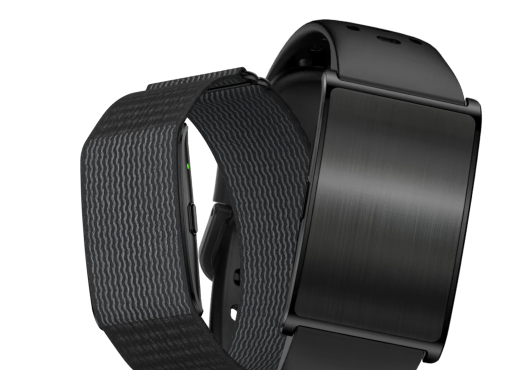
This was your history, written down once. The bracelet is the part that keeps watching — sleep, resting heart rate, temperature and movement, night after night, in one place.