A diagnosis of pattern, and of what has been ruled out.
Irritable bowel syndrome is a disorder of gut–brain interaction: recurrent abdominal pain tied to defaecation, with a change in stool frequency or form, and no structural disease to explain it. It is diagnosed positively, on symptom criteria, but the alarm features that point elsewhere have to be absent first.
Worth answering if your gut symptoms have run for months, come and go with stress or food, and you want to describe the pattern accurately.
- Abdominal pain tied to opening your bowels — better after, or worse before
- Stools that swing between loose and hard
- Bloating that builds through the day and settles overnight
- Symptoms that flare with stress, or with particular meals
- Months of this, with nothing found on tests
Bleeding, weight loss you did not intend, waking at night with symptoms, or symptoms starting after fifty are not IBS features and need a clinician’s eye.
Three steps, in the order a clinician takes them.
- 1
IBS is diagnosed positively, on the pattern
Recurrent abdominal pain related to defaecation, with a change in stool frequency or form, running for months. It is not a label applied when everything else is excluded — it has criteria of its own, and meeting them is the diagnosis.
- 2
But the alarm features have to be absent
Bleeding, unintended weight loss, waking at night with symptoms, a family history of bowel cancer or inflammatory bowel disease, and onset after fifty. Any of those and the investigation comes first.
- 3
A short set of tests, not an endless one
Usually a full blood count, coeliac serology, inflammatory markers and a stool calprotectin. Repeatedly re-testing a settled IBS diagnosis is its own problem; what helps more is tracking what actually sets it off.
You walk away with a page you can hand over.
About a minute and a half. It asks about your history only, scores it the way the source document scores it, and gives you the answers back as something worth mentioning, worth bringing and worth asking — in a file you can download. It is not a diagnosis, and it does not predict anything.
Take the questionnaire- Two weeks of notes: pain, stool form, and what you had eaten
- Whether the pain eases after opening your bowels
- What was happening in your life when it started
- Anything you have already cut out, and whether it helped
The irritable bowel questionnaire
Eleven questions. Most of them are scored in reverse, which is deliberate: irritable bowel syndrome is what remains once the investigations come back clear, so normal results count towards it rather than against.
- 11questions
- a minute and a half.to finish
- Nothing savedanswers stay in this tab
This is the questionnaire domain of ONU’s own model, not a diagnosis and not a probability. Irritable bowel syndrome is confirmed by a clinician ruling other things out, not by a set of questions.
Straight answers, including the awkward ones.
Is IBS a real diagnosis?
Yes. It is a disorder of gut–brain interaction with defined diagnostic criteria, not a shrug. The gut and the nervous system that governs it are genuinely more reactive; the pain is real, and it has a mechanism.
What symptoms mean it is not IBS?
Bleeding, weight loss you did not intend, waking from sleep with pain or diarrhoea, fever, a family history of bowel cancer or inflammatory bowel disease, or symptoms that started after fifty. None of those are IBS features, and each is a reason for a clinician to look further.
Should I cut out gluten or dairy?
Not before coeliac disease has been tested for, because cutting gluten out first makes that test unreliable. Beyond that, structured approaches such as a low-FODMAP diet help many people, but they work best supervised and time-limited rather than as a permanent list of forbidden foods.
Does stress cause it?
Stress does not cause IBS, but it reliably modulates it — which is why the pattern often tracks what is happening in your life. That is a reason to treat sleep and stress as part of managing it, not a reason to consider the symptoms imaginary.
One domain of a larger model.
This is one of four domains. The others — fifteen blood markers, three resting measurements and an age term — need results a clinician interprets, so the full score cannot be produced here.
Questionnaire source: Irritable bowel syndrome.docx — questionnaire domain, negative impact
Independent health information: NIDDK: Irritable bowel syndrome. This source explains the condition; it does not validate the questionnaire as a diagnostic test.

Stress and burnout
Burnout is an occupational phenomenon, not a medical diagnosis. Naming it accurately is what makes it possible to act on.
Read the area
Weight and metabolic health
Weight on its own explains very little. Alongside movement, sleep and what you eat, it starts to describe something useful.
Read the area
Ascites
Worth answering if your abdomen has been swelling, if you have a known liver condition, or if you are preparing for an appointment about either.
Open the check
Jaundice
Worth answering if you or someone you look after has noticed yellowing, dark urine or pale stools, and wants to arrive at an appointment with the history already straight.
Open the check
Crohn’s disease
Worth answering if you have had months of abdominal pain, diarrhoea, weight loss or fatigue and are trying to describe it accurately to a clinician.
Open the checkA questionnaire is a snapshot. A night is not.
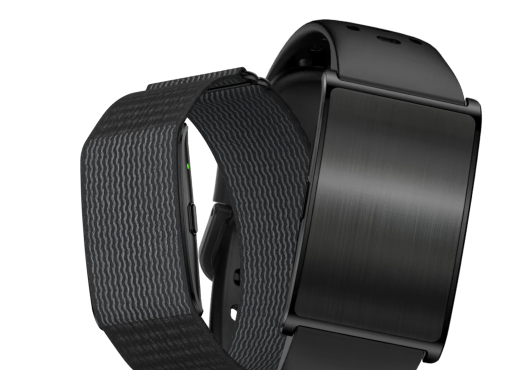
This was your history, written down once. The bracelet is the part that keeps watching — sleep, resting heart rate, temperature and movement, night after night, in one place.