A biomarker is a measurable sign of what is happening in your body,
such as the level of sugar or cholesterol in your blood.
 Written and medically reviewed by Dr. Arup Sen, Consultant physician, internal medicine
This common blood biomarkers list covers 20 markers people most often ask about, starting with the ten below: HbA1c, fasting glucose, LDL, HDL, triglycerides, TSH, ferritin, haemoglobin, vitamin D and CRP. Ten more, from total cholesterol and vitamin B12 to eGFR and platelets, are listed further down. Each one has its own page that explains what it measures, the typical ranges and what can affect it. Your lab report shows the range your lab uses, so always read your number against that first.
Choose a marker
such as the level of sugar or cholesterol in your blood.
blood sugar (HbA1c, fasting glucose), cholesterol (LDL, HDL, triglycerides), thyroid (TSH), iron and red blood cells (ferritin, haemoglobin), vitamin D, and inflammation (CRP).
MedlinePlus says labs often use different ranges and units, so compare results from the same lab.
A biomarker is anything that can be measured to give a clue about your health. On a blood test, each line is one biomarker: a substance in your blood and how much of it there is.
The NHS says a blood test is often done to check your health or to find out why you are having certain symptoms. It can also show whether you are more likely to develop a condition, or how well a condition is being managed.
Most blood tests are quick. The NHS says the test usually takes about 10 minutes, with blood usually taken from the inside of your elbow using a needle. Sometimes a finger-prick test is used instead.
These two tests are used to look for prediabetes and type 2 diabetes. They answer slightly different questions.
HbA1c shows your average blood sugar over the past two to three months. MedlinePlus explains that it measures how much of the haemoglobin in your red blood cells is coated with sugar. NIDDK says you do not need to fast for it. Read the HbA1c normal range page.
Fasting glucose shows your blood sugar at one moment, after at least 8 hours without food, according to NIDDK and MedlinePlus. Read the fasting blood sugar normal range page.
NIDDK says a diabetes diagnosis usually needs a second measurement to confirm it, unless you have clear symptoms. So doctors often use both tests, or repeat one.
Here are the ten markers covered in this guide, what each one measures, and where to read more. Each page also links to the free prevention check that matches it.
| Marker | What it measures | Read more | Related free check |
|---|---|---|---|
| HbA1c | Your average blood sugar over the past two to three months | HbA1c normal range | Type 2 diabetes |
| Fasting glucose | The sugar in your blood after at least 8 hours without food | Fasting blood sugar | Type 2 diabetes |
| LDL cholesterol | The bad cholesterol that can build up in your arteries | LDL cholesterol | Cholesterol |
| HDL cholesterol | The good cholesterol that carries cholesterol back to your liver | HDL cholesterol | Cholesterol |
| Triglycerides | A type of fat in your blood that stores spare energy | Triglycerides | Cholesterol |
| TSH | The pituitary hormone that tells your thyroid how much hormone to make | TSH | Thyroid |
| Ferritin | A protein that stores iron, which reflects your iron reserves | Ferritin | Anaemia |
| Haemoglobin | The iron-rich protein in red blood cells that carries oxygen | Haemoglobin | Anaemia |
| Vitamin D | Usually 25-hydroxyvitamin D, the main way to check your vitamin D status | Vitamin D | All checks |
| CRP | C-reactive protein, made by the liver when there is inflammation | CRP | Heart and circulation |
Descriptions are drawn from MedlinePlus, NIDDK and the American Heart Association. Each linked page lists its own sources.
These usually come together in one cholesterol test, sometimes called a lipid panel. The NHS says high cholesterol does not usually cause symptoms, and you can only find out you have it from a blood test.
LDL is the bad cholesterol. The AHA says it contributes to fatty build-ups in the arteries. See what is a good LDL cholesterol level.
HDL is the good cholesterol. MedlinePlus says it carries cholesterol back to the liver, which removes it. See low HDL cholesterol meaning.
Triglycerides are the most common type of fat in the body, according to the AHA. See high triglycerides causes.
UK reports often add total and non-HDL cholesterol. The NHS describes non-HDL as the difference between your total cholesterol and your HDL.
TSH (thyroid-stimulating hormone) is made by the pituitary gland in your brain. MedlinePlus says it tells your thyroid how much thyroid hormone to make, and a TSH level that is too high or too low may be a sign of a thyroid problem. Other thyroid tests are usually needed to find the cause. See TSH.
Ferritin is a protein that holds iron in reserve. MedlinePlus says lower than normal ferritin may suggest iron deficiency anaemia or another low-iron condition. Higher levels can point to too much iron, but also to inflammation, liver disease and other conditions. See ferritin.
Haemoglobin is the iron-rich protein in your red blood cells that carries oxygen from your lungs to the rest of your body. MedlinePlus says low levels can point to anaemia, iron deficiency or blood loss. It also says altitude, dehydration and smoking can shift the number. See haemoglobin.
A blood test can feel like a page of codes. Most of the codes fall into a few families: blood sugar, cholesterol, thyroid, iron and red blood cells, vitamins and inflammation. Once you know the family, the number becomes easier to talk about with your doctor.
This guide explains the markers in general terms. It does not interpret your own results. That is the job of the doctor or nurse who ordered your test.
Vitamin D is usually measured as 25-hydroxyvitamin D. MedlinePlus calls this the most accurate way to see if you have enough. Low results can affect your bones. High results usually come from taking too many supplements, and MedlinePlus says too much vitamin D can cause serious damage to organs and blood vessels. See vitamin D.
CRP (C-reactive protein) is made by your liver when there is inflammation. MedlinePlus says a high level can point to an infection or a longer-term inflammatory condition, but it does not show the cause or where the inflammation is. A related test, hs-CRP, measures very small rises and helps estimate heart disease risk. See CRP.
Next to each result, most lab reports print a reference range. MedlinePlus explains that this range is based on results from large groups of healthy people. It marks the low and high ends of what is usually seen.
A few things are worth knowing:
MedlinePlus lists several common things that can change lab results:
Tell the person taking your blood about every medicine and supplement you take. Do not stop a medicine unless you have been told to.
The NHS says the GP, nurse or specialist should tell you if you need to do anything to prepare. For some tests you may need to fast, having only water, for a short time.
The NHS says you may sometimes need to stop certain medicines, such as anticoagulants, for a short period. Only do this if you have been told to.
The NHS says results usually come within a few weeks, sometimes a few days. If you hear nothing after a few weeks, contact the surgery or specialist.
In the UK, the NHS says you may be able to see your results in the NHS App or your NHS account. Keeping your own copy makes it easier to compare over time.
Beyond the ten markers above, these pages explain other results that often appear on a routine blood test. Each one covers what the marker measures, typical ranges with their sources, what high and low results can mean, and when to see a doctor.
ONU does not sell lab tests and does not interpret your results. ONU is a wellness product, not a medical device.
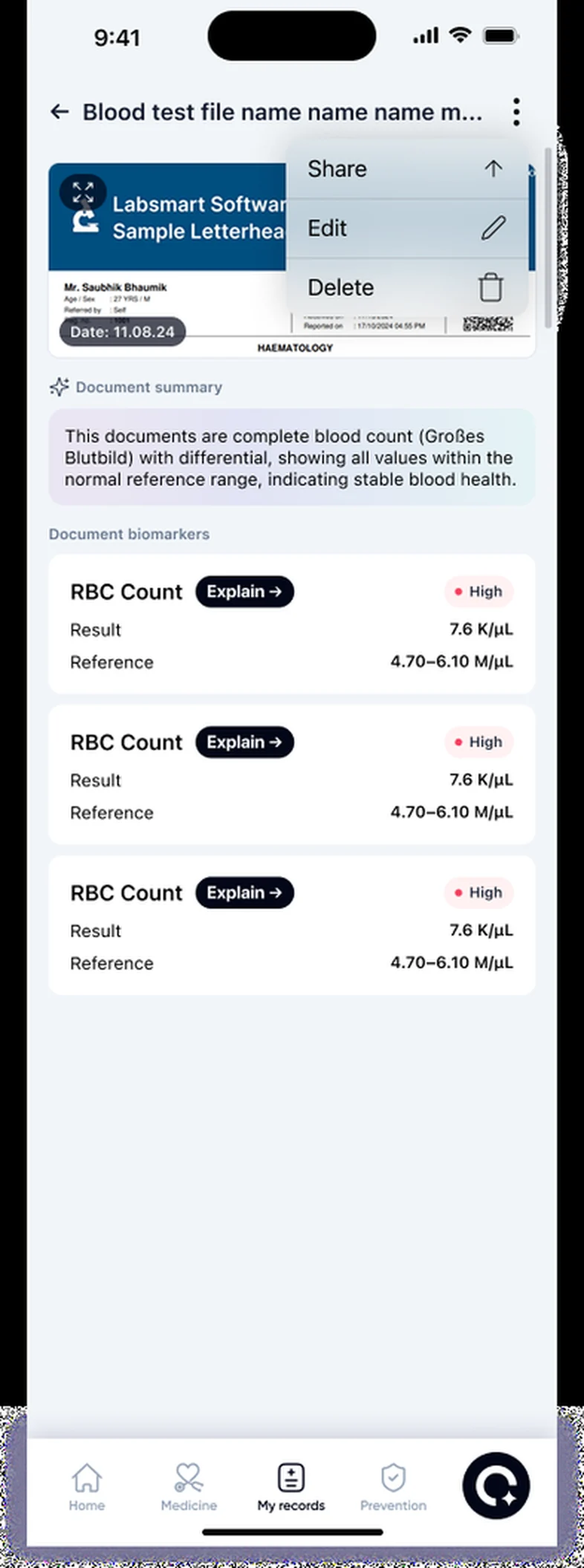
What ONU can do is keep your results in one place. In the ONU app for iPhone, you can upload the lab reports you already have and store them. They then sit next to your daily ONU Score and your sleep, recovery and activity trends, so you can look back over months rather than digging through emails and paper.
If you want a starting point, the free prevention checks cover eight areas, including type 2 diabetes, cholesterol, thyroid and anaemia. Each one ends with a summary you can take to your doctor.
The NHS says the GP, nurse or specialist should talk to you about your results and explain what happens next. If a result is unclear, you can ask a healthcare professional to explain it.
Ask for an appointment if a result is flagged and nobody has explained it, if you have new symptoms, or if you are unsure what to do next. Our blood test results explained guide and the questions to ask at a preventive health check-up can help you prepare.
If you feel very unwell, do not wait for a routine appointment. In an emergency, call 999 in the UK or your local emergency number. See emergency information.
Bring your everyday signals and health information into a clearer picture.